This week I’ve got a few teaching wins to share as well as a story of how I had to completely change my math lesson on the spot.
First, the teaching wins:
1) I pulled a small group to play the game Multi. They loved it! Throughout the game they kept remarking, “This is so fun! Where can I get this?”
2) Early in the week we took notes on the lives of serfs during the Middle Ages. Later, students wrote an informative paragraph using their notes. Many of them were amazed they were able to write a full page (or more!). We talked about how good notes support us when we get to writing.
3) We’re working on representing and solving multi-step problems in math. I’ve been mixing numberless word problems, three reads, and worked examples to support their sense making. I’ve been impressed with how many have been able to create accurate models and equations on their own. This doesn’t signal long-term learning, but it’s a good starting point!
4) My principal stopped me in the hall to tell me the school did a survey of parents about communication between home and school. He said several parents made a point of telling him how much they appreciate the emails I send home and the tone of my communications. Yay!
And now for a short story about how I had to completely change my math lesson on the fly with my students:
It all started with this Same and Different warm up. Things were going great. They shared lots of ideas, with me adding in vocabulary as needed, until I asked the students, “What about the quotients? What’s the same or different about those?”
Students chatted in pairs. When I called them back together they said, “A and C are the same because you can do those. B and D are different because you can’t solve those.”
I was a little perplexed. I asked, “Why?”
A student shared, “Because you can’t skip count by 4s to get 15.”
I replied, “15 divided by 4 does have a quotient. Was anyone able to figure it out?”
A student raised her hand. “It’s 3 remainder 3.”
I turned to the room, “Did you hear that word she said, remainder? That’s a word you probably heard in 3rd grade. Talk to your partner and try to remind each other what it means.”
Students chatted in partners, and it was immediately obvious they had no memories to remind each other of. The one student who had shared “3 remainder 3” said she just learned about remainders in an iReady lesson this week. No one else in my class had ever heard of them before!
I was floored! While students learn to interpret remainders in 4th grade, they should at least encounter division with remainders as they’re developing their understanding of the operation in 3rd grade. Division so often results in a remainder, students should be encountering it early on in their learning.
I suddenly realized I could not, in good conscience, continue with my iReady Mathematics Lesson that was all about solving multi-step problems where students would have to divide and interpret the remainder.
Mentally I said, “Shit!”
Out loud I said, “Okay, let’s talk about division with remainders.”
Since the only strategy my students seem to associate with division is skip counting, I went ahead and modeled dealing out cubes under the document camera.
“I’ve got 15 cubes. It says divide by 4. What action am I doing when I divide?”
Silence. Finally, a student shared, “Making groups?”
“Ok, so a group of 3, a group of 2, a group of 3…”
Something finally clicked. “No, they have to be equal.”
For the rest of the lesson, we got out color tiles and students solved division problems on their mini white boards. I walked around and monitored students. If a student had a correct answer, I would pose a new problem for them to solve. If they were having trouble, I offered suggestions.
The interesting thing to me was the sheer amount of direct modeling going on. I don’t think any one of my students used any relationships or anything to divide more efficiently. I was throwing out 50 divided by 3, and they were dutifully dealing out 50 tally marks. Wild!
I tried sharing how you can use larger numbers like 5 and 10 so you don’t have to count by ones all the time, but they were already so overwhelmed with the idea of division have remainders that I didn’t push it.
When we came back together at the end, we did touch on the idea of interpreting remainders.
They recognized that you could cut the remainder in half if it’s candy or money, but not if the remainder is a person.
I’ve decided that when we go back to solving multi-step word problems, I’m going to skip the interpreting remainder problems for now. Honestly, I would have introduced that idea with single-step problems to begin with. This lesson was biting off waaaaay more than my students could chew.
Short week this week! We had school Monday and Tuesday, and now we’re off for the rest of the week for Thanksgiving recess. What I’m really excited about is that I got all my planning and prep done today, so I didn’t have to bring my computer or any work home with me. Sure, there’s grading I need to do when I get back, but for the next 5 days I am taking a mental break from work. Time for some rest and relaxation!
Day 50
Number Sense Routine
I was excited to start the day with our third Estimation Clipboard activity. The students were excited, too!
The first picture is always the hardest. Our estimates had quite a wide range, 39-82. Students shared why they thought their estimate was reasonable, but no one was convinced to revise their initial estimate.
For the second picture, the range was still pretty broad, 43-74.
Me: “If your estimate is 43, how many pebbles are you saying were removed?”
S1: “…46.”
Me: “Let’s take a look. Do you think 46 pebbles were removed?”
S1: “No, maybe only 20 were removed. Can I revise my estimate?”
Me: (marks up the drawing to show that maybe 20 pebbles have been removed) “Of course! What do you think it is now?”
S1: “69.”
For the third drawing, our estimates tightened up even more. Students were estimating in the mid-40s to mid-50s.
Me: “How did you get your estimate this time?”
S2: “It doesn’t look like that many have been removed, like maybe 6 or 8. I just took away 8 from 61.”
And for the final picture, our range was similar with mid-70s to mid-80s.
S3: “I used the first picture to help me. I think maybe 13 were taken off the top.”
S4: “I think maybe 3 were taken off the top.”
S3: “I think it’s more than 3 because I can count 3 outside of the jar in the picture at the top and there are still more around it.”
Amplify CKLA
Instead of moving on to the next Amplify CKLA lesson this morning, we did the assigned homework from Lesson 1 in class. Students reread chapter 1 in their reader and answered 3 text-based questions.
While everyone else worked in pairs, I reread the chapter with two of my English as a New Language students, and the three of us worked together to answer the questions.
I could not fathom my students being successful with this assignment as homework, but they handled it well in class today. I think I’m going to make a habit of doing the assigned homework readings in class. I’ll probably be doing a lot of partner reading as well. I know it will slow us down, but it will ensure students have repeated opportunities to practice reading and engaging with these complex texts.
Math
To refresh our memories after the weekend, we started today’s math lesson with a review of the meaning of the terms area and multiple. To reconnect with multiple, I asked students for numbers that are multiples of 2 and numbers that are not multiples of 2.
Next, we did a number talk with a string of multiplication problems all involving 7 as a factor. I feel like many of my students see multiplication facts as discrete objects. It was nice to get some ideas shared today that showed how other facts can be used to find the product of a different fact. The more comfortable they are with partial products with single-digit facts, the easier it will be to introduce and use partial products with larger numbers later.
For our core math lesson today, students worked in pairs to create all the rectangles they could with a given area. Each pair of students got two numbers to explore.
Afterward, they went on a gallery walk to see the posters their classmates made with all the different numbers that were assigned.
When we came back together, one student shared, “I noticed everyone had a rectangle with 1.” This led us to dig deeper into what she meant. Ultimately we came up with, “Everyone has a rectangle that’s 1 row of their number.”
We didn’t get to finish the lesson, so tomorrow I’ll introduce the term factor pair and we’ll connect that new term to all of the rectangles they created today.
Day 51
Humanities
This morning we made it through the halfway point in Love That Dog. Over the past few weeks, students have gathered 15 entries as they’ve read that answer the questions, “What happened?”, “How does Jack feel about it?”, and, “What text evidence helps you know how he’s feeling?”
When we come back from Thanksgiving break, we’ll stop and analyze all of these entries to help us answer the question, “How has Jack changed from the start of the book until now?”
Amplify Science
Today we finally wrapped up the third chapter in our Energy Conversions unit in Amplify Science.
In this final lesson, we gathered evidence from a town climate report and a reference book to help us decide how well the two possible solutions, solar and wind power, meet the town’s criteria:
It has to add more energy to the electrical system
It can’t be too expensive
It has to be safe for the environment
Neither solution meets the criteria perfectly, so students had to look at the trade offs and decide which of the two is a better option and use the evidence we collected to explain their reasoning.
Math
To warm up today, students had to work in pairs to determine which of the numbers on the board are multiples of 5 and which are not. Then they had to use multiplication to justify their answers.
Some of the students keep defaulting to skip counting. While skip counting is related to multiplication, I’m working hard to nudge them away from a strategy that can be used to calculate products and toward the operation itself. It feels like an uphill battle.
To reconnect with the activity we did yesterday, I put up two rectangles with an area of 21. Students were able to identify the length, width, and area of each rectangle. When I asked, “Are there any more rectangles that can be made with an area of 21?” Students didn’t think there were any, but they had no idea how they could prove it. I gave them think time, asked them to chat in pairs, and they still had nothing. I finally said, “We’re using multiplication to show that we can multiply the length and width to get the area. Could we try multiplying other numbers to see if we can get 21?”
Suddenly they were re-engaged with the task. “We can try 8s. I know 8 times 3 is 24.”
Me: “Okay, that’s too high. What’s the next 8 fact below that?”
S1: “8 x 2 is 16. That’s too low.”
We repeated this for a while, trying out lots of different possible factors.
When we finished I shared, “Wow! Look at all these factors you tried. Earlier, you didn’t have any strategies for checking to see if there are any more rectangles that can be made with an area of 21. What strategy did we just use?”
S2: “We tried multiplying by other numbers to see if it would work.”
After introducing the term factor pair, we collected together all the factor pairs students found with the areas they explored yesterday.
Once they were all collected, I said, “I remember when we did our gallery walk, one of you made a really interesting observation. Do you remember what it was?”
S3: “That every poster had a rectangle with 1.”
Me: “Let’s see if that’s true now that we’ve got all the factor pairs up here.”
We went through each factor pair and realized there is a “1 and __” factor pair for every single number.
Then I asked, “What else do you notice?”
S4: “Some of the numbers only have one factor pair.”
Me: (circles all the numbers that have only one factor pair) “That’s so interesting. These three only have one factor pair, but all the others have more. Why do you think these three might only have one?”
S5: “They’re all odd.”
Me: “Interesting. So maybe even numbers have something that makes them have more factor pairs? Take a look and see if you notice anything all the even numbers have in common.”
S6: “They all have 2!”
Me: (circles the 2 in all the even numbers) “Interesting. Do any of the odd numbers have 2 in them?”
S7: “…No. None of them do.”
Me: “Do the odd numbers have anything in common like the even numbers do? Maybe there’s a number they all have?”
S8: “No, but all the factors are odd.”
Me: “Really? Let’s take a look at that.”
We looked at every factor of an odd number and realized every single factor pair is composed of odd number.
Me: “How interesting! What does this tell you about odd numbers?”
S9: “They only have odd factors.”
Response to Intervention
My RtI class was able to finish reading and summarizing an article Native Americans keeping their food traditions alive today.
Next week I’d like to start pulling small groups to read and discuss longer texts.
Closing Circle
We closed out our day with an activity called “Triple A: Appreciations, Affirmations, and Accolades.” After introducing those three terms to the students, they each had a chance to write a short note to give an appreciation, affirmation, or accolade to another member of our class.
When they were done writing, we shared out what they wrote in a community circle. Some of the students were shy to read the notes they wrote, so we mixed them up so everyone read a note someone else had written.
I took a risk and let students choose who they wanted to write to. Surprising to no one, some students did not receive any notes, which led to some hurt feelings. I feel bad about that. At the same time I didn’t want to assign everyone a person to thank which could make the appreciations feel forced. I liked that my students authentically shared kind words today. I’ll just have to make sure I continue to include activities like this to keep giving students repeated opportunities to give and receive appreciation.
I wasn’t sure what I was going to talk about at the beginning of this post, but then as I was putting it together, I realized I have nothing to share from science this week. As I mentioned previously, when our school started Response to Intervention, it effectively halved the amount of time I have for science. Add on to that a few disruptions to our schedule, and I only got to do about 30 minutes of science this week. Our momentum in this unit has slowed significantly. I hate how this happened last year and now this year. I don’t want to find myself in the same position last year where our first science unit took my until early February to finish. My goal is to wrap up chapter 3 of this unit on Monday, and then put all my effort into getting through the final chapter in December. I would have loved to finish this unit in early November, but if I can be done by winter break, at least it will mean we can start a new unit come January.
Day 45
Amplify CKLA
I had a good conversation with my principal during my post-observation debrief. We discussed the Amplify CKLA lesson he observed the week before. In that lesson (which is allotted to take 30 minutes), students were supposed to take on the role of the author of the narrative Small Steps. In the first half of the lesson, the students were supposed to use the text to generate answers to four interview questions. In the second half of the lesson, they were supposed to interview one another like they were on a morning talk show. In 45 minutes, we almost made it through the first half of the lesson.
During our conversation, my principal wondered if I could have done some modeling to help the students be more successful. For example, I could have modeled coming up with an answer to question 1, then we could have worked on question 2 together, leaving my students questions 3 and 4 to do on their own. I told him I don’t disagree with this feedback, but it’s challenging. Throughout this first unit, I’ve encountered problems every time I *added* anything to a CKLA lesson. Some of the things I’ve added have been:
Discussing vocabulary words and their meanings before reading a text
Sharing a model of my writing at each stage of the process as students are working on a similar piece of writing
More thoroughly explaining directions than just reading them and sending students off to work
Everything I add just makes a lesson that is already going to take a long time take an even longer time. He wondered aloud whether going more slowly in the beginning with more supports and modeling would accelerate instruction later. Maybe? I’ve tried to walk a tightrope of providing additional supports while maintaining a pace that doesn’t feel glacial. And yet, this 15-day unit still took me roughly 3 times that long to teach! (Look at me using a multiplicative comparison!) On top of that, CKLA considers unit 1 a review. You don’t really get into your first instruction at 4th grade level until unit 2 (and boy is that a doozy!).
Another thing that has made adding supports difficult is knowing when they’re going to be most effective. I’m not familiar with these units at all; no one in my district is. So when I’m planning, I have no idea how critical the activities are in any given lesson. Is this a one-off skill? Is this the core skill that’s going to come up again and again throughout the unit? I have no idea. The teacher’s guide for just one unit is hundreds of pages long, and I don’t have the bandwidth to read through all of that to determine what’s most important and make decisions about which activities and lessons are crucial for providing more intentional support on a given day of instruction.
This year is just learning the curriculum, and next year will be strengthening that understanding. I might do a better job at knowing when and how to support in year 2, but I wouldn’t be surprised if I don’t have a strong grasp of it until year 3.
Thankfully my principal is very supportive. He acknowledged that he’s not as close to all of this as I am, so he’s offering feedback knowing he doesn’t have the full picture. I’m taking his feedback with me, and I’ll continue to do the best I can each day.
Math
To get us warmed up after a 3-day weekend, we re-analyzed three bar models illustrating multiplicative comparisons. For each model, we answered three questions:
What is known?
What is unknown?
What equation can we use to find the unknown?
Afterward, I left this slide up so students could reference it as they continued on the activity we started on Thursday where they had to write an equation and draw a bar model for each situation.
When they were finished working, we analyzed two students’ work to see how their diagrams, equations, and answers did or did not match the situation.
After wrapping up the math lesson we started on Thursday, we launched into a new lesson today about solving multi-step multiplicative comparison problems.
The lesson opens with using the Three Reads routine to make sense of a multi-step word problem. This was tough for my students! We only made it through the first and second read. We had to do a lot of turn and talk to make sense of all the quantities and relationships in the situation.
(I also had to reiterate my expectations around turn and talks because some of the students were sitting there not saying anything to one another. They did much better after I gave them a reminder about how I wanted them sharing as many ideas as possible while I gave them time to talk.)
I didn’t love stopping before doing the third read, but I think it’s for the best. This was clearly a challenging situation to make sense of, and I said as much to them. “This is a hard problem! We really had to think deeply about this today, and that’s okay! Strategies like Three Reads are a great way to slow us down and make sure we are paying close attention to what’s going on.”
Day 46
Humanities
We’re continuing to read Sharon Creech’s novel Love That Dog. After every few pages, students are summarizing what they’ve read, determining how the main character is feeling, and identifying text evidence to back up their thinking.
They are loving the book! The first few days, they were wondering why it’s called Love That Dog because there hasn’t been mention of a dog. As students read today, I suddenly heard, “He used to have a dog! It was yellow! That’s why the cover is yellow! This is his dog on the front!”
I love it!
Amplify CKLA
We’re finally done with Unit 1 of Amplify CKLA! Today students met in small groups to share the personal narratives they just finished writing and typing.
Reading through their stories, I was very proud to see so much evidence that so many students tried out the different author moves we learned across the unit:
sensory details
dialogue
similes
transition words
conclusions
We’re ready to dive into Unit 2 tomorrow to begin learning about the Middle Ages!
Day 47
Small Group Instruction
I worked with the same small group on rounding this morning. Despite several days between sessions, they picked right back up rounding numbers to the nearest ten and nearest hundred.
Amplify CKLA
We finally kicked off unit 2 of Amplify CKLA!! This unit is all about the Middle Ages. To set the scene, we analyzed a time line, talked about BCE/CE, and watched a few short videos about ancient civilizations in Egypt, Greece, and Rome. The kids are so excited! Here’s hoping we can ride that wave of excitement into all of the reading of complex text we’re about to undertake.
Math
When my mom passed, I inherited quite a collection of plastic containers. They came in super handy today! I need each pair of students to have at least 36 square tiles for a math lesson, so I just poured tiles like muffin batter into each of the containers.
Sadly, we didn’t actually get to start this lesson today, but the tiles are ready to go for tomorrow!
The reason we didn’t get to the planned lesson for today, is because I stopped to review previously learned content that students aren’t remembering well. Up until now my students have been doing really well on our spiral review quizzes.
After grading the quiz they took yesterday, however, I realized we needed to touch base on a few concepts – multiplicative comparisons, writing multi-digit numbers in word form, and locating fractions on a number line.
I hated that it took time away from the lesson I had planned, but if students aren’t retaining previously learned content, what is the point of forcing us to move forward learning new content?
Response to Intervention
In my Response to Intervention class, we prepared to read an article about Native American chefs preserving their culinary traditions. Before reading the article, we named the different text features in the article as well as their purpose.
Humanities
I just love seeing my students react as the story unfolds in Love That Dog. Today as they were reading in pairs, I could hear them emphatically telling each other, “That’s the yellow dog he wrote about before!!!” They furiously called me over and demanded, “Why did the other dogs get killed!?”
So many asked me that question, I had to stop the class so we could discuss kill and no-kill animal shelters. They were appalled that any shelter would kill dogs.
Last year I remember the EL Education lessons made this book stretch out for so long that the students had no emotional investment in the plot whatsoever. My class this year is hanging on every word!
Day 48
Small Group Instruction
I started another morning practicing rounding with a couple of my students. Today we used faded examples to practice rounding to the nearest thousand. I followed up by trying to generalize to rounding to any place, but I think that was a little too ambitious for one of the students.
Amplify CKLA
In Amplify CKLA, we read chapter 1 from their new reader Empire of the Middle Ages. The lesson had me read aloud the chapter page by page, which was for the best. As we read, we identified events happening leading up to the start of the Middle Ages in western Europe.
On a side note, I finally graded the comprehension assessment from Unit 1 that helps determine students’ readiness to continue with the 4th grade CKLA curriculum. According to the scores, only 5 of my students demonstrate adequate preparation to continue with the 4th grade curriculum. Everyone else is considered minimally prepared because their scores were so low. I had 0 students score well enough to demonstrate outstanding preparation.
I still have a few other assessments to administer before making a final determination, but I’m foreseeing that the assessment is going to recommend a large chunk of my students stop receiving instruction from the 4th grade curriculum and be moved into a 3rd grade unit. Sadly, that’s not an option, so pressing on with 4th grade it’s going to be!
Math
We’re moving into lessons on factors, multiples, and prime and composite numbers. Today’s lesson on multiples opened with a Which One Doesn’t Belong? all about area. This was tough! They were able to share some surface level differences, but area just does not appear to be a salient concept for my students. (This is after we’ve had area problems on our sticky practice for a couple of weeks!)
On a positive note, one student did note that the bottom right picture can be divided into two rectangles. Toward the end, a student gave a rambling (and faulty) explanation for how to calculate the area of that shape. It was too much to unpack after we’d already spent almost 10 minutes on the activity, so I decided we would put a pin in it until later. I think tomorrow I might ask them to build the shape using square tiles and then use that to label the shape we looked at today.
Our lesson on multiples continued with a discussion of this figure. Even after the WODB and some mentions of area, it took several minutes and going around to several students before I could finally get one of them to say the word area. The student started by saying, “It’s small.”
Me: “What do you mean small?”
S: “It has a 2 and 3 and those are small numbers. And when you multiply them, the answer is 6.”
Me: “6 what?”
S: “The answer. It’s 6. 2 times 3 is 6.”
Me: “Okay, but what are there 6 of when you multiply?”
S: “Squares.”
Me: (writes, “There are 6 squares in the rectangle.”) “What does knowing there are 6 squares tell us about the shape?”
S: “It’s the answer.”
Me: “The answer to what? What do we know when we know this rectangle is filled with 6 squares.”
S: “Oh, it’s the area.”
Oh my gosh! We finally got there, but this is what I mean when I say area is just not a salient concept to this class. I’m glad this was just the beginning of the lesson!
After analyzing a rectangle with an area of 6 square units, students were challenged to use color tiles to create as many rectangles as they could with an area of 10 square units.
After they were finished, I asked if any students built rectangles that were 2-wide, 5-wide, and 10-wide. They described their rectangles to me, and I built them under the document camera.
Next, students were challenged to build five rectangles that were 2-wide, five rectangles that were 3-wide, and five rectangles that were 4-wide. They had a table to record all of the areas of their rectangles.
Sadly, I was feeling pressed for time, so I clearly did not go over the directions well enough with them. I was walking around the room wondering what in the world was going on. I ended up stopping them and modeling building a few rectangles that were 2-wide and recording their areas in the table. After seeing me do this for a few rectangles, they finally understood what to do and carried on.
We only got to debrief a little at the end. This lesson will need to carry over to a second day.
Day 49
Math
Last night’s math homework coincidentally had a problem involving finding the area of a composite figure (something students struggled understanding in yesterday’s math warm up). When we went over the homework at the start of math today, I shared a slide where I included the diagram as well as a photo of the same figure made out of color tiles.
First, I asked the students to make connections between the diagram and the color tile model. Being able to count tiles helped students connect the lengths labeled on the diagram to the lengths of the model.
Next, students turned and talked to find a way to find the total area of the shape. When we came back together, a student shared that he multiplied 3 times 3.
Me: “Why?”
S1: “Because there’s a 3 and a 3.”
Me: “Ok, but what do you see that makes you want to multiply?”
S1: “3 on the top and 3 on the side.”
Me: “Yes, but why are you multiplying? What about this is multiplication?”
S1: “There’s 3 rows of 3.”
Me: “3 rows of 3 what?”
S1: “…of 3 squares.”
Me: (writes “3 rows of 3”) “Oh! Since there’s 3 rows of 3 squares, you can multiply to find the total number of square units.”
S1: “Yes.”
Me: “Ok, so now we’re done?”
S1: “No, that’s just the top.”
Me: “Oh, that’s just these 9 square units up here. We didn’t count these down here?”
S1: “No.”
Me: “How can we do that?”
S2: “You can multiply 3 times 2.”
Me: “Why is that?”
S2: “…because there are 3 rows of 2.”
Me: (writes “3 rows of 2”) “I can see that. Here’s 3 rows, and there are 2 in each row. So how many square units are right here?”
S2: “6.”
After finding the two smaller areas, I knew we needed to be careful how we calculated the total area.
Me: “Ok, the area here is 9 and the area here is 6. What do we need to do to find the total area?”
S1: “We add.”
S2: “I’d multiply.”
Me: “Why would you want to multiply?”
S2: “Because you multiply to find the area.”
Me: “We did do that to find each of these areas: 3 x 3 and 3 x 2.”
S3: “I multiplied. 9 x 6 is 54.”
Me: (writes “9 x 6 = 54”) “Okay, so you’re saying the area of this shape is 54 square units. Do you see 54 square units here?”
S3: “…No?”
Me: “We do often use multiplication to find the area of a rectangle, but we don’t want to assume that we’re going to use all multiplication all the time. Think about it. If you look at this picture, do you see 9 of something 6 times?”
Ss: “…No.”
Me: “Do you see 6 of something 9 times?”
Ss: “…No.”
Me: “Yeah, multiplication doesn’t make sense here. There aren’t 54 square tiles inside this shape. If that isn’t the right operation, how can we find the total area of this shape?”
S4: “I think we should add.”
Me: “Why is that?”
S4: “Because you already found those two areas. You just need to combine them.”
Me: “Ah, so we know the area up here is 9. How many times do we see a group of 9 tiles?”
Ss: “Once.”
Me: “And down here is an area of 6. How many times do we see an area of 6 tiles?”
Ss: “Once.”
Me: “So if we add, or combine, these two areas, what will we get?”
Ss: “15.”
Me: “Let’s count and see.” (we choral count all the tiles) “So the total area of this shape is 15 square units. We multiplied to find the area of each of these parts, then added the area of each part together.”
And this was just to discuss a homework question that just happens to relate to the area work we’re doing.
When we finally launched back into our math lesson on multiples, we started by recapping yesterday’s activity.
Me: “Yesterday you found rectangles that are 2-wide. I’m going to put some possible areas up here. Two of them won’t be possible. Talk with your partner to see if you can figure out which two won’t work.”
S1: “5.”
Me: “Why won’t that work?”
S1: “Because if you count by 2s, you won’t say 5.”
Me: (draws squares to make a rectangle that is 2-wide by 2-long.) “What will happen when I try to get to 5 from here?”
S1: “It won’t work.”
Me: “Why not?”
S1: “It’s not a rectangle.”
We repeated this for rectangles that are 3-wide and 4-wide. Students kept talking about using skip counting, and I kept getting them to connect the skip counting to the models of rectangles: “Because there’s 4 in every column, and if you count by 4s, you won’t say 26.”
38 proved challenging, so we ended up skip counting by 4s to show that you can make a rectangle with an area of 36 or 40, but not 38.
The core activity of our math lesson today was building rectangles that were 3-tiles wide with an area of 30 or less. After building the rectangles, students recreated them on grid paper.
When they were finished, we came together to debrief. This led us to the introduction of the term “multiple.”
My students were really hung up on skip counting throughout this lesson, so I had to be a little heavy handed in getting them to use multiplication to prove why a number is or is not a multiple. They kept saying things like, “Because you can’t skip count by 3s to get to 34.”
I’d interject and say something like, “So you can’t multiply by…?”
After getting them comfortable using multiplication to show that a number is a multiple, I pointed at one of the equations and asked, “Which part of this equation is the multiple?”
S1: “4 times 6 equals 24.”
Me: “That’s the whole equation. A multiple is the result of multiplying a number by a whole number. Which part of this equation is the multiple?”
S1: “24.”
Me: “Great! What about in this equation? Which part is the multiple?”
S2: “4 x 7 is 28.”
Me: “Nope. That’s the whole equation again. A multiple is the result of multiplying a number by a whole number. Which part of this equation is the multiple?”
S2: “28?”
You’ve got to be really careful when introducing vocabulary! We will continue practicing this word beyond today’s lesson. I’ve already incorporated it into the next lesson where we talk about factor pairs.
Response to Intervention
In my Response to Intervention class, we’re working on summarizing as we read. Today we stopped to do a quick summary after each paragraph. We did the first two together. Then I gave them a chance to come up with a summary for the third paragraph with a partner.
The first student who shared said, “They got moved out of their land.”
I used this as an opportunity to talk about pronouns and how we should avoid them unless it’s clear what’s being referred to. In this case, because we talked about Native Americans and then Europeans in the first two summaries, it wouldn’t be clear who “they” is referring to.
The second student shared, “Native Americans got kicked off their land, when they were good at growing food correctly.”
I made sure to point out that I really liked this summary because it mentioned food. When we discussed the title of the article, Tasty Traditions, we guessed this was going to be an article about food. I told the student I really like how she brought that into her summary. I pointed out that we talked about food in the summaries for paragraphs 1 and 2. Seeing it again in this third summary really helps emphasize how much this article is about food like we thought it would be.
Humanities
We’re continuing to make our way through Love That Dog. The kids are loving it, and I’m loving listening in as they read and talk with their partners. It’s bringing me a lot of joy.
It’s hard to believe we’re a quarter of the way through the school year. Before moving in to the second quarter, I wanted to take some time in this post to reflect on how things are going.
Classroom Management
I listened to a podcast over the summer, I think it was with Dylan Wiliam. He differentiated between “teaching” and what he termed “crowd control.” The term “crowd control” resonated with me. While I was out of the classroom for 13 years designing curriculum and supporting schools, I was immersed in the “teaching” side of this job. When I got my own classroom again last year, it was readily apparent that I was out of practice with the “crowd control” side of this job. I didn’t have routines and procedures in place at the start of last year, and it had been so long since I’d run my own classroom that I wasn’t even sure what procedures and routines I would want or need. It took living through last year and reflecting over the summer for me to figure out what I wanted to put in place to create a safe, productive, and calm learning environment.
Here are some things I put in place this year that have helped me feel more successful in managing my classroom:
1. Clear expectations shared from the get go.
Our school uses the acronym CARE for expectations across the school, so I made sure mine aligned with the same acronym. I introduced my expectations, and we practiced them. I also made sure to call out when I saw students following them. Writing this post reminds me that we are due to revisit them.
2. Clear routines
The first routine I developed was our morning routine. I thought through all of the things I needed students to do in the morning, and came up with the steps they would need to follow. I quickly turned the steps into pictures to make them easier to notice and follow, particularly for my ENL students.
As we got further into the school year, I started fading the reminders because I want this routine to become automatic.
There are a few students who still put away their backpacks (Step 1) and immediately go get their computers (Step 5), but all in all I’m impressed with how much better my students are doing this year. Last year I would have only maybe half my class make their lunch choice when they arrived. Now I have everyone make it or maybe all but 1 or 2 students. That’s a win in my book!
Other procedures and routines that I’ve used this year to help keep our classroom safe, productive, and calm are:
Having my students turn on their laptops in the morning and get on Fluency Flight – This serves two purposes. First, it gets their computers turned on and any updates applied so if we need computers later in the day we don’t have to waste time waiting for them to boot up. (Booting up can occasionally take 20-30 minutes!) Second, it ensures students are getting math fluency practice nearly every day.
Getting snack and water bottles from their lockers as soon as they come back from specials
Putting away water bottles at the end of snack so students aren’t nursing their water bottles and having to go to the bathroom or fill up their water bottles multiple times per day
Keeping their mini white board, marker, and eraser in a zipper pouch in their desks, so they can quickly get these materials out and ready to use
Keeping their Daily Folder in their desk so they can take out their homework and a colored pencil very quickly when it’s time to go over their homework
Using mailboxes so I don’t have to spend time handing out papers at the end of the day
Having students put their Daily Folder on their desk at the end of the day and then calling them in small groups to get the papers from their mailbox to put in their folder and pack up
Sending only homework home Monday through Thursday and then Fridays are reserved for sending home all classwork, graded work, and flyers
3. A focus on attention
I’ve been reading Daniel Willingham’s book Why Don’t Students Like School? as well as listening to a variety of education podcasts, and a recurring theme is that attention is a limited, yet vital, resource in classrooms. I’ve been making keeping students’ attention a priority in my classroom this year. One way I’ve done this is by using the acronym SLANT. I was hesitant to use it because I know it’s been controversial on social media because of some heavy-handed applications of it. However, telling students, “Pay attention,” is not super helpful. Naming specific behaviors that are good proxies for attention is much more concrete and helpful, particularly when I need to give them feedback when they aren’t paying attention.
When I need students’ attention, I give a countdown, “3, 2, 1, Slant.” As I count down, students should be putting down their pencils, stopping talking, and turning their eyes toward me. Once I finish saying the word, “Slant,” I pause to make sure I’ve got all eyes on me. Then I’ll continue with whatever I was going to say.
Recently I noticed they my students weren’t responding as well, so this past week we engaged in some deliberate practice to ensure the whole class is stopping what they’re doing and looking at me when I call for attention. Instead of just counting down I would say, “5, finish writing, 4, putting pencils down, 3, turning your body, 2, looking at me, and 1, Slant.” Those reminders helped a lot.
4. Checks for listening
Over the summer I listened to an episode of Mr Barton Math’s Podcast with guest Pritesh Raichura. (Click here to access this podcast episode.) It was a fascinating conversation. It actually inspired my use of SLANT above. Pritesh’s deliberateness and the positive way in which he communicates his expectations to students were inspirational. In particular, I was curious to try out something he shared called checks for listening. (Click here to read more about this on his blog.) Unlike a check for understanding, which is designed to gauge how well students have grasped a concept, a check for listening is designed to gauge whether students have been paying attention in the first place.
It was very eye opening trying these out in my classroom. When I first started, my students were failing my checks for listening left and right. I would share something, immediately ask them a question which essentially asks them to repeat back a word or phrase I just said, and hardly any of them could do it! I’m unsure whether it’s an issue of developmental appropriateness (I teach 4th graders and he was talking about working with 7th or 8th graders) or whether my students really just need a LOT more practice. It has been very eye opening that if my students are failing checks for listening, it’s no wonder they get confused on assignments particularly around the directions I’ve just gone over. I feel like I need to double down on incorporating more checks for listening in the second quarter.
5. A focus on the brain and memory
Related to SLANT and attention, I’ve been teaching my students about the brain and how their memory works. These two posters are somewhat of a mantra in my classroom:
I also taught them a simple model of how memory works that I adapted from Daniel Willingham’s book.
This has been super helpful because now I can say things like, “I bet your working memories are really full right now,” and, “Let’s see if we can pull what we’ve learned about this before from our long-term memories to help us with this new idea.”
6. A system for rewards
I’m not a huge fan of reward systems, but inspired again by the podcast episode with Pritesh Raichura, I started giving out points this year. (He talks about giving out merits and demerits. I changed it to points and strikes.) Taking an idea he shared, I have a blank seating chart in front of me at all times. Throughout the day, I give students points for following directions and answering questions. I just put a tally under the student’s name on the seating chart every time they earn one.
I love this system! First, I don’t have to give students a physical object. In the past I’ve handed out tickets, and it was always such a pain to remember to carry them around, hand them out, and get more when I ran out. Second, because it’s on a seating chart, I get a quick at-a-glance of my class. If I see someone doesn’t have a lot of points, I can be sure to call on that student or try and notice them following directions.
At the end of each day, I call out the top 3 point earners for the day to get a piece of candy. Often there are ties, so the top 3 can easily be 6-7 students. I also have a leader board that shows our top point earners for the week.
I want to build up my students, so I try to hand out points readily. I want them to hear from me very regularly that they’re doing a good job. Since points are so easy to hand out, because they’re just tallies, we’ve amassed a lot in a short amount of time. It only took our class a few weeks to earn their first 1,000 points. We celebrated with an Oreo party.
Just a couple of weeks ago we hit 2,000 points and had another small celebration. I’ve also started handing out certificates to acknowledge when individual students have earned 100 points. It’s going to take some students more time than others, but everyone will get their certificate when they reach that milestone. I’ve already had one student get her certificate for earning over 200 points!
6. A system for consequences
My system for consequences involves giving out strikes when students are not meeting my expectations. I use the same seating chart where I make the tallies for points. I just write an X for each strike. Here’s what happens as students accrue strikes throughout the day:
1 strike – Warning
2 strikes – Study hall and a conversation with me to figure out how I can help the student be successful
3 strikes – Phone call home to get parents involved in helping the student successfully meet classroom expectations
4 strikes – Conversation with the principal to loop in another adult to support the student
The strike tally resets at the end of every school day. Usually one strike is enough to get students back on track. Occasionally I give two strikes. When that happens I chat with the student before or after study hall to let them know why they are in study hall, reiterate my expectations, and ask how I can help them be successful in meeting my expectations. Only once so far this year has a student earned 3 strikes.
Sometimes I feel like I can be a little too lenient with regard to handing out strikes, but I try to balance my expectations with the culture of our school. Our school culture is not one of strict adherence to behavior expectations. I don’t want to be the one super strict teacher, so at times I’ll lean on verbal warnings instead of strikes. All in all, my class seems to be doing a good job so I think this is a good compromise.
Classroom Organization
In addition to classroom management is classroom organization. How do I structure our environment to help me and my students be successful?
Laptops
Last year, my laptop organization system was the bane of my existence. There is no guidance from the school district around storing laptops. The other 4th grade team in our district sends laptops home with students every day so they don’t have to store them in class. The trade off is that they have to constantly remind students to bring them in and to make sure they are charged.
The 4th grade team at my school keeps the laptops at school. This means we have to have a way to keep the laptops and chargers organized. Last year I had them spread around the classroom. It resulted in charging cables becoming tangled constantly. This year, I was inspired to try something different.
We just finished Week 10 and this system is still working! I’ve had to untangle a few cables every now and then, but this is one of my biggest wins for the year so far!
Seating
In the past I’ve been adamant that students need to sit in groups of 4 so they can work together. With my newfound focus on getting and keeping student attention, I realized that when students are sitting and facing one another, it is much more likely they are going to focus their attention on the students sitting around them.
As a result, I have all of my students sitting in pairs facing the front of the room this year. This makes it easier to focus their attention on me and/or the white board. At the same time, I’m able to engage students in frequent turn and talks.
At the start of the year, I changed up partnerships pretty frequently as I got to know students and how they got along with one another. I also moved partnerships to different parts of the room if I realized certain students couldn’t handle sitting near certain other students.
When our beginning of the year assessments were finished, I tried out something I’ve never done before. I used the data from our reading assessments to make strategic partnerships. Every pair of desks has what I call a door partner and a window partner. The door partner is seated closer to the door and the window partner is seated closer to the window. The door partner also happens to be the student in the partnership who earned a lower score on our BOY reading assessment and the window partner earned a higher score. Our new literacy curriculum is very demanding, but now I feel confident that every partnership in my classroom is better set up for success. While the curriculum often calls for independent activities, I’ve been turning most of them into partner activities so students can read and think through the text together.
One thing I need to do as we move into the second quarter is revisit expectations for turn and talks and working in pairs. With everything else I got up and running at the start of the year, I did not give sufficient time to model and practice these skills.
Mini White Boards
“Why ask a question to one student and get one answer, when you can ask a question to all students and get an answer from every single one of them?”
This was something I heard on a podcast last year, and I implemented it with mixed success. I didn’t have a good way of organizing and handing out the mini white boards last year. Often they would take so long to get handed out that I would avoid using them.
This year, I bought a set of zippered pouches. Now each student keeps a zippered pouch in their desk. Inside is their mini white board, a marker, and an eraser. When I want to use mini white boards, students are able to get them out quickly and get to work.
I love the ability to get whole class feedback about what students are getting right and wrong. It allows me to respond in the moment. For example, I might stop and explain something, have students defend their answers, or change the next question I’m going to ask.
Revamped Schedule
I’ve made lots of tweaks to my daily schedule since the school year began. I feel like I’m on a never ending quest to figure out the best way to utilize my limited and precious instructional minutes.
The biggest change I’ve made is taking the first 30 minutes of each day and using it for students to engage in personalized instruction using the various digital programs our school district adopted. When students arrive in the morning, they go through our morning routine which ends with them getting on their laptops and logging into Fluency Flight on iReady. When they’re finish playing two games on Fluency Flight, they either engage in math lessons on iReady or reading lessons on Amplify Boost.
I’m doing this for two reasons. The first is because my English as New Language students are pulled the first 45 minutes every morning. I used to do Humanities during this period, and I realized these 5 students would never learn this content. That isn’t right. I opted to move Humanities later in the day and create this block of personalized instruction time. This way my ENL students aren’t missing any first instruction.
The second reason I made this change is because it means I finally have time in my schedule to pull small groups of students. For example, I’ve started pulling students regularly to do reading fluency check ins.
This past week I also started pulling students who have been struggling with rounding.
Once every six days, instead of doing personalized instruction and small groups, we engage in a whole-class number sense routine. My students last year LOVED these activities, and I want to be sure I continue using them. How can you say no to a math activity where students literally cheer at the end every time? These activities bring me joy as much as my students.
Homework
Last year I didn’t send home any homework. I haven’t been a huge believer in homework throughout my career in education. However, after surviving a school year with much less instructional time than I’m used to, I realize that at this school homework is a necessary component to ensure students have opportunities for practice I can’t provide during the school day.
To set students up for success, I’ve made homework very consistent. Students have the same three assignments every day, Monday through Thursday:
Reading fluency practice – Students take home a new text selection every Monday. They practice reading it at home 1-2 times every night. On Friday I do fluency check ins with a sampling of students. (I’ve also started doing cold reads with a sampling of students on Monday so we can compare their fluency before and after they’ve practiced.)
Cursive practice – I spent the first few weeks of school teaching my students cursive. I know it takes a lot of practice to become proficient at reading and writing cursive, so now students take home one cursive handwriting page every day. My plan is to start having a cursive check in every Friday to gauge how students do when the assignment is completed in class. I can tell some of them are not putting in their best effort at home.
Math Sticky Practice – This is a daily spiral review that I created to ensure students are encountering math topics multiple times across the school year. The students complete these practice pages at home, and then at the end of every 3 to 5 day lesson, they take a Sticky Quiz in class to see how they’re doing. The Sticky Quiz covers the exact same five topics students had on their Sticky Practice for the previous 3 to 5 days. For example, the most recent Sticky Practice had questions on multiplicative comparison, adding multi-digit numbers, writing numbers in word and expanded form, calculating area of a rectangle, and locating fractions on a number line.
Instruction
Amplify Science
I continue to struggle with revising these lessons to fit within the time constraints I have. Each Amplify Science unit is 22 lessons. There are 4 units across the year, for a total of 88 lessons. Each lesson is supposed to take 60 minutes, though I can guarantee 75-90 minutes would probably be more appropriate for many lessons. If I were able to teach science every day, it wouldn’t be a problem, but November through May our school takes away one 45-minute period of instruction every other day for literacy intervention. This means I only get to teach science for 45 minutes every other day.
Last year the Earth’s Features unit took me until early February to finish. The Energy Conversions unit took me from early February until the end of May. I had to cram the remaining two units into the final weeks of the school year. I’m proud I got through all four units, but that was not high quality instruction.
Amplify CKLA
Speaking of instruction that takes entirely too long, our school district adopted Amplify CKLA for 3rd and 4th grade this year. It was adopted in grades K-2 last year.
There is a lot I like about this curriculum, but boy does it make me feel like a failure on the regular.
I’m just about done teaching Unit 1, a 15-day unit that I was supposed to complete in the first three weeks of the school year. Why did it take so long? Because every lesson is supposed to take 90 minutes, when in reality it’s easier for them to take twice that long or more!
Now that I’m wrapping up my first unit, one reason I think the curriculum takes so long is because it throws new activity structure after new activity structure at students. I spend a lot of time just explaining, modeling, and re-explaining directions to my students. We’ve done things like making comic strips, engaging in convoluted peer feedback protocols, and working in small groups to read prose like it’s a dramatic script.
Compare that to math, where I’ve used routines like “Same and Different” and “Which One Doesn’t Belong?” over and over so that when my students see one, they can get right to mathematical thinking. They don’t need me to explain anything. When you are able to reuse activity structures, students have more cognitive capacity to devote to the actual task at hand rather than trying to learn and remember a new set of directions.
The curriculum also seems to have an unreasonable expectation for how quickly students can read text and answer questions. I’ve modified almost every activity so that students read in pairs because so many cannot read the texts independently. That ensures greater access to the content of the text, but it still doesn’t get it read fast enough. I’ve even read some of the texts out loud to my students, and that still didn’t save any time once they got into whatever task they were supposed to do with the text.
I’ve heard from numerous CKLA teachers that this is common in year 1 of implementation. They say that next year I will likely go a little faster, and in year 3 I’ll be able to go faster still. I’ll believe it when I see it.
On the plus side, I appreciate having a coherent curriculum to follow. I did not have that last year. I feel much more sure of what I’m doing each day with my students, and I feel like we’re covering a wider range of literacy skills than I managed last year. The students are happy with the curriculum, too. They love the stories we’re reading, and despite being asked to do a LOT of writing, they are taking it in stride. Many of them are proud of the stories they’ve written in this unit.
Here’s hoping Unit 2 goes well! I think I can finally start it sometime this coming week.
Math
This year my district adopted iReady Mathematics Classroom. There are things I like about it, but one area where it fell flat on its face was in Unit 1 with number sense around multi-digit numbers. After spending a few days introducing reading and writing multi-digit numbers, students then spent a few days on comparing multi-digit numbers. This was a bumpy start to the year considering that my students had only worked with numbers up to 999 before 4th grade.
It got even more bumpy when we hit rounding. The curriculum wants students to use models like number lines to round numbers like 145,214 to the nearest ten. The trouble is that almost no work has been done to build students’ number sense with these large numbers. Sure, they can read and write them now, but being able to identify that 145,214 is between 145,210 and 145,220 on a number line is not easy! On top of that, being able to identify that 145,215 is the halfway point between those two numbers is just as complex.
I tried my hardest to stick to my guns and teach rounding while simultaneously teaching them how to locate these numbers on a number line, and it was hard! I ended up cutting us off after a few days so we could move on to something else. I moved rounding to the back burner. It started appearing as a question on homework every day, and we would go over that in class. Through repeated exposure, a little over half my class is showing that they can reliably round multi-digit numbers, but it was unnecessarily tough. Now I’ve got a group of students I’m working with in small groups to teach an alternative strategy.
I’ve also found that the instruction in iReady Mathematics Classroom can be dry as dirt. I taught a lesson introducing multiplicative comparisons, and it was not interesting at all. I opted to continue teaching multiplicative comparisons using the Illustrative Mathematics lessons I used with my class last year. Those lessons have a nice progression to them. I also love that my students are much more engaged in making sense of the comparison language as they tackle a wide variety of problems.
Looking Ahead
Quarter 2 began on Thursday. We’re getting into holiday season which means lots of time off and breaks in instruction. I’ve got a 5-day week coming up followed by a 2-day week, a 5-day week, and a 4-day week. A week off for holiday recess isn’t far off after that.
I modify so much on the fly, I don’t think I have any grand changes I’m going to implement as we move into the next quarter. If anything I need to work on practicing and refining what I’ve already got in place. Compared with last school year, things are running extremely smoothly this year. I have a lovely class of students that works hard, and honestly, I couldn’t ask for much more than that. Well, a longer school day would be nice, but I’m making do with what I’ve got.
I’m so proud of myself! Report cards are due on Monday, and I didn’t want them to get in the way of my 3-day weekend. My challenge to myself was to get everything done before going home on Thursday so that I wouldn’t have to do ANY work on report cards this weekend, and I succeeded! Not only that, but I got my week sketched out and Monday planned out and ready to go, so I was able to leave my work computer at school. No school work for me for 3 days!!
Day 41
Fluency Check Ins
I’m getting into the groove of taking quick fluency checks with my students in the morning. Today was the cold read, and then on Thursday I’ll check in with the same students to see if they’ve improved after practicing at home for a few days.
I can’t check in with all of my students each week, so I’m trying to be strategic and pick the students who I really need to be watching every week and then sprinkle in other students from time to time to see how they’re doing.
Humanities
In Humanities, we’re starting to read the novel Love That Dog by Sharon Creech.
This book is the focus of an EL Education unit that I tried out last year (Click here to view the unit), but I’m just distilling out a small bit of that unit to use with my students this year. Every time we read, we’re going to practice summarizing what we just read, inferring how the main character is feeling, and citing evidence from the text to back up our inferences.
About halfway through the book, all of the work we’ll have been doing will come into play. We’ll be able to analyze how Jack felt at the beginning of the story and how he feels at the middle of the story. This will help us identify how his feelings have changed over the course of the novel, and we’ll be able to analyze our summaries of the plot to help us infer why his feelings changed.
I felt compelled to do this after seeing my students struggle in the Amplify CKLA lesson where we finished reading the personal narrative Small Steps. In that discussion, I realized that my students are not adept at observing how a character changes across a text. Their observations were very surface level. To be fair, Amplify CKLA seems like it’s here, there, and everywhere with regard to the literacy skills you’re teaching and practicing across lessons and across the same text, so it’s not like this idea was a focus of the unit.
With Love That Dog, I’m making it the focus of our reading. I hope that focus helps my students better understand this important idea about stories.
Amplify CKLA
I didn’t get any pictures because today’s Amplify CKLA lesson also happened to be my first formal observation of the year, but I’ll quickly share about it anyway.
We’re oh so close to the end of unit 1. We started Lesson 14 today. The first activity (suggested time: 30 minutes) has the students prepare for and conduct interviews from the perspective of Peg Kehret, the author of Small Steps.
The 30-minute activity took 45 minutes, and in that time we only tackled the prepare portion of the activity. We never conducted the interviews. I am absolutely not surprised at this point.
The lesson began with a quick launch where we talked about what interviews are. Then I went over the directions with them for preparing for the interview. Rather than have them work independently as the lesson plan suggested, I had them work in pairs. Even in pairs, this was hard work!
There are four interview questions they have to prepare for that ask things like, “Why did you write this story?” and “What is the message you want readers to take away from your book?” In addition to coming up with an answer, they also had to go back into the text and find a quote to accompany each answer. The idea is that it would be like a targeted book reading during the interview.
They spent 35 minutes or so just tackling those 4 questions with their partner. And even after 35 minutes, many students had only prepared for 2-3 of the 4 questions.
I called us back together with 5 minutes to spare and said we were going to wrap up for the day, but first I wanted to talk about one question that seemed to be giving many students trouble, “What is the message you want readers to take away from your book?”
They had no idea! I got answers like, “So you don’t get polio,” and, “To teach you about polio.”
I reminded them that the polio vaccine we read about means that nowadays people in our country don’t get polio. “If we’re not getting polio today, then why would she write this story? What might be a reason? What message might she be trying to share?”
I had them turn and talk with their partner to see if they could come up with a message.
When we came back together, I got, “So we can learn about the past?”
I ran with it. We finally came to an agreement that a story like this let’s us learn about life in the past. We can’t time travel, so stories are a great way to experience something that happened in the past. I would have liked a meatier message, and one that better reflected the story’s plot of overcoming hardship and recovery, but I’ll take this.
Response to Intervention
Today we launched our grade-level-wide RtI block which will continue until the end of May. For 45 minutes every other day (which is really 30 minutes after transitions), all 6 fourth-grade classes are mixed up into 10 RtI groups to work on literacy. The extra 4 teachers come from intervention, special education, and English as New Language services.
I have 17 students in my RtI class. We’ll be focusing on fluency, vocabulary, and comprehension. Today we just had a community circle where we introduced ourselves, played a name game, and talked about what makes characters memorable. I read Don’t Let the Pigeon Drive the Bus. We revisited the question of what makes characters memorable, and that was the end of our first session.
Math
Today’s math lesson opened with a number talk. As I presented each problem, students recorded their answers on a mini white board, and then held them up so I could see their answers. Afterward, they shared their strategies for finding their answer. Lots of skip counting! I sure hope that our new math curriculum introduces a better repertoire of strategies to our 3rd graders.
I was pleased on the last problem when a student shared, “I used the problem before. Since 4 x 8 is 32, I just added 1 more 8 to get to 40, so I knew it was 5.” Great thinking!
Now that students have learned how to represent a comparison using multiplication, we’re moving into using multiplication and/or division to solve comparison problems.
In the first activity today, students solved three problems, then we analyzed one of them in depth. I showed four students’ work one at a time. First we looked at a solution where the student created groups of 3 up to 21.
Then we looked at a solution where the student drew 21 boxes and circled groups of 3.
In the third solution, we focused on the multiplication equation the student had written.
In the final solution, which I forgot to photograph, we analyzed the division equation the student wrote.
While the first activity focused on 3 problems where students had to answer the question, “How many times as many books did ___ donate than ___?” In the second activity, students solved a new problem which involved finding the smaller quantity in a multiplicative comparison.
I was impressed with how well so many of them handled it! I didn’t see anyone multiply 48 x 6 to get the answer.
Day 42
Small Group Instruction
I have several students who have not been able to grasp rounding. This morning I met with them in a small group to introduce a variation of the strategy we’ve been using.
They still have to identify what two ___s the number is in between, but they don’t have to explicitly name the halfway number anymore. When we finished, I asked them how they felt about this way of rounding. One student quickly replied, “This makes a lot more sense!”
I need to meet with them a few more times to keep practicing, but I’m hopeful this will help them find more success.
District Common Assessment
Our first quarter ends with a district common assessment that utilizes passages that are either from a released NY state test or are written like passages from the NY state test. The test is short, just two passages, and it only has 7 multiple-choice questions and 1 short-answer question. We have done nothing by way of test prep, so I handed it to them and told them to just do their best. We did revisit the meaning of close reading as a call back to our recent conversations about what that looks and sounds like in your head. As is usual with standardized tests, the two passages don’t align to any topics that they’ve been learning. Some students were successful at answering the questions. Some students were not.
Amplify Science
In science we started reading a book called Sunlight and Showers. It’s supposed to launch students into an activity where they design a wind turbine. I decided to skip that this year. I am so pressed for time when it comes to science, I’m giving myself permission to cut things to save time and keep us focused and moving. The wind turbine activity is fun for many students, but it doesn’t actually further develop their understanding of energy conversions – the focus of the unit – so I’m okay letting it go.
Back to Sunlight and Showers, I happened to notice that this book has a short summary on the back, so I asked my students what a summary is. This is a question I have to keep asking because they don’t yet have a strong grasp of what it means to summarize. (Side note: I’m glad we will be summarizing over and over and over as we read Love That Dog during Humanities!)
We read the summary together and used it to discuss the meaning of the term engineer again (a person who uses scientific knowledge to design a solution to a problem). The summary was intentionally written so that we could identify the problem and solution before even reading the book. We were also able to talk about the energy conversion that is at the heart of the solution.
Math
Today’s math lesson opened with some quick review of using multiplicative language and connecting it to diagrams and multiplication equations.
Today we wrapped up the Illustrative Math lesson we started yesterday. Our primary focus was determining whether multiplication or division could be used to solve a multiplicative comparison problem.
Surprise! You can use both!
Day 43
Small Group Instruction
This morning I worked with a small group of students again to practice rounding. Yesterday we rounded every number to the nearest ten. That’s how we started today as well. I used faded examples to reinforce the strategy I taught them yesterday.
By the time they finished, they were open to a challenge, so I had them round a 5-digit number to the nearest ten. One of the students remarked, “This isn’t any different because I’m still looking at the tens place.” Exactly! They confidently rounded a six-digit number to the nearest ten, and then we started rounding numbers to the nearest hundred.
I’m so happy I was able to make time in my day to work with small groups as needed. I’m loving how confident these two are becoming after just a couple of mornings of working together.
Math
We launched math today by comparing two students’ solutions to yesterday’s Cool Down problem.
They noticed:
the solution on the bottom states the answer explicitly
both solutions labeled their diagrams
one solution drew boxes and the other wrote numbers instead
one wrote a multiplication equation and the other wrote both a multiplication and a division equation
I asked what we can learn from these solutions. They came up with:
make sure you answer the question that was asked
label your diagrams
I’m happy with that!
We’ve been writing multiplicative comparisons in the following format so far:
___ is ___ times as many as ___
So for today’s warm up I adjusted the arrangement of the wording slightly:
___ times as many as ___ is ___
I want to make sure they are flexible in reading and interpreting the language regardless of how it’s written.
I was inspired by the math language routine, Stronger and Clearer Each Time, to help my students process the comparison that was part of today’s warm up.
First I asked them, “What’s being compared?”
S: “9 and 8.”
Me: “Don’t worry about numbers. *What* is being compared?”
S2: “The pages they each read.”
Me: “Whose pages?”
S3: “Noah’s and Clare’s.”
Me: “Okay, so we’re comparing the pages that Noah and Clare read. Can you tell who read more?”
S4: “Clare because she has more boxes.”
Me: (writes “Clare read more pages than Noah.”) “Okay, can we make this more specific? Do we know how many pages Clare or Noah read?”
S5: “Noah read 9 pages.”
Me: “How do you know that?”
S6: “It says ‘Noah read 9 pages.'”
Me: (writes “Clare read more than 9 pages.”) “Okay, so if Noah read 9 pages, we know Clare read more than 9 pages. Do we know how many pages Clare read?”
S7: “No.”
Me: “If we don’t know how many pages she read, do we know the relationship between the number of pages she read and the number of pages Noah read?”
S8: “It says she read 8 times as many pages as Noah.”
Me (writes “Clare read 8 times as many as 9 pages.”) “Nice! After analyzing the diagram we know that Clare read 8 times as many as 9 pages. Great job going back to the diagram and the words to help us get a very clear comparison between the two students. If I was going to ask a question about this comparison, what would it be?”
S9: “How many pages Clare read.”
Me: “Yes, how many pages did Clare read? We know enough we can figure that out now.”
After days of direct modeling the amounts in comparison problems, today students were introduced to a bar model for representing multiplicative comparisons. We talked through a model of one comparison together before students worked in pairs to solve other problems that involved interpreting other bar models.
This first model only asked students to estimate the number of pages Andre read. I wanted to keep our focus on the bar models, so we didn’t get into finding the exact answer. However, I was delighted when I overheard one student sharing with another how she would find the exact amount:
S: “First I would find 5 x 9. That’s 45. Then I would find 10 x 9. That’s 90. Then I just add 45 and 90.”
We haven’t spoken of partial products at all this year. It was encouraging to hear her share that!
Response to Intervention
Today was our second time mixing up all of the 4th graders for RtI. We did another community circle to get to know one another. We introduced ourselves again. This time the students had to come up with a food that starts with the sound of their name, so they could introduce themselves like, “Hello, my name is banana bread Bushart.” It’s silly, but they love it. We also played a name game to help everyone learn everyone else’s names. I’m not sure how well they are learning the names, but I’ve got pretty much all of them down at this point which makes me happy.
We only had a few minutes after that, so I made sure they could all log in to Amplify Boost. My plan for RtI is to work with students in small groups. When students aren’t working with me, they will either be working with a TA in the room to practice and monitor reading fluency, or they’ll be working independently on Amplify Boost.
Amplify CKLA
It’s not in the official Amplify CKLA plans, but we’re taking the time to type up the personal narratives my students have spent several weeks planning and writing.
They’re so proud of their hard work, and so am I!
Day 44
Fluency Check Ins
I didn’t get a picture, but I did do fluency check ins again today to see how students’ fluency compared between Monday and today. Sadly, many of the students stayed about the same. Only one showed noticeable improvement. Several students admitted they hadn’t really practiced this week. I made sure to bring this up in our morning meeting. Hopefully now that I’ve got a routine for regularly checking in with them, they’ll be more motivated to do their daily practice.
Amplify CKLA
The first Amplify CKLA unit closes with a monster 3-day assessment. It’s meant to be a beginning of year assessment to check students’ readiness to continue learning with the 4th grade curriculum. I don’t have a choice. All of my students have to continue with the 4th grade curriculum regardless of the assessment results, but I’m required to give the assessment anyway. On the plus side, I don’t have to give it across 3 consecutive days. We did Day 1 today, and we’ll do Day 2 next Friday probably.
Day 1 was a doozy!
It’s a 90-minute comprehension assessment. There are three passages that apparently all come from a 3rd grade CKLA unit on ecology. My students didn’t learn with CKLA last year, so these were not familiar texts. I wonder if my students next year will be better prepared for this assessment, because the struggle was real for my current students this morning! Not only were the texts complex, so were the questions! The wording of many questions was difficult for the students, and the formats were all over the map. There were multiple choice with one answer, multiple choice with two answers, a sequencing task, a task that is too convoluted to try and describe in words, and a question that required students to go back into the text and circle two paragraphs. I was up walking around answering questions left and right.
I have to grade this assessment before Day 2 because their scores will determine who needs the Word Reading in Isolation Assessment. I’m going to go out on a limb and guess many of my students did not do so great on the comprehension assessment and will need me to administer that word reading assessment next week.
At least we’ll finally be able to start Unit 2 next week!
Amplify Science
In science today we finished reading the book Sunlight and Showers about a team of engineers that designed a solar water heater to help people in Guatemala have access to warm water.
Math
Today we continued a lesson on solving multiplicative comparison problems. We analyzed three problems that included bar models representing the multiplicative comparisons.
For each problem, we analyzed the diagram to determine which two parts of the comparison we know and which part of the comparison we don’t know. We also looked at student solutions to each problem.
Making sense of this new type of model and talking about them explicitly was challenging!
After analyzing multiplicative comparisons represented with bar models, students were challenged to draw bar models and write equations for a set of new problems.
Before they got started, we revisited the models in the activity we just finished. I said, “When you need to create a bar model, you can use the models from the activity we just completed to help you see what it should look like. For example, if you realize the problem is asking you to find the lesser amount, which of the models from the last task could you look at?”
This was tough! I’m glad I spent time working with them to make this explicit. The three bar models in the first activity matched the three types of problems they would encounter: missing greater amount, missing lesser amount, and missing relationship. I wanted them to see that the models they just got done analyzing could be really helpful when they had to create their own bar models for the first time.
We didn’t have much time to work on the second activity, so we’ll continue that on Monday.
I’m always conscious of lost instructional time. As I wrote about last year, I’m adjusting to a drastically shorter school day than I’m used to from Texas. (Click here if you’d like to read about that.) Anything that takes away even a few minutes from instruction hurts. This week we had so many things!
Tuesday was Halloween. Our entire school stopped instruction around 1:15 or so to go outside to watch the Halloween parade the next-door elementary school does every year. By the time we got back to the classroom, I did my best to wrap up the lesson we were doing before moving on to our Halloween Party. I think some teachers call it a Fall Celebration, but who are we kidding?
Wednesday we had a field trip. That’s not lost instructional time in the traditional sense. Our field trip to our school district’s nature center tied in beautifully with what we’d been learning about the Haudenosaunee in our latest Humanities unit. When we got back to school, we graded the previous night’s homework and everyone got packed up. Then we had another small celebration because my students crossed the milestone of 2,000 points for following directions, asking questions, and generally being the best 4th grade class in my school district.
Thursday I had to cut my last lesson of the day short because a student brought in cupcakes and juice pouches to share with the class for her birthday. I’m happy to do that, but this time is on top of already having to cut my last period short everyday. What’s supposed to be 45 minutes of instruction is usually only 40 minutes since we have to stop and pack up before going home at 2:30.
Friday we had a lock down drill in the morning. It happened right in the middle of a period so we had to stop what we were doing, quickly get into our safety position, and then try to get the momentum going again when the drill ended. Later, when I picked my students up from specials, we had to walk from one end of the school to the other through 6th graders on their way to lunch. It took us 10 minutes to get back to class! That 45-minute instructional period could now only be 35 minutes.
I know I sound like I’m just being a curmudgeon, but I do think these large and small thefts of instructional time do matter. As isolated incidents, they don’t feel like a big deal, but in the aggregate across a school year, they add up! Let’s take the last example of taking quite a while to get back to the classroom. This is a common occurrence when I pick my students up from specials. If we’re losing 5-10 minutes of instruction every single day because of this, it adds up to 15-30 hours of lost instruction across a school year! Getting back from lunch also usually loses about 5 or so minutes from instruction. That’s another 15 hours lost. When we have to stop instruction 5 minutes early to pack up, that’s another 15 hours lost across the year.
I know that some of these losses of time are unavoidable, but then it should make us feel that our remaining time is even more precious. Any other interruptions resulting in lost instructional time had better be worth it!
Day 36
Fluency Check In
Last week I got the idea of taking a 1-minute read at the beginning of the week and another at the end of the week so my students and I could have something to compare to. I got my act together and took a sampling of 1-minute reads this morning. Yay!
Amplify CKLA
I was torn whether to start this Amplify CKLA lesson today. It’s supposed to kick off the revising process for the personal narratives my students have been writing. It also seems to assume everyone is done writing their narratives. Ha! With random absences and students writing different length stories at different speeds, I have some students who have been finished and some who still have quite a bit to write.
I opted to go ahead and try the activity today. Students were asked to underline all of the events in their story in different colors and circle all of the details related to each event in a matching color. Just giving the directions for this took a lot of explaining and re-explaining. Once students had color coded the parts of the story that are written, I decided we would stop the lesson there and I would just let everyone write. I really don’t want to continue this lesson until nearly everyone has finished their first draft.
It means the finish line for this unit is that much further off, but I’d rather my students feel proud of the work they’re doing on their personal narratives than move on to a new unit a little sooner.
Amplify Science
While students completed their science sticky practice on their white boards, I was able to go around and formatively assess before we went over the answers. I like that on white boards students tend to write much larger, so it makes observing their work that much easier as I circulate around the room.
Today, for example, I was able to tell there was some confusion between “claim” and “evidence” so I made sure to talk about how they’re related while reinforcing their respective meanings when we came together to go over the answers.
Today’s Amplify Science lesson opened with a map showing the blackout area in the fictional town of Ergstown. A hospital sits in the middle of the blackout area, and yet its electrical devices continued functioning. The lesson plan included an elaborate discourse routine to discuss why this might have happened. In my efforts to make these lessons manageable with the time I have, I turned the discourse routine into a turn and talk. My kids still came up with reasonable ideas, so I’m happy with my choice.
After that discussion, I introduced our latest investigation question, “Where does energy come from?” We explored this idea in our digital simulation. Students created a variety of systems that all power an LED light. Afterward I asked where the energy for each system came from. This led to introducing the key concept that energy doesn’t come from nowhere, it has a source. We started reading about energy sources in a reference book to learn more, but we ran out of time to finish the lesson.
I’m guessing if I didn’t include retrieval practice at the beginning of the lesson, I probably could have finished this lesson in one day (which is my goal), but I feel like retrieval practice is a non-negotiable component of my teaching. It doesn’t seem worth teaching if my students aren’t going to practice remembering what they’ve learned.
Math
I went off on an unexpected tangent while reviewing our learning targets today. I asked my students what an equation is, and they weren’t sure at first. I finally got a student to start sharing one.
She said, “8 times 3,” so I wrote that on the board.
I interjected, “This is called an expression. What else are we going to need in order to make this an equation?”
Another students responded, “An equal sign and then the answer!”
I decided this was the time to ensure students walked away with the understanding that the equal sign is not “the answer” symbol, but a comparison symbol along with > and <.
We will definitely need to continue revisiting this idea throughout the year.
One feature I like about iReady Mathematics Classroom is that each chapter includes a short comic about a person who works/worked in STEM. The students enjoyed learning about Annie Jump Cannon today.
There are no state standards that require students to learn about mathematicians or scientists. I appreciate that this curriculum publisher made sure to include it anyway.
Today’s math lesson started with the Same and Different routine. The most salient difference seemed to be that one appears horizontal while the other appears vertical.
Surprisingly no one brought up the word array. As we were wrapping up, I asked, “What are models like this called?” because I didn’t want to move on without drawing out that vocabulary.
I tried the introductory lesson from iReady Mathematics Classroom to introduce multiplicative comparisons to my students today. It was dry as dirt.
I remember having much richer discussions about this concept using the Illustrative Mathematics lessons on this topic last year. I’m planning on using those lessons to teach this concept for the remaining number of days I have on it.
Day 37
Happy Halloween!
Counting Circle
A student recently asked if we could play a game called Sparkle. It’s a game I gather their 3rd grade teachers like to use to practice skip counting that can be used to help students solve their multiplication facts.
While we were playing the other day, I blew their minds a bit by asking them to do things like skip count by 2s starting at 20 and stopping at 60. It quickly became clear, they were swimming in unfamiliar water.
Since I could tell they weren’t super comfortable with skip counting beyond that needed for the multiplication facts, I decided to do a counting circle today. I said, “Today we’re going to skip count by 10s. When we go around the circle, what number do you think we’ll stop on?”
The students frantically started pointing at one another and counting. I didn’t want them to do the whole count, so I quickly called on two students:
S1: “210.”
S2: “I think it’ll be 170.”
We did the count and ended on 170. I asked the first student, “Why do you think we didn’t get to 210?”
S1: “Because not everyone is here.”
Her thinking was so clever! “Yeah, I guessed what you were doing. If everyone was here, we would totally have gotten to 210.”
Then I said, “What if we keep going? Where will we we land after a second time?”
Again, students started silently counting, so I said, “Do you think it will be more than 300 or less than 300?”
S3: “I think it will be more than 300.”
S4: “I think it will be in the 200s.”
After doing a lot of formal choral counting with recording over the years, it was nice to do some quicker counting that didn’t feel heavy with a lot of extra steps and things to do. Sometimes quick and easy is good enough.
Amplify CKLA
I’m not sure I would have come up with anything better on my own, but the protocol for students’ revising their writing in this Amplify CKLA lesson felt so cumbersome and difficult for students to follow.
It didn’t help that they needed to utilize so many documents. Here’s what they needed to do:
Reread their entire story that is written in what I’ve dubbed the Story Packet (Document 1).
As they’re reading, consult their Planning Packet (Document 2) where they planned out each event of their story on a separate page.
As they encounter each of their planned events in the Story Packet, they have to underline it in a different color. For example, Event A could be underlined in red, Event B in blue, and so on.
Then they had to reread their story a second time. This time they had to circle every detail that had to do with a given event in the same color that event was underlined. So if Event A was underlined in red, then any details pertaining to Event A had to be circled in red.
When all this was done, they got a third packet (Document 3). This packet included a table listing the Events along the top and all of the types of details we’ve learned about along the side.
Students had to read each detail and decide what type of detail it is and put a check mark in the table showing the type and what event it went with.
The clever thing is if they did it correctly, they get a nice visual of what kinds of details they used the most and least.
Finally, they got a fourth page (Document 4) where they had to plan out 3 more details they could add to their story. Ideally, these would be detail types they hadn’t used much or at all so far in their writing.
Lovely idea. Convoluted execution.
Math
Today we did an Illustrative Math lesson introducing the comparative language, “times as many.” (Grade 4, Unit 5, Lesson 1 – Click here to access the lesson.)
The lesson opens with a Same and Different. Because we had done the boring iReady Mathematics Classroom lesson introducing multiplicative comparisons yesterday, one student did share that the top picture is showing “4 times as many.”
I opted not to push it, but it’s interesting that this didn’t spark anyone to think about how the bottom picture is also representing a comparison. I might need to draw their attention to this in our next lesson.
After the warm up, students were posed the problem, “Andre has some cubes. Han has twice as many cubes as Andres. How many cubes could they each have?”
I put out cubes and they went to town! I realized this was our first lesson involving any manipulatives this year. Well, there was the lesson where I modeled building 1, 10, 100, 1000, and 10000 out of base ten blocks, but that was me demonstrating. When an entire unit works with 4-, 5-, and 6-digit numbers, there aren’t a lot of manipulatives for that. I did get some place value discs this year, but just enough to use with small groups not the entire class. I should get more of those.
Anyway, the kids were so excited to actually build and make things! They were a little too excited at times and couldn’t help but build some towers and other things that weren’t related to the problem. I get how fun these things are when they’re new.
After students created a model to show how many cubes Andre and Han could have, we shared out. First I started with a model made with cubes.
Then I shared a drawing that showed the same number of cubes so I could highlight how we can use objects, but we can also make pictures of those objects.
Next, I shared a different set of amounts a student made with a drawing.
Finally, I threw out various possibilities of what Andre could have and asked students how many cubes Han would have as a result.
In the second half of today’s lesson, students had to move beyond “twice as many” to interpret language like “4 times as many” and “6 times as many.” When students finished making models with their partners, I picked several to highlight and discuss as a class.
Each time I asked, “How does _____’s representation show times as many?” They kept saying things like, “She made 4 groups of 5,” and, “She made 6 groups of 3.” We realized our way of describing each representation and how it showed “times as many” was very consistent.
Day 38
Number Sense Routine
Time for another Estimation Clipboard! This is the first time we’ve talked about length, so I gave everyone a ruler so they could see how long 1 inch is. I also talked about how the picture on the screen looks huge, but if we look at the clues in the picture, we can get a sense for how big it really is.
Their first round of estimates had such a wide range! I’m not surprised. I don’t think most elementary curriculums give students many opportunities to measure or talk about length. I asked students to share the thinking behind their estimate and then revealed the actual length. The students who estimated in the 20s felt really good about their estimates!
The range of estimates was much smaller for the second image. As they held up their mini white boards, and I scanned their estimates, I remarked, “Interesting, all of your estimates are less than 28. I wonder why.”
S1: “I can tell the rope is shorter in the second picture. They both have a loop around the toy car, but it looks like you cut off part of it near the dice.”
Me: “I love that we went from having such a wide range on the first picture to having such thoughtful observations now that we’ve got a little bit of information to help us estimate.”
For the third picture, I made a similar remark as I did with the second picture. “Interesting, now all of you are estimating above 28. Why is that?”
S2: “It looks longer. It’s sticking off the clipboard at the top and on the bottom and on the side.”
Me: “I love the way you all are paying attention to each picture to help you estimate.”
For the last picture I said, “I want you to be able to tell me which of the three pictures is most helpful for making your estimate.”
S1: “I used the third picture. The third picture sticks out a lot on the top, but the fourth picture doesn’t. It’s the same thing on the side and on the bottom. I think it’s going to be shorter than the third picture but longer than the first picture.”
S2: “I used the second picture. It looks longer than that so I estimated 24 inches.”
Me: “So you think it’s 2 inches longer than the second picture?”
S2: “…No.”
Me: “Oh, do you want to revise your estimate?”
S2: “Maybe it’s 30. It also looks longer than the first picture.”
By the way, since students were trying to think in inches while looking at enlarged photos, I used a yardstick to make lines showing the actual lengths so students could reference those while they estimated.
Field Trip
Today we took our first field trip. We went to Helmer Nature Center, a nature center that is actually part of our school district. I love that we have this resource within our district! The students get a little tired of going there year after year, but the staff do such a fantastic job of incorporating a wide variety of standards and topics connecting students to the natural world within our own town.
Today’s field trip was all about learning about the way of life of the Haudenosaunee who first settled in this region. The field trip kicked off with a reading of our district’s land acknowledgement to recognize that these are originally the lands of the Seneca.
Throughout the course of the day, the students:
went on an ethno-botany hike to learn about various plants and how the Haudenosaunee were able to use them,
observed and made predictions about various artifacts that turned out to be tools and instruments the Haudenosaunee made using items from their environment,
tried their hands at using a push drill to make beads out of stone,
made their own corn husk dolls, and
helped make and eat popcorn and fry bread.
It was a great day of learning!
While the field trip was amazing, the weather was WILD today! We started with a beautiful, sunny morning as we arrived at our field trip.
Not long after, the clouds rolled in, and it started drizzling a bit on our hike. Within an hour, it was snowing big, fluffy flakes! It continued to snow for several hours.
Shortly after school dismissed, the sun was out again and the afternoon looked beautiful! And yet it was sleeting when it was time for me to go home around 4:30. Mother Nature could not make up her mind today!
Day 39
Amplify CKLA
Today we wrapped up the personal narrative Small Steps. As students finished the final chapter, I heard them commenting to one another, “This was so good!” and “I know!”
When we came back together, we practiced close reading to answer some questions about the text. Now that I know they need more support with close reading, we practiced together as a class. When we were finished, I asked them to reflect on what it means to close read.
S1: “It means you read more slowly.”
Me: “So I should read like this: I…went…back…to…school…?”
S1: “No, you just don’t rush through it.”
Me: “Exactly, it’s slower than how you might normally read. There’s something we’re doing when we close read that slows us down. What is it?”
S2: “We’re thinking about the words and if they help us find what we’re looking for.”
Me: “Yes! We’re focused, and we keep stopping to check in if the words we just read are the information we’re looking for or if they help us answer a particular question. This is something I didn’t understand when I was your age. I thought if I just read all the words, I was supposed to know the answer. I didn’t realize I needed to read carefully and have that voice in my head always asking if this is important.”
After doing some close reading together, students worked in pairs to answer some questions to wrap up the book. I was surprised when we talked about one like, “How is Peg “stronger” at the end of the story?” Nearly every response was about how she had recovered from polio so she could move her arms and legs again. A very literal interpretation of “stronger.”
We moved on to another question that asked, “Why do you think the author chose to end the story with her first day back at school?”
They didn’t really have any idea why she chose to do that. I finally had to intervene and ask, “What class was she in at the end?”
S1: “Chorus.”
Me: “Oh, and what class was she in at the beginning of the story?”
S2: “Oh! Chorus!”
Me: “Why do you think the author chose to start and end the story in chorus?”
S3: “Because she got better at singing?”
Me: “I think she did while she was at the hospital, but I don’t think that’s why she chose to start and end the story in that same class.”
I ended up making it explicit that authors often want to show how a character changes across the story. I drew a picture on the board of a stick figure and I wrote “Chorus Beginning” underneath. I said, “This is Peg at the beginning of the story when she’s in chorus class.” Then I drew a line across the board, and I said, “A whole lot of things happened to her in this story,” and then I drew another stick figure and I wrote “Chorus End” underneath. I said, “By the end of the book Peg isn’t quite the same person she used to be. Let’s see if we can think about the ways she’s changed from that first chorus class until now.”
Working together, they were able to identify a lot of changes. This idea is clearly something to continue discussing and practicing!
Science
I’m always delighted at how happy my students are when I tell them it’s time to get their mini white boards out. I’ll hear them say, “Yes! It’s time for science!” I love that our daily retrieval practice is a positive start to the day’s science lesson.
Because I’m using a spreadsheet that I can easily add questions to and that randomly pulls up 5 question every day, I feel confident my students will continue encountering and practicing all of these terms and concepts across the year even after this unit is over. (If you’re interested in trying this out for yourself in science or other subjects, I’m using the free retrieval roulette spreadsheet shared by Adam Boxer on his blog. Click here to read about it and get a link to download the blank file.)
Math
Today’s math lesson started with the Same and Different routine, but this time we analyzed two students’ responses to the Cool Down from our previous lesson.
It was a great way to revisit what we learned in that lesson, compare how different students showed their thinking, and reinforce the important idea that we can use multiplication to represent comparisons with the language “times as many.”
After analyzing two student responses, we revisited the image that launched the previous lesson. My students had used multiplicative comparison language “4 times as many” to describe the top picture, but no one shared any sort of language to describe the comparison in the bottom picture. I wanted to be sure we came back to that today. It turns out they didn’t really have the language to describe the comparison on the bottom, so I shared it explicitly with them.
After we got both comparisons written, I asked, “So does this 4 up here and this 4 down here mean the same thing?”
Students thought for a moment and then one student raised her hand. “The one on top is showing that you have 3 cubes 4 times.”
Me: “So the 4 is a number of times. What about the 4 on the bottom?”
S: “…”
Me: “Is it a number of times or something else?”
S: “It’s something else.”
Me: “Do you see 4 of anything in this picture?”
S: “4 yellow cubes.”
Me: “Oh! So this 4 represents 4 actual cubes. The top picture is the number of times you’re drawing cubes, but these 4 down here are just 4 cubes.”
Today’s actual math lesson opened with yet another image of cubes. I used it as a chance to practice using multiplicative comparison language. Specifically I wanted them to get that while we’re talking about cubes, what we’re really doing is comparing the numbers 2 and 6. We’re showing how much bigger 6 is than 2 using multiplication.
Students finally had a chance to model multiplicative comparisons and draw some diagrams.
I love seeing them go from those nervous first steps when I first introduced this idea a few days ago to more confident modeling and talking about the comparisons.
We didn’t get to wrap up the full lesson today, but we did get to analyze one student’s work before stopping for the day.
I purposefully chose her work because she had seemed very perplexed the first two days we worked on this. Today, however, she was much more confident drawing and labeling her representations. I wanted to give her an even bigger boost by highlighting her work. I’m so proud of her!
Day 40
Fluency Check Ins
What a difference four days of practice makes! This morning I did fluency check ins to see how students’ reading fluency compared on the same text selection between Monday and Friday. Students take the selection home for homework Monday-Thursday. All I ask them to do is read it 1-2 times each night.
Clearly the practice is paying off! Even the one student who didn’t increase her words correct per minute by much still improved by making 4 less errors than she did on her cold reading. They were so proud to see how well they read today. I’m proud, too!
Amplify Science
Our usual retrieval practice kicked off today’s science lesson.
In science we’ve been learning about sources of energy and about how a converter is needed to convert these energy sources into electrical energy. Now that we have two converters in our model of the electrical system, we did a sort together today to help us differentiate between both kinds of converters.
It was supposed to be a partner task on their laptops, but because Clever wasn’t working, we did it whole class on my laptop. I called on students to choose a card from the right. Then they had to decide where it should go and justify it. I encouraged them to describe the input and output energies in their explanations.
At the end I asked them, “How do you know when a converter is going to use electricity?”
S: “You have to plug it in.”
The most interesting picture to talk about was the car. We realized it could go in two places depending on whether it uses electricity or fuel as its input energy.
Amplify CKLA
We are slowly wrapping up our first Amplify CKLA unit. Today we planned the conclusions to our personal narratives.
Next week students will do another round of peer feedback, and then all that’s left is to write a final draft of their stories and share them. I can’t wait to celebrate all of their hard work!
Math
I opened today’s math lesson by explicitly naming the two kinds of comparisons students have now learned: additive and multiplicative. I wanted to make this explicit because they didn’t seem to be too confident with the additive comparison when we talked about it yesterday.
We talked about the multiplicative comparison first because that’s the fresh, new learning on their minds. Then we focused our attention on the additive comparison.
I was kind of surprised when one of my students shared that she knew it was 4 more because 6 – 2 = 4. I took the opportunity to remind students (hopefully it’s a reminder) that subtraction is an operation we can use to compare numbers and that when we call the answer the difference, we’re talking about the part that one number has that the other number does not.
It’s a marathon, not a sprint. There’s still plenty of learning ahead of us with regards to comparisons, but we’re making progress.
I had to cut our lesson short yesterday, so we started today by revisiting the problems they completed yesterday. As we talked through all three problems, we realized that in these comparisons we didn’t know the larger number for any of them. We used the students’ drawings to help us make connections to the situation and the equations that students wrote.
This was helpful because afterward we moved into a sorting task where students had to analyze a set of cards and make sets of 3 cards that included a situation, diagram, and equation.
When pairs were finished working together to make sets, I asked for volunteers to get up and share why a set of cards went together. They aren’t used to balancing connections across multiple representations, so I scaffolded by asking questions to ensure connections were being made across all three representations.
We ended the lesson with a final problem students solved independently. They were given a diagram and they had to choose the description and equation that matched the diagram.
Most of the class was successful on this problem, but I do have a few students I need to be sure I’m checking in with as we move away from these introductory lessons and into lessons about solving problems involving comparisons.
We’re one-fifth of the way through the school year! We’re also well into autumn, and this week temperatures climbed into the 70s for most of the week. While a last hurrah of summer might sound like cause for celebration, our air conditioner is still broken. Rather than celebrating the warmer weather, we did our best to stay focused through muggy mornings and sauna-like afternoons most of the week. While I wish were weren’t dropping into the high-40s next week, I am looking forward to our classroom feeling comfortable again!
This week you’ll see me trying out some new things in the morning – small group instruction, a whole-class number sense routine, and reading fluency check ins. I recently made a change to my schedule that has given me some flexibility with what I’m doing the first 30 minutes of every day.
I have five students in my class who are pulled every morning for 45 minutes to receive English as a New Language services. When the year started, they were missing cursive instruction which didn’t bother me too much. However, once I started Humanities instruction, I realized they were never going to learn any of our social studies standards if I taught it while they were being pulled. I decided to move Humanities to later in the morning and turn the first 30 minutes of every day into personalized learning time.
Here’s what this means on most mornings:
After students arrive and unpack, they immediately get on their computers and get on a program called Fluency Flight from iReady. The goal of the program is to spend 8 minutes a day building fluency in math facts across all four operations. I’m normally not a fan of digital programs for this kind of work, but I feel like this one has some decent design behind it. Basically, students are working through three stages:
The first stage is developing an understanding of the facts, in which case the games they play work on creating models like arrays and finding the total.
The second step is practicing their facts while playing games.
The third stage is building automaticity. It isn’t until this stage that the program adds any sort of time element, and even when it does, students don’t realize they’re being timed. Instead the game might tell them they got a “Speed Bonus” for being so fast in that game.
When students finish their 8 minutes of playing Fluency Flight games, they move on to either an iReady lesson or an Amplify Boost lesson for about 20 minutes. These two programs use assessment data to create personalized instructional paths for students. After this time is up, we come together for morning meeting for about 15 minutes before we head to specials.
This change in my schedule not only ensures my ENL students aren’t missing core instruction. It also affords me 20-30 minutes to pull students for whatever I’d like. You’ll see that I make use of this several mornings this week.
You’ll also notice that we don’t do personalized learning on one of the mornings. I’ve decided once a 6-day cycle that we’re going to do a whole-class number sense routine instead of a computer-based activity. These are some of the most joyful activities I get to do with my students. I don’t want to do them so frequently they get bored though. Getting to do one every 6 school days will keep it feeling like a treat!
Day 31
Amplify CKLA
Friday was a good day with CKLA. Today, not so much. I’m still aiming for a light and breezy pace like our trainer recommended, but it often comes at the expense of giving good directions or taking the time to set up students for success. I can’t make certain tasks, like reading the actual text, go any faster. So I’m left with cutting in other places that lead to less than desirable results.
Today for example, students were supposed to read in small groups. There’s a lot of dialogue in this section so the lesson plan wanted to make it sort of like a play. One student in each group would read the narration, which is the bulk of the text, but everyone else in the group was supposed to read the dialogue for a specific character.
Had this been a script, the students would have had a much easier time knowing when it was their turn to talk. As it turned out, several students kept getting their feelings hurt because they thought someone else was reading their part because they kept getting confused between narration and dialogue and recognizing who was doing the talking at any given moment in the story.
We powered through, but it was a less than enjoyable activity. Also, students get squirrel-y when they’re in small groups like this. I feel like with all the giggling, arguing, and getting distracted by all the other students reading at the same time, many students were distracted from making meaning of the text.
Was it fun for them? Maybe.
Was it a worthwhile activity to read and comprehend a text? Doubtful.
Perhaps if I had taken more time to give clearer directions, this could have gone smoother, but we ran out of time as it was.
Math
We launched math with my new favorite routine, Same and Different. Since it’s Monday and students haven’t thought about regrouping in two days, I wanted to make sure we got our brains focused on that idea right away. My students did not disappoint!
S1: “I think they’re the same because they can both be the before and the after.”
S2: “Hey! That’s what I was going to say.”
S1: “It could be 1 thousand regrouped as 10 hundreds, or it could be 10 hundreds regrouped as 1 thousand.”
After the Same and Different routine, I asked the students to record how 8,091 has been regrouped so 1 thousand is now 10 hundreds. They did this on mini white boards and held them up so I could see their answers.
Then I asked them to subtract 3,467. After they showed me their answers, I asked why regrouping was needed in this problem.
S1: “Because you need more ones. There’s only 1 and you need to take away 7.”
S2: “There aren’t any hundreds. You have to regroup to get more.”
After getting warmed up with regrouping and subtraction, I facilitated our first numberless word problem. The students were a little put off by the numbers being covered up, particularly when I revealed the question, “How many more visitors are there during the second weekend than during the first?”
They thought this meant the first weekend had more visitors. Clearly they need more practice with comparative language, which makes sense. This is so often an area of weakness with elementary students. We’re moving into multiplicative comparisons soon, so we’ll get immersed in comparative language then.
I gave the whole class one last subtraction problem to solve on their mini white boards. If they got it correct, I gave them today’s practice to solve on their own. If they got it wrong, I asked them to work with me at the back table. I only ended up needing to work with three students.
We used the place value disks to do some physical modeling of the quantities, regrouping, and subtraction. We also focused on recording the regrouping symbolically. All the crossing out can get overwhelming and requires a lot of patient and precise accounting of what you’re doing at each step.
A common mistake I see is that students will recognize they need to regroup and they will annotate the regrouped amount, but they will forget to show that the column to the left now has 1 fewer of its unit. For example, they’ll have 4 thousands and 2 hundreds. They’ll cross off the 2 and change it to 12, but they’ll forget to also cross off the 4 thousands and change it to a 3 to show where those 10 hundreds came from.
Day 32
Small-Group Instruction
I’ve finally got some time set aside in my schedule so I can work with students in small groups or one-on-one. Today, for example, I worked with a student who still wasn’t feeling confident with using the standard US algorithm for subtraction.
I met with her in a small group yesterday afternoon, and she and I met again this morning for some more practice. I was so proud of how carefully she thought about when to regroup and how to record it. Despite her initial hesitation, she totally rocked it!
Humanities
Today’s Humanities lesson opened with some map work. First, students tried to remember where Rochester is located on a blank NY map. Then we practiced using language such as “___ is north of Rochester.” This was tricky language last week! Students assumed the first location is where you start when the phrasing actually means start at Rochester and find a location north of the city.
After the map warm up, we launched into today’s lesson where we began thinking about how the environment helped the Haudenosaunee survive. Since my students live in a world of convenience, I started the lesson by having them imagine being shipwrecked with their families on an island with no other people.
They had lots of great ideas for how they could survive:
“I would get a stick and some rock to make a spear so I could hunt food.”
“I would go looking for food like coconuts.”
“I would get some logs and maybe some stone to make shelter.”
They were in the perfect mindset to imagine how people long ago managed to survive and thrive.
Amplify Science
In our current science unit, we’re exploring energy conversions through the story of a fictional town experiencing blackouts.
Today we investigated the question, “Why would electrical devices stop functioning?”
We started the lesson learning about how the fictional town we’re learning about has had several changes recently that might be affecting the amount of energy being used. Students turned and talked to decide whether each change would use more energy, less energy, or have no effect.
Next we observed a demonstration where a simple electrical system goes from having 1 buzzer to 2 buzzers to 3. Students were quick to hypothesize why the buzzers stopped working when 3 were attached to the system.
Finally, we brought the learning together with a model where a water pitcher represents the amount of energy in a system, and three cups represent the electrical devices that need energy. When we tried giving energy to each device, we ran out. We connected this model back to the simple electrical system with the additional buzzers and back to the fictional town and the additional electrical devices that have been using more of the town’s energy.
We even analyzed the model and came up with ideas for how to get the system working again:
add more energy to the system
remove an electrical device so the existing energy is sufficient
shrink the cups (use electrical devices that use less energy so the existing amount can be stretched further)
It was a busy lesson, but it all tied together really well.
Math
We’re wrapping up our first math unit this week. Before diving into some review problems, I planned a worked example so my students could analyze a common mistake I see when they’re using the standard US algorithm for subtraction. Namely, they add the 10 units they need, but they forget to take 1 away from the larger unit to the left.
I had them analyze the example silently at first. I asked them to put up their thumbs when they thought they had identified the mistake. When it looked like most everyone had their thumbs up, I asked them to turn and talk to their partner to see if they agreed about what the mistake was.
After sharing out their excellent thinking, I put up a scaffolded explanation to help us articulate how to record regrouping while subtracting. We used the correct example of regrouping in the tens and ones places to help us out. Then we corrected the regrouping in the thousands period to show that one of the ten thousands was taken away to be regrouped as 10 thousands.
I love their confidence as we approach the end of this unit. I still need to make sure the learning sticks in the long term, which is where daily spiral review comes into play, but I’m feeling pretty good about where they are at this point in their learning around multi-digit numbers.
Day 33
Amplify CKLA
Today we revisited cause and effect. First, I read some sentences and students practiced identifying the cause and the effect. Then they read another chapter from the personal narrative, Small Steps, and analyzed the author’s use of cause and effect to understand how she changed over the course of the story.
After reading short narratives throughout this unit, my students are finally realizing that this narrative is multiple chapters long, and we’re still not done! One of my students said, “I’m so glad! This story has sucked me in! I want to keep reading!”
Amplify Science
We kicked off today’s science lesson with retrieval practice.
Then we quickly reviewed the three activities we did yesterday to help us understand how the number of electrical devices and the amount of available energy within a system are related.
After that, we analyzed two potential solutions to help our fictional town have less blackouts:
Get people to use less electrical devices
Replace old streetlights with LED lights
I added two criteria to guide our decision making:
The solution has to use less energy
The solution can’t make people change how they use their devices.
Students talked about it and came to the decision that replacing the streetlights is probably the better choice. As one student put it, “If they replace them, people can still use them, so it doesn’t change anything.”
We weren’t sure, however, whether replacing streetlights with LED lights would use less electrical energy, so we investigated in our digital simulation.
Students were shocked to find out how much thermal energy light bulbs output, and how much less energy is needed to output the same amount of light with an LED bulb.
Math
Since we are wrapping up unit 1 in math, I looked at a prerequisite report that iReady creates using student data to see how ready my students are for unit 2. According to the report, 16 of my 20 students need intensive review of modeling division situations and understanding the relationship between multiplication and division. So, before diving in to our next math unit, I’m taking a couple of days this week to revisit those concepts.
Today I used an Illustrative Math lesson to review modeling division situations (Grade 3, Unit 4, Lesson 3 – Click here to access the lesson.). All of the students in my class sit in pairs. One is called the door partner (because they’re nearer the door) and the other is called the window partner. I started by asking door partners to draw 10 stars in groups of 2 and window partners to draw 10 stars in 2 groups. Window partners had a much easier time with this task!
Many of my students who are door partners were thrown off by the language “groups of 2.” It made me very happy I took the time to do this lesson!
After drawings were complete, I had the partners talk about what is the same and what is different between their two drawings. Then I held up two white boards and asked the class to help me identify which one was drawn by a window partner and which was drawn by a door partner. Finally, I put up larger versions of the models so we could have a conversation about the number of groups and the number in each group.
The next activity in our math lesson was to analyze a situation and decide which of two models represented the situation.
After students answered the question independently, they shared with their partner before we talked about the answer as a class.
I chose one student’s work to share under the document camera mostly because I wanted to highlight how she had used labels to help make her thinking clearer.
We wrapped up today’s lesson with a larger activity where students had to read 6 different division situations and match them to just 3 drawings. They seemed surprised that a drawing could match more than one situation.
After students completed the task independently, they again shared with their partners before sharing answers out as a whole class. No one disagreed with any of the matches anyone shared, so that was really encouraging!
To wrap up the lesson, we looked at just one representation and the two division situations that it matched. I asked the question, “How can one model represent two different situations?”
It was a useful conversation, but they did not seem comfortable talking about the number of groups or the number in each group. They also didn’t seem to be aware that division can answer two questions, “How many groups?” or “How many in each group?” It validates taking the time to do this lesson.
I’m glad that tomorrow we’re going to do another Illustrative Math lesson. That one will be about the relationship between multiplication and division.
Day 34
Number Sense Routine
We started our day with some math that brought me and my students joy: estimation clipboard! This activity is part of Steve Wyborney’s 20 Days of Number Sense & Rich Math Talk. Click here to access it.
The students had no idea what they were getting into at first, but once we got into guessing and revealing numbers, they were completely on board! The mini white boards are a great fit for this activity because students can record their estimates, share with a partner, and then hold up their boards so I can get a quick read of the room.
Here’s a snippet of conversation from the final picture. I encouraged the students to use one of the other three pictures to help them make this final estimate.
S: “I think it’s 14. I used the picture of 11 to help me.”
Me: “So if you’re estimating 14, how many more balls were added to the glass?”
S: “…3.”
Me: “Okay, so looking at these two pictures, does it look like 3 balls were added?”
S: “…No. I think it might be 5.”
Me: “Would you like to revise your estimate?”
S: “I think it might be 16.”
Amplify CKLA
In today’s Amplify CKLA lesson, we continued writing our final personal narrative for this unit. They wrote the introduction last week. Then they wrote the first body paragraph earlier this week. Today they wrote the second body paragraph, and next week they’ll write a conclusion while also working on revising their writing.
Whew!
This has been quite a lengthy writing process, and I’m proud of their effort! I think because so much effort has been put into the planning of this writing piece and breaking up the writing itself, they aren’t stressed about writing it. I say it’s time to write and they just start writing. It’s amazing!
After working on their personal narratives, we transitioned into an activity where we practiced changing nondescript verbs into vital verbs.
After practicing on some pre-created sentences, students were challenged to choose one sentence from their personal narrative and try to swap out the verb they used for a vital verb. For example, one student changed, “My mom drove to the ER,” to “My mom raced to the ER.”
I love the invitations in these lessons to try out the writing moves that are being highlighted. They’re bite-sized and manageable. They’re not always easy for every student, but they all give it a try.
Math
Before getting into today’s math lesson, I put up the cool down from yesterday’s lesson. We analyzed two different student responses. Pretty much every student felt like the bottom response was better, but they had an extremely difficult time articulating why. I got answers like, “It’s longer,” and, “They explained more.”
I kept probing, but I couldn’t find one student who was able to articulate that the bottom explanation actually referenced the situation. I finally made it explicit myself and reinforced that we should always go back to the situation to see what it says and what that means in relation to the picture.
To kick off today’s math lesson, we analyzed two equations using the Same and Different routine. This is the warm up to another Illustrative Math lesson (Grade 3, Unit 4, Lesson 6 – Click here to access the lesson.). The focus of this lesson is on division as an unknown factor.
If nothing else, all of these conversations we’re having are ensuring we surface a lot of math vocabulary.
After the warm up, we analyzed a situation about 14 onions at a farmers market that are evenly put into 2 bags. Students had to decide whether they agreed that the situation could be represented by:
2 x ___ = 14
or
14 ÷ 2 = ___
At first it sounded like they were agreeing with just one, but by the time we came back together, most pairs were saying both were correct because the missing number in both equations is 7.
After that discussion, students worked in pairs to create missing representations in a table. In the first row they had to write the missing multiplication equation. In the second row they had to create the missing drawing. In the third row they had to write the missing division equation, and in the fourth row they had to write a situation that matched the given drawing and equations.
To wrap up the lesson, we came back together and revisited the two equations related to the 14 onions and 2 bags. We worked together to show that they had not just the same numbers, but that the numbers still meant the same things in both equations. They were just arranged differently in the multiplication equation than in the division equation.
I’m sure I could spend more than two days revisiting these multiplication and division concepts from 3rd grade, but I’m going to move on to unit 2 next week. I am glad I took these two days because it really showed how much my students struggle articulating when they reason abstractly and quantitatively. I’ll be sure to keep working on that as we continue through the year.
Day 35
Fluency Check In
Since the school year began, I’ve been sending home text selections from the Fluency Supplement provided in Amplify CKLA. Students are supposed to read the selection 1-2 times per day Monday-Thursday. On Friday, I’ve been calling on volunteers to read the selection aloud.
Now that all the dust has settled from beginning of year assessments, I have a list of students who need me to regularly check in on their reading fluency. Today I pulled each of those students for a one-minute reading using the selection they have been practicing at home throughout the week.
If I can get myself organized enough, I might try taking a one-minute read from these students on Monday before it goes home and another on Friday to gather data about whether their fluency has improved.
Humanities
To launch our Humanities lesson today, we continued practicing using the language, “___ is north of __.” Students definitely seem more comfortable with it than when I first introduced it last week. They’re also getting more familiarity with our state to boot!
In the actual lesson, students worked in pairs to read different selections about the Haudenosaunee way of life. In particular, they were looking for ways the environment helped them meet their needs.
After students read and recorded, they shared out and I collected some of their responses on an anchor chart. We noticed that many of the items on the chart were used to meet multiple needs. For examples, hunting animals not only provided food, it also provided materials to make clothing and tools.
At the end of the lesson, students compared and contrasted how they get their needs met today and how the Haudenosaunee were able to meet their needs in the past.
Amplify CKLA
In today’s Amplify CKLA lesson, students were supposed to practice close reading to pull out details the author included about an accordion and what it’s like to play one.
This is the first time the curriculum has asked students to do a close reading. I guess they’re expected to just do it? I found that my students did not understand how this kind of reading is different from regular reading. They effectively had to read one page of text, and it was littered with descriptions. And yet, after giving them some time to work, I saw that many students only had one thing written down. As I walked around, I watched as they would read/skim a paragraph that had 2-3 details and quickly move on to the next paragraph without writing anything down.
When the time went off, I decided that we would read the text together and I would model what it looks like to read closely. Basically, I went sentence by sentence and asked myself after each one, “Is there a detail about the accordion in this sentence?”
When I reached the end of the first paragraph I asked students to share how many details we’d found. And then I reiterated how I wasn’t just reading the text from start to finish. I was constantly stopping and checking in with myself about the information I was looking for.
The next time a CKLA activity asks for close reading, I think I’ll plan for some gradual release to ensure students remember how carefully and thoughtfully they need to be reading.
Amplify Science
I’m trying to ramp up the difficulty of my science sticky practice. Up until now I’ve provided a word bank, but today I included a couple of extra words that aren’t needed. I could tell from their conversations that students had to think a little harder as they selected the correct terms to write on their mini white boards.
Speaking of close reading, students got an unexpected chance to practice close reading in science today. Yesterday they used a digital simulation to explore whether LED lights use less energy than regular light bulbs. Today, they read in a reference book to gather additional evidence to support the claim that replacing old streetlights with LED lights will use less energy.
When they were finished, we connected what they read to their experiences in the digital simulation. It gave us a great chance to synthesize the two together as we talked about what it means for LED lights to be more efficient than regular light bulbs.
Math
I didn’t get any pictures, but we wrapped up our week with the Unit 1 math test. Woo hoo! The room was silent as students showed off everything they’ve learned about reading, writing, comparing, rounding, adding, and subtracting multi-digit numbers. I especially applaud their efforts considering how muggy our room was.
Now that we’re done with unit 1, I look forward to diving into a new unit next week and continuing to revisit all of the unit 1 topics in our sticky practice assignments across the rest of the school year.
After two 4-day weeks in a row, it was tough going back to a 5-day week. I can’t tell you how many times on Thursday I thought it was Friday!
By the way, I don’t think I’ve addressed it explicitly, so I want to do so now. The reason I use the headings “Amplify CKLA” and “Amplify Science” is because for those blocks of instruction I am specifically using those two curriculums very closely. Yes, those are my literacy and science blocks, but I want to be up front that anything I share about my instruction during those times is my interpretation and implementation of those two specific curriculum programs.
For math, I just say “Math” because I’m not following our curriculum program as closely. Our district adopted iReady Mathematics Classroom this year. I follow their sequence of lessons, and I pull a lot from their materials, but so much of my actual instruction is made up by me that I don’t want to give the false impression that you’ll find these activities in that curriculum. I don’t want to hide that I have and use those curriculum materials, but I also don’t want to confuse anyone who goes looking and doesn’t find something I’ve shared in those same materials.
For humanities, our district wrote its own units, so those are all home grown. There is no curriculum to name. I do add my own spin on some of it. For example, the map activities I share in this post were made up by me. Since nobody reading this has access to our district units, it doesn’t really matter as much whether you know I made something up or I used it from our units.
Day 26
Humanities
Today we reread the article “Meet the Haudenosaunee.” We stopped to talk about the role of men and women in government. When I asked for the three roles women had, my students were only able to come up with two:
removing men from the Grand Council
helping the men who were on the Grand Council
I asked them to go back into the text with their partner to find the third role, and they were stuck! I quickly reread the paragraph, and that’s when I finally realized why they were unable to figure out the third role.
I copied this sentence on the board. See if you can figure out what comprehension issue it caused for my students:
“Clan mothers were women who chose and helped the men who were on the Grand Council.”
I asked my students to identify the two actions in the sentence. They were able to come up with “chose” and “helped.” Then I explained how authors will sometimes put two actions in the same sentence when writing two sentences would reuse almost all of the same words. We practiced reading the sentence with one of the actions and then the other:
Clan mothers were women who chose the men who were on the Grand Council.
Clan mothers were women who helped the men who were on the Grand Council.
Then I asked students what the third role women had, and students were able to tell me.
To practice this sentence structure again, I wrote a new sentence on the board, and we practiced reading and making sense of that sentence.
After learning last year that a lot of comprehension breakdowns occur at the word and sentence level, I’m trying to be more aware of when that might be happening with my students like it did today.
Amplify CKLA
Today’s Amplify CKLA lesson opened with a review of the vocabulary words students learned while reading our latest personal narrative.
This curriculum throws a LOT of vocabulary words at students and has a very scattershot approach to doing any sort of learning about the words. Most lessons just open with the directions, “Introduce today’s vocabulary words if you want to.” This is the first time we’ve ever revisited vocabulary words in a later lesson.
After a recent training, at least now I understand that every unit after unit 1 will include some word work after every activity where students read. The lessons will still bombard students with lots of words, but the teacher will spend a little time studying *one* word with students after every reading.
After reviewing vocabulary words in our Amplify CKLA lesson, my students worked in pairs to reread the first two sections of our latest personal narrative. As they read, they identified the character’s feelings – emotional and physical – and included text evidence for each feeling.
Amplify Science
I’m trying to get in all the science I can right now. In November, I’ll effectively lose a 45 minutes of first instruction every other day as we begin shuffling students around for literacy intervention. At that point I’ll effectively be cutting my science instructional time in half every week. So sad.
In today’s Amplify Science lesson, we learned that the role of electrical devices in the electrical system is as converters. They take the electrical energy that travels through the electrical system to our homes and businesses and convert it into other forms of energy we use, such as motion, sound, thermal, and light energy.
We also started reading a book comparing and contrasting how people have used energy in the past and present.
I specifically remember that my students last year had a difficult time wrapping their heads around the idea of electrical devices as converters. To them, the function of any electrical device is related to whatever energy is being outputted. For example, the function of a fan is to cool you off, so to them, fans “make” motion energy. Even after these lessons, I remember they still said things like, “Electricity gives the device power so it can make wind.” There’s some truth to that, but it feels like it’s ignoring all of the concepts and vocabulary we spent days learning together.
Math
Today’s math lesson opened with a Same and Different routine.
I feel like this fell a little flat because my students are not very comfortable with using models or drawings to represent addition. The standard US algorithm seems to be what they have the most experience with, and since it’s such a useful strategy for adding 5- and 6-digit numbers, I’m mostly focusing on the algorithm in my instruction this year. That doesn’t mean I let them slack off though! It just wasn’t our richest conversation.
On one hand, I’m glad I’m leveraging what my students actually do know and are comfortable with in math, but at the same time, it’s sad that they seem to have so little comfort with drawings and models. It feels like all algorithms, all the time.
After the warm up, we talked about estimating to find the sum. This was a great chance to revisit rounding, which they seem to finally be finding their footing with.
It’s a really hard sell that estimating is a “quick” way of finding a close answer though. Rounding is still such a laborious process for so many of them that just adding the numbers would be waaaaay easier and faster.
This was also a great example of how we haven’t spent enough time building any sort of number sense with big numbers. When I asked the question, “So is 80,639 reasonable? Is it close to our estimate of 81,000?” they all said, “No!”
The same thing happened with a question on their practice. The estimate was 76,000 and the exact answer was 76,237. Multiple students said the estimate wasn’t close because it’s 237 away. To them that’s still a big number! They didn’t get that when you’re working in the magnitude of tens of thousands, a difference of 237 is not very large.
There’s no work in these lessons on what it means to be close or far from a number relative to the magnitude of the numbers you’re talking about. Again, so much is assumed that students can do and make sense of with regard to magnitude and place value with no work done to develop these important understandings.
Day 27
Amplify Science
Today we continued an Amplify Science lesson. Students partner read a book about how people have used energy in the past and present and answered some questions about their reading. I love all of the books that accompany our Amplify Science units.
Before students read the book, they had to read several statements and decide whether they agreed or disagreed with each statement. After finishing the book, they were supposed to revisit the statements to decide if they still agreed or disagreed. As we debriefed, it became abundantly clear that the phrasing of several statements was so wordy and/or unclear to the students that their agreement/disagreement gave the impression that they got the completely wrong idea from the book. I like the idea of this activity, but if the statements are confusing to the students after reading the book, then they’re not supporting students in clarifying scientific ideas.
Amplify CKLA
In my continuing adventures of failing to finish an Amplify CKLA lesson in one day, we spent our second day on lesson 8 and managed to finish the second of three activities in the lesson. So, we still have one more day to go in this one-day lesson…
I even tried to speed things up. Here’s what students were supposed to do in 25 minutes:
Reread an article called “Introduction to Polio.”
Look for how the article describes three specific facts about polio and write it down in a table.
Reread the first two chapters (about 6 pages altogether) of the personal narrative we’re reading.
Look for how the narrative describes the same three facts about polio and write it down in a table.
Have a discussion where we compare and contrast what we can learn from secondhand and firsthand accounts.
Here’s how I tried to save time:
I reread the article out loud.
I divided the class into three groups. Each group just had to listen for *one* of the three facts and share out when they heard it. Everyone recorded in their table.
I reread the narrative out loud.
Again, each student only had to listen for *one* of the three facts and share out when they heard it. Everyone recorded in their table.
I had to drag us over the finish line, because this took us about an hour, but we did end with a brief discussion about firsthand and secondhand accounts.
Rereading the article and finding evidence about the three facts went pretty quickly. Rereading the narrative slowed us down considerably because the narrator’s firsthand account is littered with descriptions that relate to the three facts about polio. You’re immersed in it! It was a good lesson, but making sense of what you’re reading and writing about it takes time!
Day 28
Morning Routine
I should have started this sooner, but better late than never! I’ve been putting the same morning routine steps on the board for weeks now. Recently I started slowly removing images because I want the students to eventually remember and internalize the routine. I will say I can already tell that this class is doing a much better job of remembering to make their lunch choice! Last year maybe half the class would do it on a regular basis. This year I usually only have to call on 1-2 students who forgot.
Humanities
I forgot to take pictures during the first half of this social studies lesson where we looked at photos of places around New York and identified physical features that make our state diverse.
After that, we looked at a map of the lands of the Haudenosaunee nations. I asked students to study the map and share what they noticed.
“They look like they’re grouped, one next to another.”
“It’s like in the video! The Seneca are supposed to watch that side and the Mohawk watch the other side.”
I loved hearing the connection between the video we watched in our first lesson and the map we looked at today.
Amplify CKLA
In today’s Amplify CKLA lesson, we talked about the kinds of details authors use in personal narratives to bring their stories to life. Then students practiced writing details to bring to life each of the events of the personal narrative they’re about to write. Toward the end, we stopped so students could share one event from their story and the details they chose to add. We noticed that sometimes dialogue is a great detail to add, other times adding action to the event brings it to life, and other times we might want to stop and describe what something looks like for the reader. A big lesson I’m trying to impart is that there is not “right” way to write. Authors have to make choices, and those choices can be more or less effective.
During my first stint as a classroom teacher, between 2001 and 2010, I used writing workshop. It always felt like I could never get it to live up the promise of what it was supposed to do to help all of my students become skilled writers. I have to say that using Amplify’s curriculum, I’m pretty happy with the structures built into the lessons to help my students try out very specific author moves as they plan their stories. It feels a lot less scattershot than my experiences years ago.
Another big difference is that I often had students who just didn’t want to write during writing workshop. While some of my students now are slow at writing, every single student is writing this year! Sure some will be more effective than others, but they are all doing the work. It’s impressive!
Math
I’m so glad I took the time this summer to create daily spiral review (Sticky Practice) activities for my students. They take one home for homework every day Monday through Thursday. At the end of each lesson (which takes 3-5 days) we take a Sticky Quiz in class so I can see how they’re doing on the topics they’ve been reviewing for homework.
If you read any of my previous posts where I talked about teaching rounding, you’ll know this was very challenging for my students. However, I’ve noticed my students have been getting more and more confident with it after it moved to our daily spiral review. I’m also happy knowing that rounding will come back up again in our spiral review in another week or two so students won’t go too long before encountering it again.
For our core lesson today, we were supposed to start subtraction with regrouping. Taking some advice I got from Michael Pershan last year, I focused today on regrouping without worrying about subtraction at all. Instead I made it feel like a natural extension of our previous work:
If we can regroup 10 smaller units for 1 larger unit, then we can go in the opposite direction as well.
I decided to start this work using place value disks. They’re a nice middle ground between concrete and abstract, which is particularly helpful when representing large numbers. I don’t know about you, but I don’t have enough base ten blocks to represent more than 1 ten thousand.
After we had regrouped 1 ten for 10 ones and then 1 hundred for 10 tens, I asked the students, “So, we have 1 thousand, 3 hundred, 12-ty- 12. Does that have the same value as 1,432?” The class was divided. I had them turn and talk with their partner.
When we came back together, a student said no, but then he started walking me through his thinking.
S: “You can regroup 10 tens for 1 hundred.”
Me: “Ah, so these 10 tens can be regrouped as 1 hundred. How many hundreds will we have?”
S: “4.”
Me: “And how many tens?”
S: “2. And then you can regroup 10 of the ones as 1 ten.”
Me: “Ah, you can regroup again. How many tens will you have if you do that?”
S: “3.”
Me: “And how many ones will be left?”
S: “2.”
Me: “So after you do these two regroupings, is it 1,432?”
S: “Yes, I accidentally thought it would only have 2 tens when I did it before.”
Me: “So if we regroup from bigger units to smaller units we can get to 1 thousand, 3 hundreds, 12 tens, and 12 ones, but you showed us we can regroup in the opposite direction to get back to 1 thousand, 4 hundreds, 3 tens, and 2 ones.”
We continued regrouping numbers in different ways and looking at how we could record the regrouping. Students practiced on their mini white boards.
I asked my students, “So obviously this isn’t standard form or the usual way we write numbers, but could it be useful to regroup like this? Is there a reason I would ever want 12 ones instead of 2 ones?”
S: “When you’re subtracting. Sometimes the bottom number you need to take away something like 5 ones, but you only have 2. If you have 12 ones then you would have enough.”
Me: “Wow! That would be so useful, wouldn’t it? Have any of you ever noticed that before? You’re trying to take away but you don’t have enough tens or enough ones?”
Ss: “Yes!”
I ended today’s math lesson showing two of the ways of representing 1,432. I asked, “If you wanted to take away 311 from 1,432, which way of representing the number would make it easier?”
Students turned and talked with their partner, and then we came back together.
S: “I would choose the one on the left because you don’t need to do any regrouping. You can just take away the number.”
Then I said, “What if I wanted to take away 315? Would you still want to use this one on the left?”
Students turned and talked with their partner, and then we came back together.
S: “No, I would use the one on the right because we need to be able to take away 5 ones. That has 12 ones.”
Day 29
Technology Woes
Holy cow did we have a lot of computer updates today! Some of my students sat (reading a book) for nearly half an hour while their computers updated. A few students were in the middle of working when their laptops restarted on their own and started applying updates. Before we went to Art, I told everyone to go ahead and shut down their computers which prompted another round of updating for some students. It was ridiculous!
Amplify CKLA
Students were excited to dig in to the third chapter of a personal narrative written by someone who had polio as a child. They read the chapter in pairs. A few of them begged me to let them continue reading! With their own personal experiences living during a pandemic, the author’s story of living during a polio epidemic is extremely relatable.
After reading, we worked together to put together a timeline of events from the chapter. Finally, students worked in pairs to identify character traits to describe different characters in the chapter including text evidence to back up their answers.
I love how their vocabulary for describing character traits is so quickly growing beyond words like nice and kind to more descriptive words like patient, strict, and protective.
Humanities
In Humanities today we used the Same and Different routine to compare two maps of the Haudenosaunee Confederacy. I love instructional routines that can be meaningfully used across subjects!
Math
In math today we started using regrouping to help us think about subtraction. I asked, “Talk to your partner. Would you rather subtract 311 from 1,432 when there isn’t any regrouping or when 1 ten has been regrouped into 10 ones?”
Students agreed they preferred the model without any regrouping because there’s no reason to have so many ones.
We went ahead and tried subtracting on the right where 1 ten has been regrouped for 10 ones and found it was really cumbersome because you end up with 11 ones in your difference, so you have to regroup 10 of the ones for 1 more ten.
Then I slightly changed the problem to subtracting 315 and had them discuss again. This time they shared they would want to regroup 1 ten to get 10 more ones. Without regrouping there are only 2 ones, and you’re trying to take away 5.
After talking about taking away 311 and 315 from 1,432, I moved on to asking about taking away 1,105 and 1,165. They did a lot of turning and talking with their partners today and justifying their thinking.
As much as regrouping just looks like crossing out digits and writing new ones, I really want my students to understand that it’s a powerful way of re-configuring a number, and in the case of subtraction, it can be a really useful thing to do.
After lunch, I posed the following problem: “What is a number that you can easily take from 1,432 without having to do any regrouping?” Students generated numbers and shared them out. We discussed them to see if everyone agreed that regrouping wouldn’t be needed.
Next I asked, “What is a number that you can easily take from 1,432 if you regroup 1 ten for 10 ones?” Again, they generated their own numbers, and we talked about several of them.
One of the most common mistakes students make using the standard US subtraction algorithm is forgetting that 2 – 7 is not the same thing as 7 – 2. I feel that with the work we’re doing, my students are getting in the habit of comparing what they have to what they’re trying to take away.
By the way I’ve been addressing the “rule that expires” that you can’t take away a bigger number from a smaller number. Every time a student says something to that effect I just say, “With the math you know in 4th grade. In 6th grade, you’ll actually learn how to take away a bigger number from a smaller number.” A few of my students chimed in, “You need negative numbers!”
This actually wrapped up the lesson I started yesterday. Math wasn’t over, so we started the lesson I had planned for today.
We kicked things off with the Same and Different routine. I loved when one student said, “Oh! I get it. The picture on the right is B which stands for Before. The A stands for After. You regrouped the 10 tens as 1 hundred.”
I replied, “That is a great answer! What if I told you that the first picture is actually the Before picture?”
Several kids immediately responded, “I knew it!”
It was a great opportunity to reinforce that regrouping is a two-way street.
I continued asking my students to generate numbers according to certain conditions, but this time I started moving us away from the place value disk model. On this slide, I said, “Come up with a number you can take away from 4,582 where you won’t need any regrouping.”
They were so surprised when the two numbers I chose from the class turned out to be related!
Then I asked my students, “What are some numbers you can take away from 4,582 where you’ll need to regroup but only to get some more ones?” We analyzed two numbers they came up with to verify that you only need to regroup to get more ones.
After that I posed a new number, 4502. I said, “What’s a number I can take away from 4,502 where I’ll only need to regroup to get some more hundreds?”
Finally, I showed the number 4,002 and asked, “What is a number I can take away from 4,002 where I’ll need to regroup to get some more ones?” Generating the number was fairly easy, but figuring out how to regroup to get those extra ones took a lot of collective brain power! Regrouping across zeroes is one of the most cumbersome examples of regrouping, and I try not to overdo it. However, it was a worthwhile question today when we had to figure out how to regroup to get more ones.
I feel like it’s worth mentioning that while this lesson involved whole group instruction for the entire time, students were actively working in pairs and independently throughout. I’ve been using mini white boards regularly in math this year. Throughout today’s lesson when I asked them to do things like generate a number, each student did that independently on their mini white board and then held up their answers. I would look out across the boards, give feedback to specific students, and use their answers to decide what numbers we would talk about as a whole class. I also frequently asked my students to turn and talk to answer questions like, “Does this number meet the condition that you’ll need to regroup to get more ones?”
Amplify Science
We ended our day with science. Since we already had our mini white boards out for math, students did their retrieval practice on their mini white boards and held them up so I could see their answers. I try to keep this practice brief, but it’s so important for helping keep all the numerous vocabulary words and concepts in their memories.
Day 30
Amplify CKLA
It’s taken nearly 30 days (I didn’t start teaching this on Day 1), but I think I’m starting to get the hang of our new Amplify CKLA curriculum. Don’t get me wrong, activities still take longer than they’re planned for, but I think I “get” the curriculum more now and it’s taking the pressure off.
Today my students continued working on their latest personal narratives. To get us started, students worked in pairs to engage in a routine for getting feedback on their stories.
Here’s how it was structured:
Partner A chooses two questions from a bank that they want to ask the listener about their story. For example, “What was your favorite detail?” or “Was there a part where you were confused?”
Partner A tells their story out loud. They can use their planning pages to remind them of the events they’ve already planned out for their story.
Partner A asks the listener (Partner B) the two questions they’ve chosen.
Partner B responds and Partner A records the feedback.
Partner B then chooses two questions from a bank that they want to ask Partner A about their story. For example, “What were you thinking/feeling when _____ happened?” or “What did _____ look like?”
Partner A answers the questions and records their answer.
Partners switch roles.
Despite some of the other convoluted activities we’ve done in our first Amplify CKLA unit, I still gave this a try. I think one thing I’m learning about this curriculum is not to put too much weight on any one day of instruction. Students will keep encountering the same ideas and skills over and over again. The important thing is to just let them try.
And sure enough, my students were patient as we worked through all the steps, and they were very thoughtful about the questions they asked and the feedback they gave.
Today was a win.
After giving and receiving peer feedback, students started writing their stories! Today we focused on writing the introduction. First, we talked about what an introduction might include.
Then we revisited the introduction from Beverly Cleary’s “The Girl From Yamhill.”
Students wrote their introductions, and then we read one together and observed what the student had included in their introduction.
My students seem really invested in their latest personal narratives. We’ll be working on them for at least another week. I can’t wait to read their finished stories!
Humanities
Today was all about maps in Humanities! I love maps! They’re so fun to talk about with students. Like graphs, there’s just so much you can do with them, and kids are so curious. They love to talk and wonder about them. First, we used a map to practice recalling the six nations of the Haudenosaunee Confederacy.
Then we tried locating our city (Rochester) on a blank map of New York.
Next we tried to locate different landmarks such as our school on a map of our town.
Finally, we practiced using cardinal directions to relate locations on a map of our town.
Math
I only had a half lesson of math today, but it worked out beautifully. My students are really confident with the concept of regrouping and using it to help them subtract. To kick off today, they solved a couple of problems on their mini white boards.
Then I let them loose on a practice page. As usual, I let them grade their own work when they were done, and I had students proudly telling me they got all the questions correct. (This is less bragging that my students were getting the answers correct and more me feeling happy that my students felt proud of their work and wanted to let me know they had gotten the answers correct.)
While the end result is the same, I feel like I’m teaching my students something much more useful than a procedure. Creating equivalent forms is something we can do to numbers. One way to create an equivalent form is through regrouping, and it just so happens to be super helpful when subtracting with multi-digit numbers.
It wasn’t part of the Amplify CKLA lesson plan, but after all the hard work my students put into their first personal narratives, we had to stop and celebrate this morning.
Students met in groups of 4 to share their food memories. After each author shared, they gave an appreciation tied to the writing skills we’ve been trying out lately:
“I liked your topic sentence because…”
“I liked when you used dialogue…”
“I liked the sensory detail where…”
“I liked your concluding sentence because…”
Then we came back together as a class to debrief, and so I could build them up even more. This curriculum demands a lot of my students, and they are working their butts off to rise to the occasion. I want to take every occasion to celebrate their amazing effort!
Amplify Science
In today’s Amplify Science lesson, students are preparing to write their first scientific argument. To get us started, I introduced the idea of claims and evidence. One way we practiced is by studying an image of a subway. Students worked in partners to find evidence of different forms of energy in the image: light, thermal, motion, and sound. They rocked it!
They did not rock the next practice activity, which was a partner discussion about two possible claims that might answer the question of why a town had a blackout. Partner A was supposed to share all their thinking about one of the claims, and Partner B was supposed to share back what they heard. I then asked Partner Bs to share out with the class. Rather than address the claim on the board, all the Partner As apparently just shared all their own ideas about what could have caused the blackout. They ignored the claim completely.
This was a new skill, so I’m not totally surprised, but I realized, I needed to provide a little more support than what the lesson was offering. We talked through the claim together as a whole class. The picture shows some of the evidence we were able to come up with. We didn’t get to talk about the second claim because we had to go to lunch, but I know better how I want to launch it tomorrow to be a more productive and focused discussion.
Math
After some fumbling on my part for a couple lessons as I realized my students were having a VERY difficult time with rounding multi-digit numbers, I feel like I found a good structure today to move us forward.
We started with a low-stakes partner quiz. I put up multiple choice questions on the board asking students to identify between which two ____s a number is located. Students worked in pairs to determine the answer, and then they showed their answers on mini white boards so I could see what the entire class was thinking.
For many questions, the class was in agreement, but occasionally there would be two popular answers, so I knew we needed to talk about those problems in more depth.
After we got through 8 or so problems, I gave the students a practice sheet where they had to name the two ____s a number is in between without the benefit of answer choices. They felt very confident with this skill for the first time!
Next, we went back into another low-stakes multiple choice partner quiz. This time we tackled the question, what is halfway between ___ and ___? Again, they worked in pairs to determine an answer and then shared their answers on mini white boards. At the end, they got another practice page, this time focused on that exact same question, what is halfway between ___ and ___? And again, they seemed much more confident answering these questions.
We ran out of time, but tomorrow, we’re going to bring it all together and use those two questions as the first two steps of a solid strategy for rounding multi-digit numbers.
Day 23
Up until now, I’ve been teaching my students cursive. Now that they’ve learned all of the lowercase letters (which we use waaaaaay more frequently than capital letters), I’m transitioning cursive practice (including learning the capital letters) to homework so that I can finally begin Humanities instruction.
Humanities
I launched our first Humanities unit this morning. We’re going to be learning about the indigenous people who first settled in what is now known as New York.
Today’s lesson started with a community circle where we answered the question, “What name do you like to be called?” Then we watched a video where we learned about the Haudenosaunee, and how that is the name they call themselves. We also learned that the name Iroquois was given to them by European explorers. Finally, my students reflected on the questions, “How would it feel to you to be called by a name that isn’t yours?” and “What do you think of the fact that some people still call the Haudenosaunee by the name Iroquois?”
Amplify CKLA
I tried so hard today to teach one Amplify CKLA all in one day, and I just couldn’t do it. I cut and modified the lesson, and I still ran long!
For example, in one activity students were supposed to (1) preview seven questions they were going to answer about an article called “Introduction to Polio”, (2) read the article independently, and then (3) independently answer the seven comprehension questions in writing. Then we were supposed to (4) collaboratively create a timeline of events from the article. All this was allotted 20-ish minutes.
Here’s what I actually did in that time (in hopes that I could fit it all in): (1) We previewed the questions together as a class. (2) I read the article out loud to everyone. (3) Then we answered the questions orally as a class. That’s all. I had to skip making the timeline altogether, and I still went over on time!
It’s so infuriating to keep failing at getting through a lesson in the suggested time. It’s one thing if the timing is off on occasion, but when it’s off day after day after day, I feel like the curriculum developer has not done their job well.
Amplify Science
My students did not understand how to draw on all the learning experiences we’ve had in science to come up with evidence to support a claim. I gave up trying to follow the lesson plan. Instead, we worked together to analyze one learning experience at a time:
a book we read on systems,
a reference book about energy,
our experience building a simple electrical system, and
our experience using a digital simulation.
It took a lot of guiding and prompting, but they were able to come up with a lot of different pieces of evidence that could be used to write a scientific argument. Unfortunately, I can’t drag this lesson on any more, so we’re moving on tomorrow without actually writing the argument.
When I was new to Amplify Science last year, I was letting lessons stretch over so many days because I didn’t know what could or could not be skipped. As a result, my first unit (which was supposed to take 22 instructional days) took me from early October to the end of January to teach. (Keep in mind I only get to teach science for about 40-45 minutes every other day, and the Amplify Science lessons are supposed to take 60 minutes.) I swore to move at a faster pace this year!
Math
Yesterday’s lesson went great! First we focused on answering the question, “What two ___s is this number between?” Then we focused on answering the question, “What is halfway between these two ___s?” My students got lots of practice and were doing great.
Today I tried to bring it home by having them use the answers to those two questions to FINALLY round a multi-digit number. We did a problem together, where they had to figure out the information for each step and show it on mini white boards. They were doing great! Then I let them loose to solve some similarly-scaffolded problems and…. they fell on their faces.
I’m going to put rounding on the back burner and move on to multi-digit addition tomorrow. It just is not a priority skill for me to keep beating my head over it right now. I did create an additional practice assignment for them to do after their addition practice tomorrow where they’ll focus on just answering the first two questions of rounding, “What is it between?” and “What is the halfway number?” Clearly that needs more practice before they can use the answers to those questions to round a number.
Day 24
Slow Reveal Graph
We launched our day with a slow reveal graph.
Me: What do you notice and wonder about this?
S1: It’s a bar graph.
Me: What makes you say that?
S1: Those look like bars, and then at the bottom would be names or something. The numbers on the side tell you how many, like that small one is 65 because it’s halfway between 60 and 70.
Me: What could it be a graph of?
S2: Some number of objects?
Me: Let me reveal a little more information about the graph. What are you thinking now?
S3: Those are dates! October 4, 5, 6, 7, 8, 9, 10, and 11.
Me: Ah, they’re not names, they’re dates. What could these numbers have to do with these dates?
S4: Maybe it’s a number of points that was earned on each of those days.
Me: Interesting.
S5: Or maybe it’s the number of movie tickets sold.
S6: Or the number of glasses of lemonade sold!
Me: Hmm, I wonder why there are no bars on October 6, 7, 8, or 9.
S7: Maybe they didn’t sell any tickets on those days. Maybe they were sold out.
Me: Ok, let’s see some more of this graph.
S8: It says number of sign outs.
S9: Oh! I get it! It’s the number of times we sign out when we leave the classroom.
Me: Yeah, this is a graph of the number of times all of you signed out of our classroom to go to the bathroom or get water. We still haven’t figured out why there are no bars on these days.
S10: Oh! We didn’t have school on those days.
We proceeded to talk about how signing out nearly 90 times a day is enough times for each student to leave *5* times during the school day. I won’t ever stop anyone from leaving, but I do try to encourage students to only leave the room up to 3 times throughout the day: once in the morning before specials, once between specials and lunch, and once after lunch and before we go home. Students are also welcome to go on the way to/from specials and lunch.
Me: I’m guessing a lot of you probably don’t even realize how many times you leave the room each day. Here’s what I’m going to do. I’m going to give each of you 3 popsicle sticks. Every time you sign out, drop it in the bucket by the door. You can still sign out as many times as you need to, but I want you to notice how quickly you’re going through your popsicle sticks.
When I looked at our sign out log at the end of today, we only had 48 sign outs! We nearly halved the number of sign outs, and students were even coming up at the end of the day to tell me how many popsicle sticks they had left.
Fingers crossed we can continue to keep the number of sign outs down. It was getting ridiculous!
Humanities
In Humanities today, we looked at maps of land forms and bodies of water in New York. There’s a lot going on geographically-speaking in our state!
Amplify CKLA
One of these days I just need to accept I may never get through an entire Amplify CKLA lesson in one day no matter how quickly I try to move us through it. Today was the second day of Lesson 7, and we still aren’t quite finished. We did start brainstorming our next personal narratives. They seem excited to dive into writing their next story!
Math
Before diving into multi-digit addition, I wanted to get us thinking about regrouping.
Me: I made a mistake in this number. Can you figure it out? (The picture below shows a later example. The first example had a 3 in the hundreds, 2 in the tens, and 10 in the ones.)
S1: You can’t have 10 in the ones place.
Me: What do you mean I can’t have 10 in the ones place?
S2: It can only be 9.
Me: Oh, so there has to be a 9 in the ones place.
S2: No, it can be 9 or less.
Me: Oh! It doesn’t have to be 9. It can be 9 or less. What do all those numbers 9 or less have in common?
S3: They’re one digit.
Me: Right, our place value system is designed so every place only has one digit in it. So can I do anything with this 10 to make this number fit the rules of the place value system?
S4: You can carry the 1 and leave the 0 in the ones.
Me: I don’t know what you mean by carrying the 1, but we can do something else with these 10 ones so there will be a 1 added to the number of tens.
S5: You can regroup?
Me: Yes! How many ones does it take to regroup them as 1 ten?
S5: 10 ones.
Me: Yes, 10 ones can be regrouped as 1 ten. So if I regroup all 10 of these ones, I’ll have 1 more ten, and how many ones will be left?
S6: 0.
Me: And how many tens will I have now?
S7: 13.
We also did a Which Would You Rather? routine at the start of our lesson today.
Me: Which of these two problems would you rather solve?
S1: I choose B because it has smaller digits like 2 and 4.
Me: What do you like about smaller digits?
S1: You don’t have to regroup.
Me: Oh, but over here in A you would?
S1: Yes, those digits are bigger like 9 and 6. If you add 6 and 8 you’ll have to regroup. It takes more thinking.
Me: What about the rest of you? What would you rather solve?
S2: I would rather solve A. Even though they’re only 2-digit numbers, you have to think more when you add them and I like more challenging problems.
When we finally got to adding, I let them try out the first problem (5,612+872) on their own since they all seem comfortable with the standard algorithm already.
When we came back together, we had three very similar answers: 6,384 6,484 6,684
Me: What do you notice about all of these possible sums?
S1: They all end in 4.
S2: They all start with 6.
Me: Those are all similarities. There are lots of similar digits. What jumps out to me is that even though so many digits are the same, there’s one place where they are different. Do you see it?
S3: In the hundreds place! There’s a 3, a 4, and 6.
Me: Can all 3 of these answers be correct for this problem?
S4: No, only one of them.
Me: That means at least 2 people made a mistake. Based on these answers, where do you think they might have made their mistake?
S5: When they were adding the hundreds!
Me: Yeah, since that one digit is different for all three sums, I’m guessing something happened there.
(We added the ones and tens and realized those were pretty simple since there was no regrouping, so then we looked at the hundreds.)
Me: What do you think went wrong here? (pointing to the hundreds column)
S6: You need to regroup when you add 6 and 8, so maybe they made a mistake when they were regrouping.
S7: I think they added 6 and 8 and got the wrong answer.
Me: Let’s see, how would you solve 6 + 8?
S8: I like to try and make 10, so I would take 2 from the 6. 8 + 2 is 10, so then I have 4 left, so it’s 14.
S9: I did it a different way. I started at 8 and then I just counted on 6 and got 14.
Me: So if the answer is 14 what digit should be in the hundreds place?
S10: 4.
Me: And if you look here in the thousands, all of these answers have a 6. Does it look like any of them made a mistake while regrouping?
S11: No, they all did that part right.
Me: This shows me that you all are comfortable with the steps of the algorithm, and you’re comfortable with regrouping. That didn’t cause you any problems at all. What did cause a problem was this little addition problem of 6 + 8. It’s so important that when you’re solving problems with numbers with lots of digits, you can’t let these little addition problems trip you up. We have to focus on being precise so our answer is correct.
Day 25
Humanities
Today we read an article from Newsela to learn more about the Haudenosaunee. As students read, they added noticings and wonderings to a t-chart, and then we shared out as a whole class.
Later, I showed students this image and asked them what they noticed and wondered.
S1: “I notice a lot of water around the land.”
Me: “How do you know it’s water?”
S1: “Because it’s blue.”
S2: “I wonder if this is a map that’s turned sideways. That white part at the top looks like Antarctica. It’s normally on the bottom.”
S3: “I think there might be a beach where that brown part is.”
S4: “I think I see the United States.”
Me: “Oh? Where do you see that?’
S4: (walks up and traces it with her fingers)
Other Ss: “Oh! I see it now!”
I traced the United States border with a marker and then asked if that could help them identify anything else on the map. They were able to identify Canada, Mexico, and Alaska.
Then I asked them if they could find New York on here. I had four volunteers share their guesses.
Before having students turn and talk to decide which guess they most agreed with, I asked, “Why do you think it’s challenging to find New York on this map?”
S5: “Because there aren’t any lines.”
Me: “Yeah, we’re used to seeing all the borders drawn on a map. If you look at the Earth from outer space, though, you’re not going to see those lines. They’re imaginary. We decide where they’re going to be on maps.”
I did this same activity last year and I loved it so much I had to repeat it again. The kids love trying to guess where New York is on a map of the Earth with no political boundaries drawn. They ultimately learned they can use the Great Lakes as a landmark to help them find New York.
Math
Today’s math lesson started with the Same and Different routine. I’m so glad that 25 days in, they are doing such a phenomenal job of looking closely and sharing their math thinking.
After the Same and Different routine, we studied a worked example showing two numbers added using the standard US algorithm. I tried a worked example earlier in the year, but I don’t think they were ready for it at the time. They were definitely ready for it today!
First, I asked students to analyze the work to see if it looked correct. Then they turned and talked with their partner about it. It was music to my ears to hear the room burst into conversation. Next, I put up the two questions shown on screen in the photo to get them to focus in on the regrouping: where it happens and why. After this they solved a different problem on their white boards before they went off to do independent practice.
All in all, we’re having waaaaay more success with addition than we were with rounding. I have been having my students continue to practice identifying what two ____s a number is between and what is the number halfway between those two ____s.
I also introduced them to the curved number line today in hopes that it makes it a little clearer how comparing to the halfway number helps us decide whether to round up or down. Here’s an example of a curved number line from an Origo video on YouTube. Click here if you’re interested in watching the video. It’s just over a minute long.
Our air conditioning unit was broken for two days when the temperatures hit 85 in October! Boo!
Day 18
Cursive
As we get close to finishing learning the lowercase cursive letters, we’re focusing on proper letter formation as well as the connections between letters in words. Today, for example, we looked closely at how a “b” leads into an “i” in the word habit.
I gave up quickly on small groups. 😂 Instead, I’m circulating quickly as students practice and giving them quick and focused feedback. For example, the student below was practicing “elf” to focus on making reasonable-sized loops. First we compared her “e” to the “e” in the model. I wrote it once to model making a reasonable-sized loop, and then she tried writing the word again on her own. She did a much better job!
Amplify CKLA
In today’s CKLA lesson, we continued planning our Food Memory personal narratives. First I showed how I had listed all of the events of my narrative about trying (and failing) to make molten chocolate cake.
After, students were tasked with writing the events of their own food memories. Next, they were supposed to work with a partner to share their events and get feedback. This is where things got unnecessarily convoluted.
Here’s what was supposed to happen:
Partner A reads their list of events from their memory.
Partner B records feedback in a table in their workbook – details they liked and details they wanted to know more about
Partner B shares the feedback out loud with the author
Partner A records this feedback in a table in their own workbook – details my partner liked and details my partner wants to know more about.
Partners A and B switch roles.
It probably sounds straightforward, but the kids did not think so at all! They were so confused about who was supposed to be writing what and when. There were too many tables across their two workbooks. We muddled through.
Math
To launch today’s math lesson, we worked on a problem where students had to use the digits 2, 3, 5, 6, and 9 to make a 5-digit number that makes this comparison true:
96,341 < _ _, _ _ _
Turns out we were able to find *three* different answers!
(After quite a bit of work.)
This was day 3 of comparing multi-digit numbers. They did great on Friday. I absolutely misjudged their ability to pick it up today after the weekend. They kept thinking statements were false because the bigger number wasn’t written *first*. They weren’t attending to the comparison symbol at all! Once they warmed back up, they did fine on today’s practice problems, but I was surprised how rough this problem went. I thought they were totally ready for it.
I am going to learn something from this experience!
Amplify Science
We kicked off today’s science lesson with some “sticky” practice. We’re learning a lot of science vocabulary and ideas, and we want to make sure they “stick” in our brains!
I had the students work in partners on this. It was great hearing them talking to one another, trying to decide which word went with which definition or blank. Eventually I’ll try doing it without the word bank, but it seemed like a good idea for now.
By the way, I’m using a spreadsheet shared by Adam Boxer called Retrieval Roulette. You can read about it here and download the spreadsheet to try for yourself! Basically I enter content into it, and it automatically pulls random questions for me to ask my students. Makes creating these tasks quick and easy! I just take a screenshot and drop it in a slide.
Day 19
Amplify CKLA
In today’s Amplify CKLA lesson, we continued to plan our personal narratives about a food memory. Today we wrote each event from the narrative, and then we thought of sensory details we could tie to each event to help bring our stories to life for the reader.
Similar to yesterday, I like the idea of this activity, but I did not like the execution. Students listed their events yesterday on one page of their workbooks. Today they had to copy that same list into a new table on another page so they could then add sensory details next to each event. I hate needless copying. Such a waste of time.
Math
We launched today’s math lesson with the Same and Different routine. Lots of great mathematical thinking shared!
We’re moving into our rounding lesson. There is so much assumed in textbooks that students can name what two thousands, hundreds, or tens a number is in between. Guess what? They can’t! We’re working on that today and tomorrow before we even try rounding a number.
I didn’t get a picture, but the next slide showed the same two number lines but bumped up by a factor of 10.
Number line 1: 3,000 to 4,000 with a point at 3,720
Number line 2: 3,700 to 3,800 with a point at 3,720.
As we were talking about them I asked, “What’s another number between 3,000 and 4,000?”
This was a surprisingly difficult question!
Even more difficult was when we go to the bottom number line and I asked, “So what are some other numbers between 3,700 and 3,800?”
“3,070?” “3,620?” “3,500?”
Keep in mind, these students just learned how to read and write numbers greater than a thousand a few weeks ago. There is just a wealth of place value and number sense development that hasn’t had time to occur yet. I just cannot fathom why we would even bother trying to round numbers at this point.
Day 20
Amplify CKLA
For part of today’s Amplify CKLA lesson, students worked in pairs or trios to read a personal narrative written by Beverly Cleary. Then they practiced identifying character traits and cause & effect. We added some great new adjectives to our Character Traits chart!
I’ll admit I was nervous as I was listening in on their conversations. Several groups thought the dad was mean, even though he chuckled when he found his daughter trying to leave on a walk around the globe. It really came together during our class debrief though!
We did have to really work together on coming up with a character trait for the mom. They assumed she was upset because Beverly came home with her shoes caked in mud.
I had us read that paragraph again together. We noticed that she sighed. I asked what they sounds like. A student modeled a sigh. Then we all practiced sighing.
Me: “Why did the mom do that when she saw Beverly’s shoes caked in mud?”
S: “Because she’s frustrated.”
Me: “I agree, she’s probably a little frustrated, but what is she *not* doing?”
S: “Yelling at her.”
Me: “And when she says, ‘What have you gotten yourself into this time?’ Do you think that’s yelling? Is she going, ‘Beverly! You are in SO MUCH trouble!'”
S: “No.”
Me: “Yeah, she’s sighing and asking this question instead of getting angry. What word could describe how she’s being?”
S: “She sounds patient.”
Me: “Yes! I agree! That’s an excellent word to describe her!”
My hunch after the fact is that my students were making faulty inferences – they were using the text and their own personal experiences to infer how the parents were feeling. My guess is my students’ parents would be really upset if they did something like come in the house with muddy feet. Their own background knowledge of their parents’ reactions to things they’ve done is so strong that it likely heavily skewed their interpretations of the text.
For the other part of today’s Amplify CKLA lesson, we learned rules for punctuating dialogue. Tomorrow we’ll attempt to write some dialogue to include in our food memory narratives.
This lesson had a LOT of discussion before students were given a chance to try out punctuating any dialogue on their own. Here’s hoping it sets them up for success tomorrow!
Math
Our AC was broken this afternoon. On an 85 degree afternoon no less! Despite the stifling heat in our classroom, my students did a fantastic job making sense of the question, “What is this number between?” as we prepare to move into rounding.
I’m so proud of their progress (and willingness to work so hard in this heat)! They still need plenty more practice, but they are starting to make sense of big numbers on number lines. Here’s hoping this helps transition us into rounding!
As an aside, I don’t think either curriculum I’ve used since I’ve been back in the classroom does justice to the number sense work that needs to happen around big numbers. After two years with numbers up to 999, my fourth graders are suddenly expected to work with 4-, 5- and 6-digit numbers. Adding a few more digits sounds simple on its face, but it’s not simple. It’s hard work for them! It deserves much more time and/or thoughtfully planned learning experiences than what we’ve been doing.
Here’s an example of a conversation I had with a student today who is still struggling with some ideas about counting within 3-digit numbers:
Me: “So what two tens is 583 between?”
S: “580 and… Five hundred eighty ten?”
Me: “That’s a great guess, but when we count these numbers, 587, 588, 589, we say something else as the next number.”
S: “Five hundred eighty ten?”
Me: “When we get to 10 in the ones place, we have to regroup it. We can’t have 10 ones. What does 10 ones regroup as?”
S: “A thousand?”
Me: “Here, let’s count. 581, 582, 583…” (I dropped a ones cube with each number) “When I get to 10 ones, what can I regroup that as?”
S: “A hundred?”
Me: “Think about it again. If I have *10* ones, what can that make 1 of?”
S: “One ten?”
Me: “Yes! So when you regroup those 10 ones as 1 ten, what number will you get to?”
S: “Five eighty ninety?”
Me: “Let’s try looking at this another way.” (I write 589 + 1 on her paper.) “When you’re at 589 and you add 1 more, what number will it be?”
S: (Does the math) “590?”
Me: “Yes! So the number just after 589 is what?”
S: “590?”
Whew! This was quite the conversation and on-the-fly problem solving on my part. I thought I was pretty safe with these first problems because students have been working with 3-digit numbers for two years already. I misjudged how hard it would be for some of my students.
(And by no means am I saying that my way of fumbling through was the right or best thing to do. I just wanted to share it because it was a very memorable conversation, for good or ill.)
Day 21
Amplify CKLA
We launched our Amplify CKLA lesson today with a review of how to punctuate dialogue. Then students were challenged to write two sentences with dialogue that they can include in their food memory narratives.
As much as I would have preferred to finish this activity yesterday, it actually worked out well as the warm up for today’s lesson.
After days of planning, my brilliant bunch FINALLY had all the pieces in order to write their food memory personal narrative.
They put pencils to paper and wrote and wrote. I’m so proud of them!
As they finished, they used a checklist before handing in their narrative.
It’s been a pleasure reading their personal narratives! Not everyone was equally as successful, but I appreciate that every single student grappled with how to effectively write events in chronological order using sensory details and dialogue. I look forward to them sharing their stories with one another next week after we get back from our four-day weekend.
Math
Today’s math lesson (with no air conditiong yet again!) opened with a review of answering the question, “What is this number between?” Then we started moving into using these boundary numbers to help us round numbers. Small steps, but we’re moving in the right direction of understanding!
Me: “Between what two tens is 689 located?”
(Students hold up mini white boards.)
Me: “Ok, I see 80 and 90 as one common answer. I also see 680 and 690. Talk to your partner. Which answer do you think is correct?”
Between what two tens/hundreds/thousands/etc. is tricky language for kids! Instructional materials make so many assumptions about what students should suddenly be able to do after just being introduced to 4-, 5-, and 6-digit numbers. Just because a standard seems straightforward (introduce place value up to one million) doesn’t mean all the learning involved is straightforward!



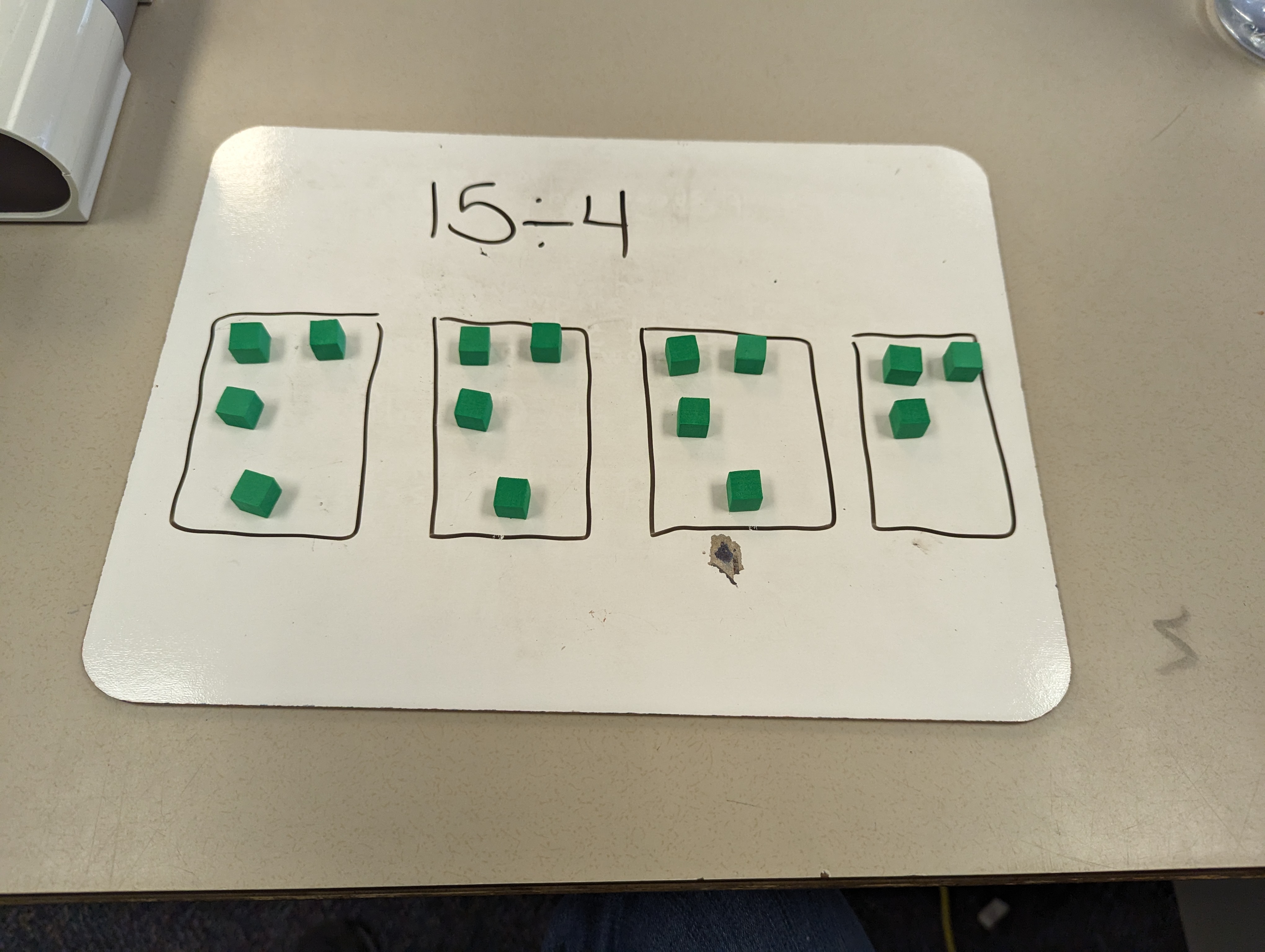


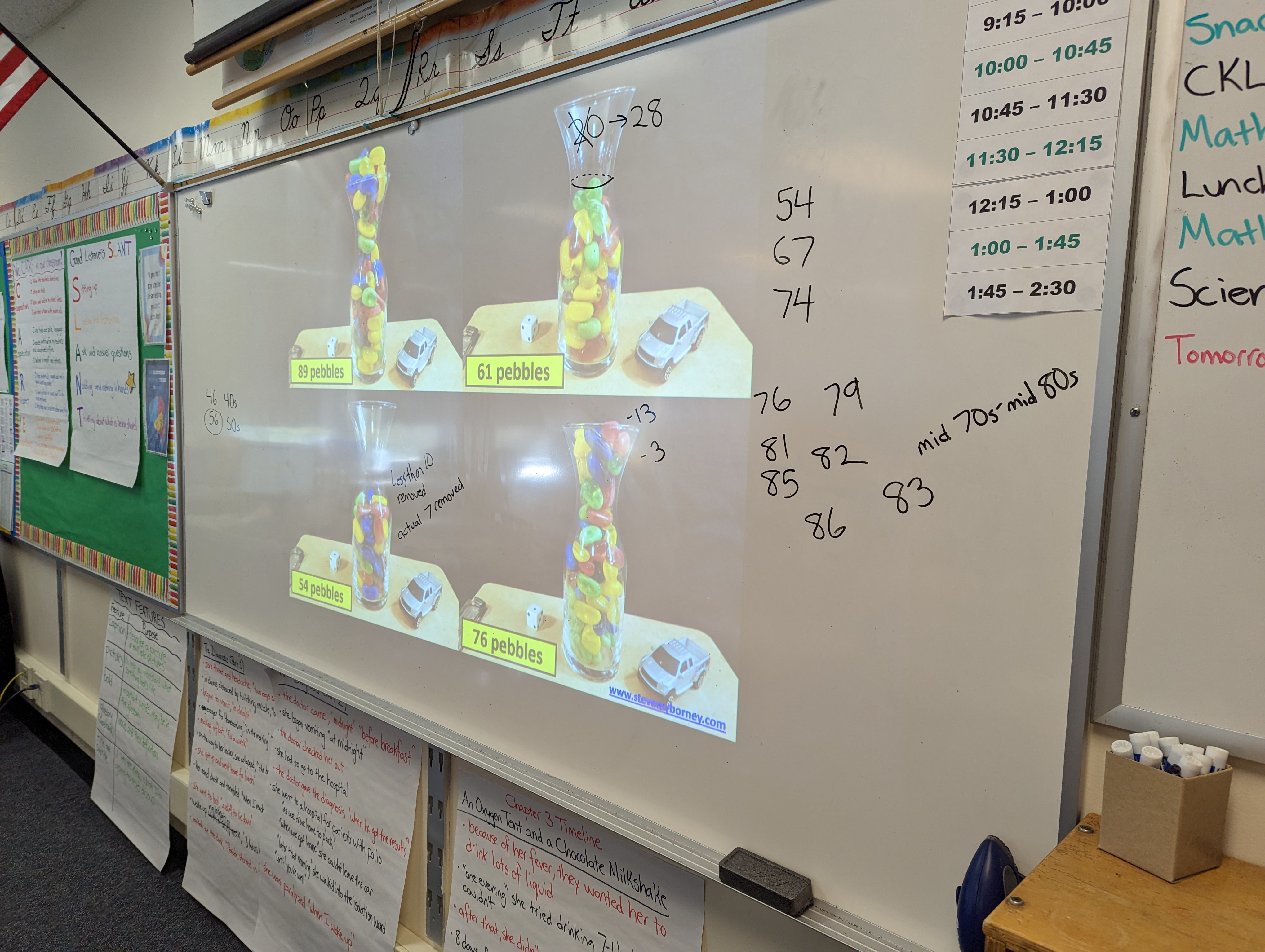


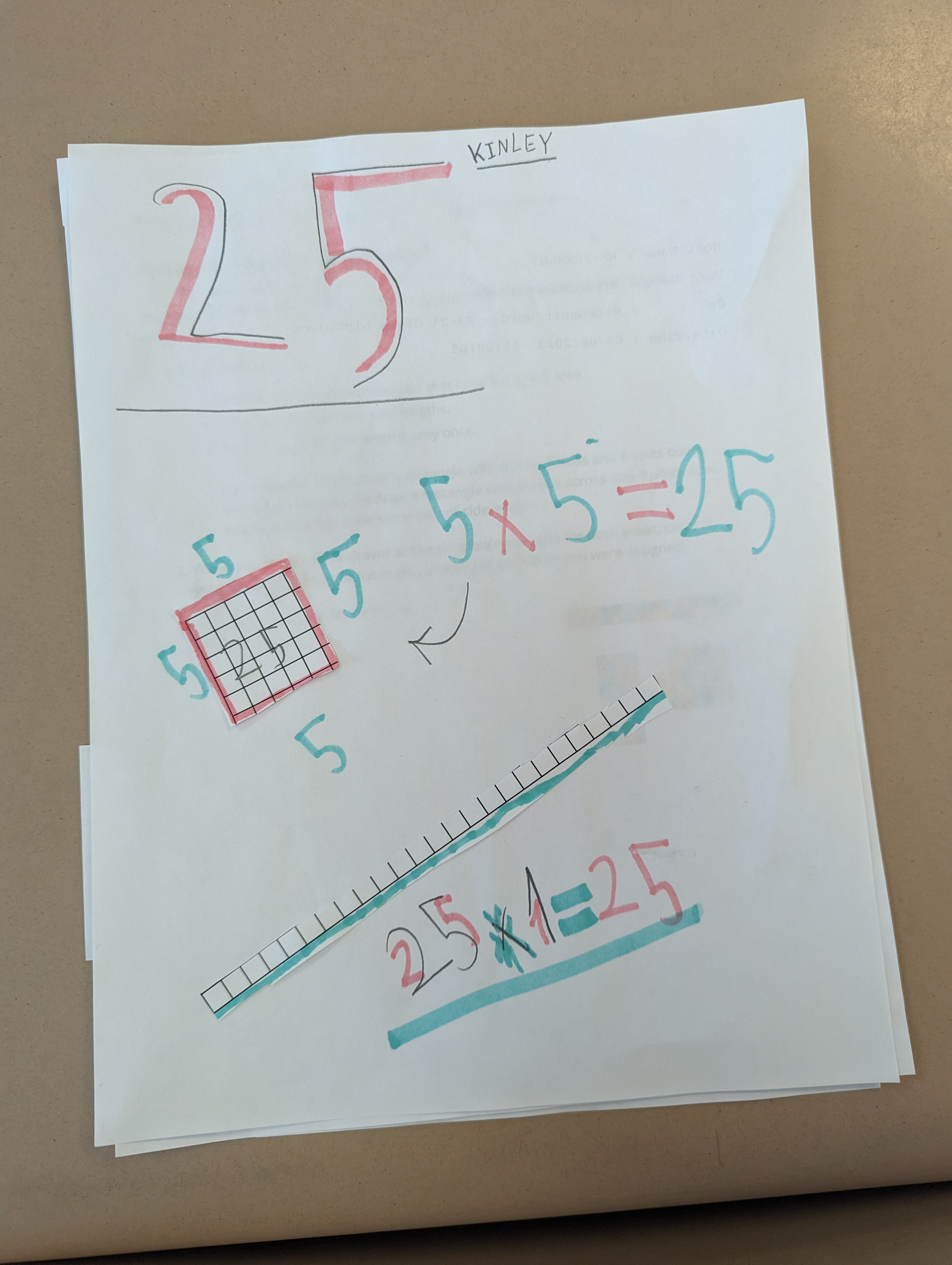


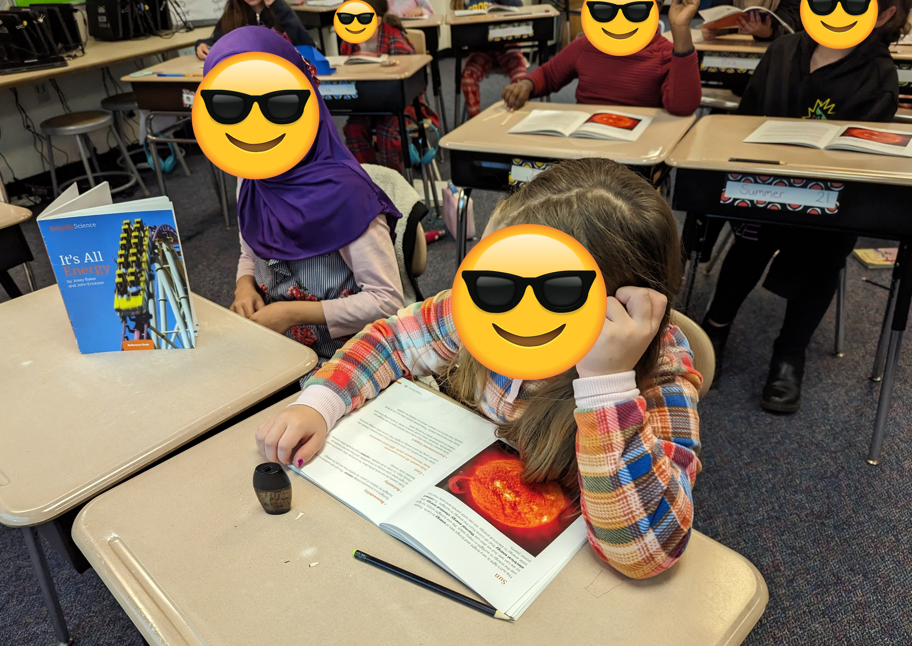


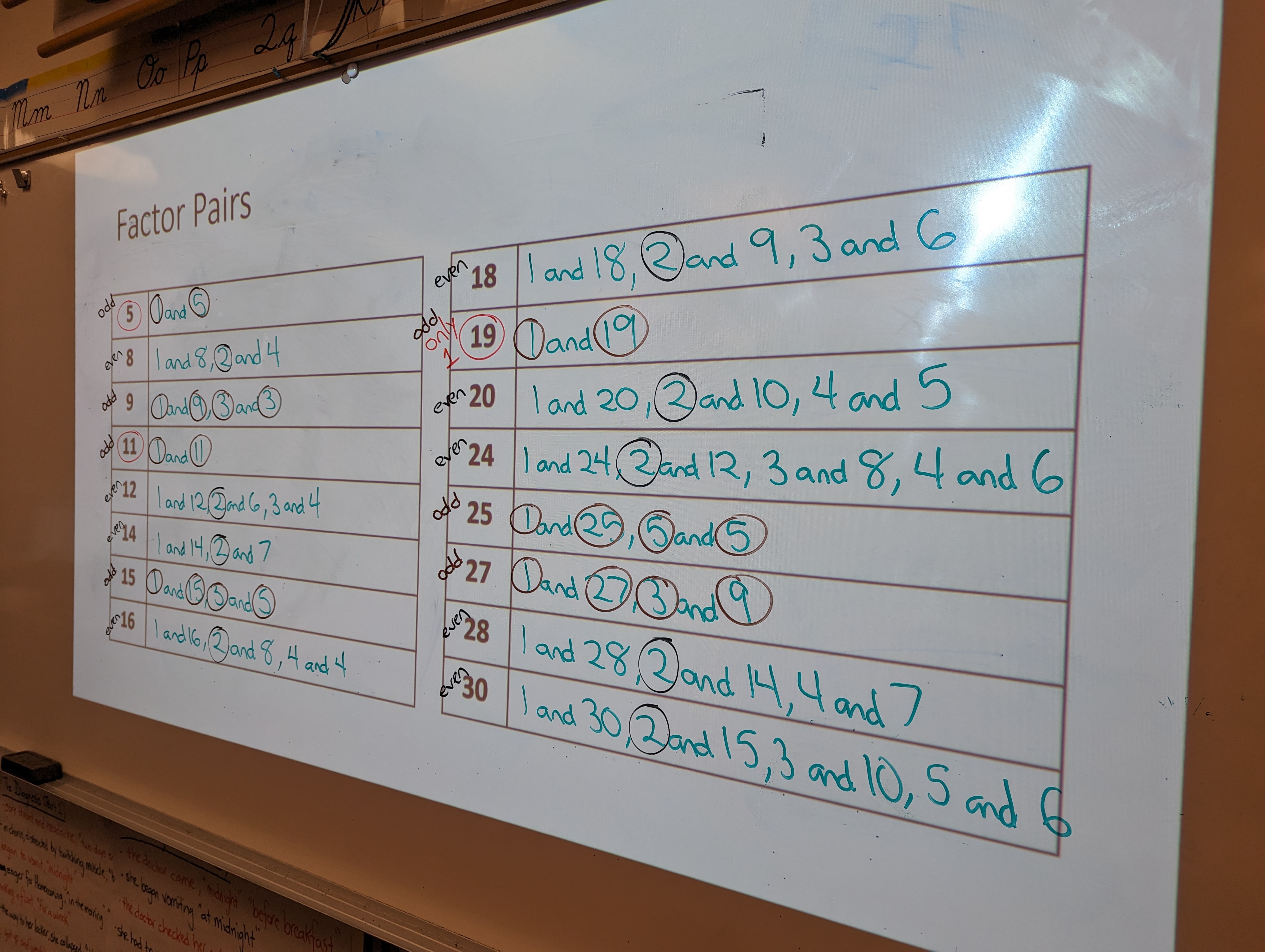


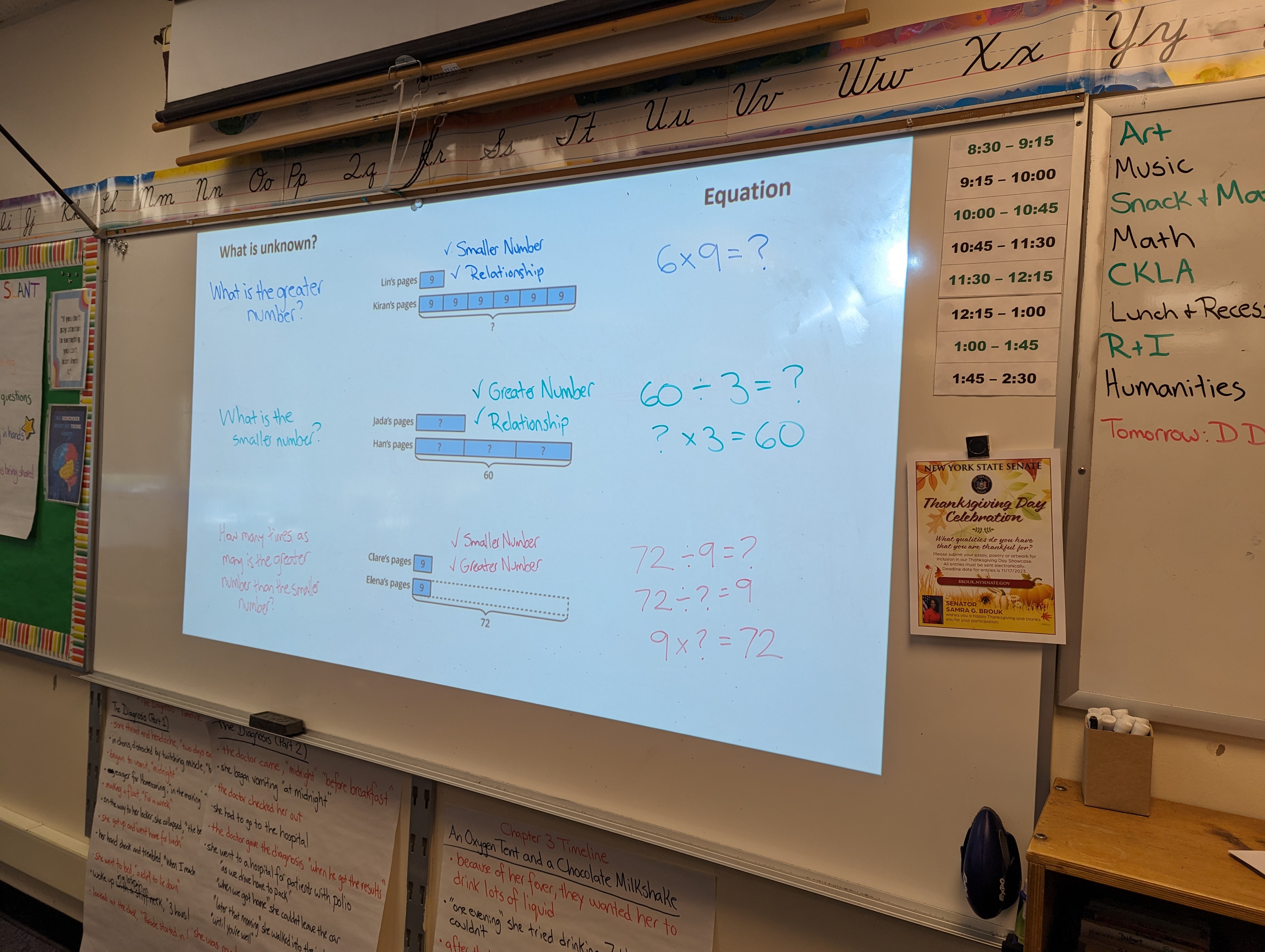


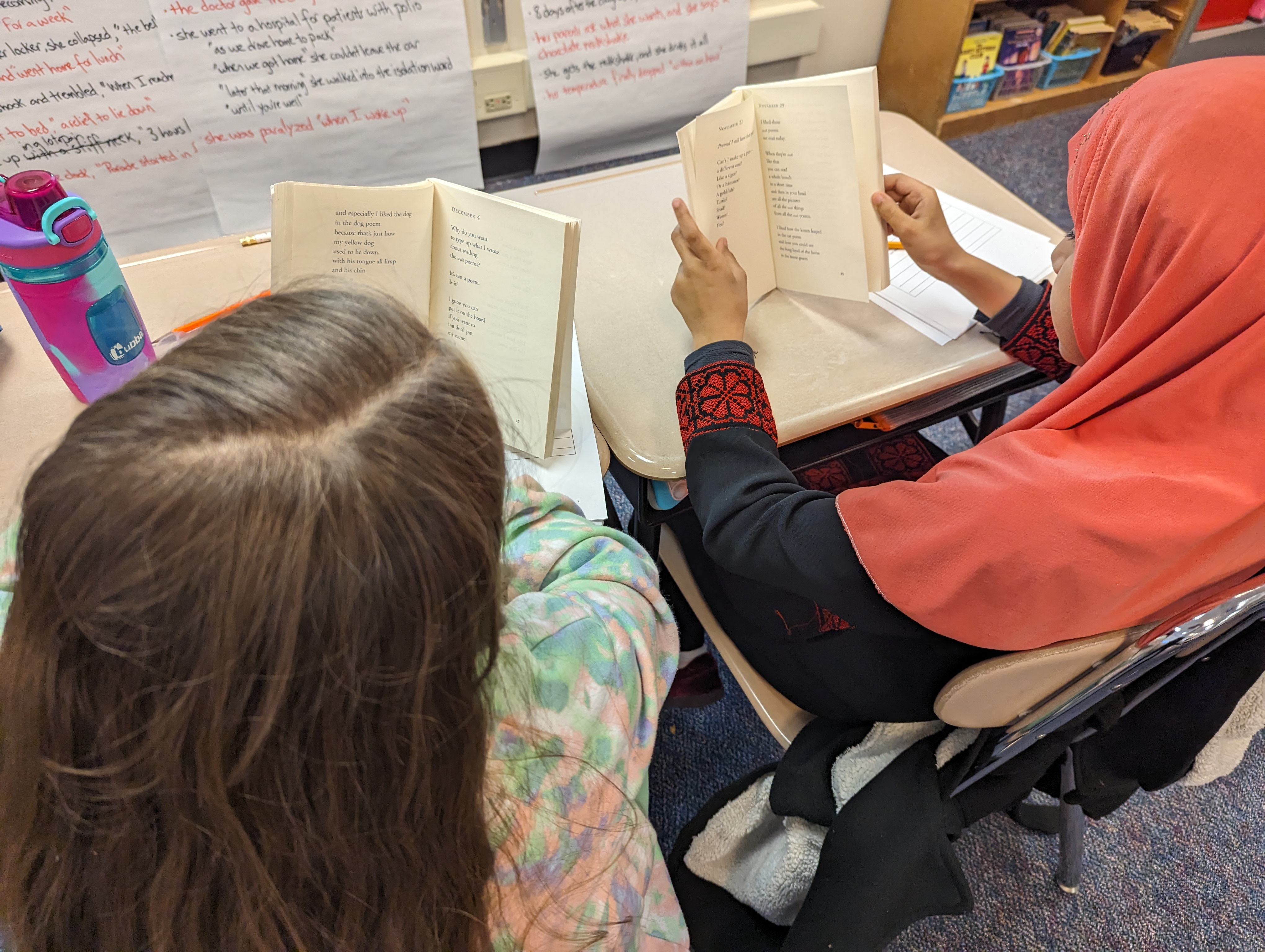

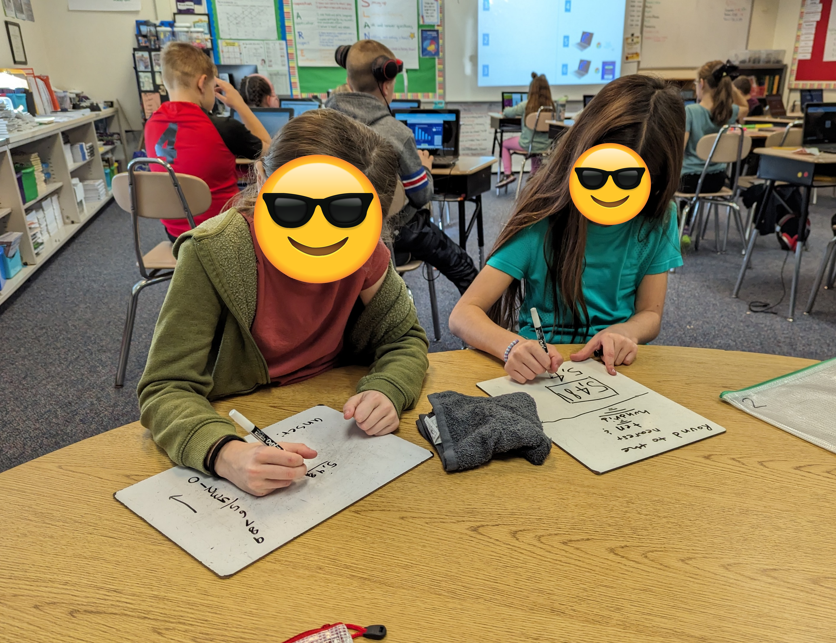


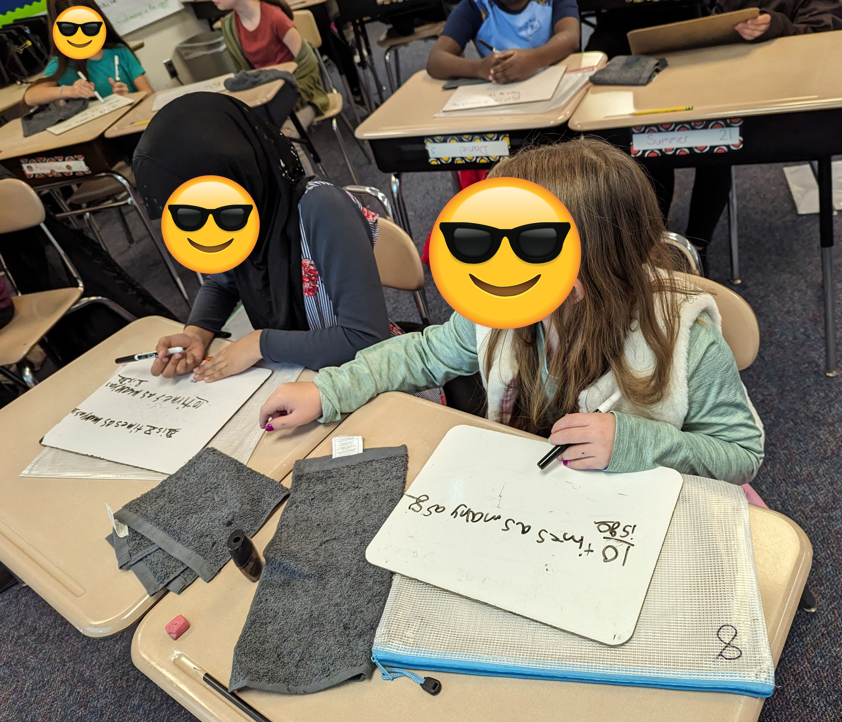
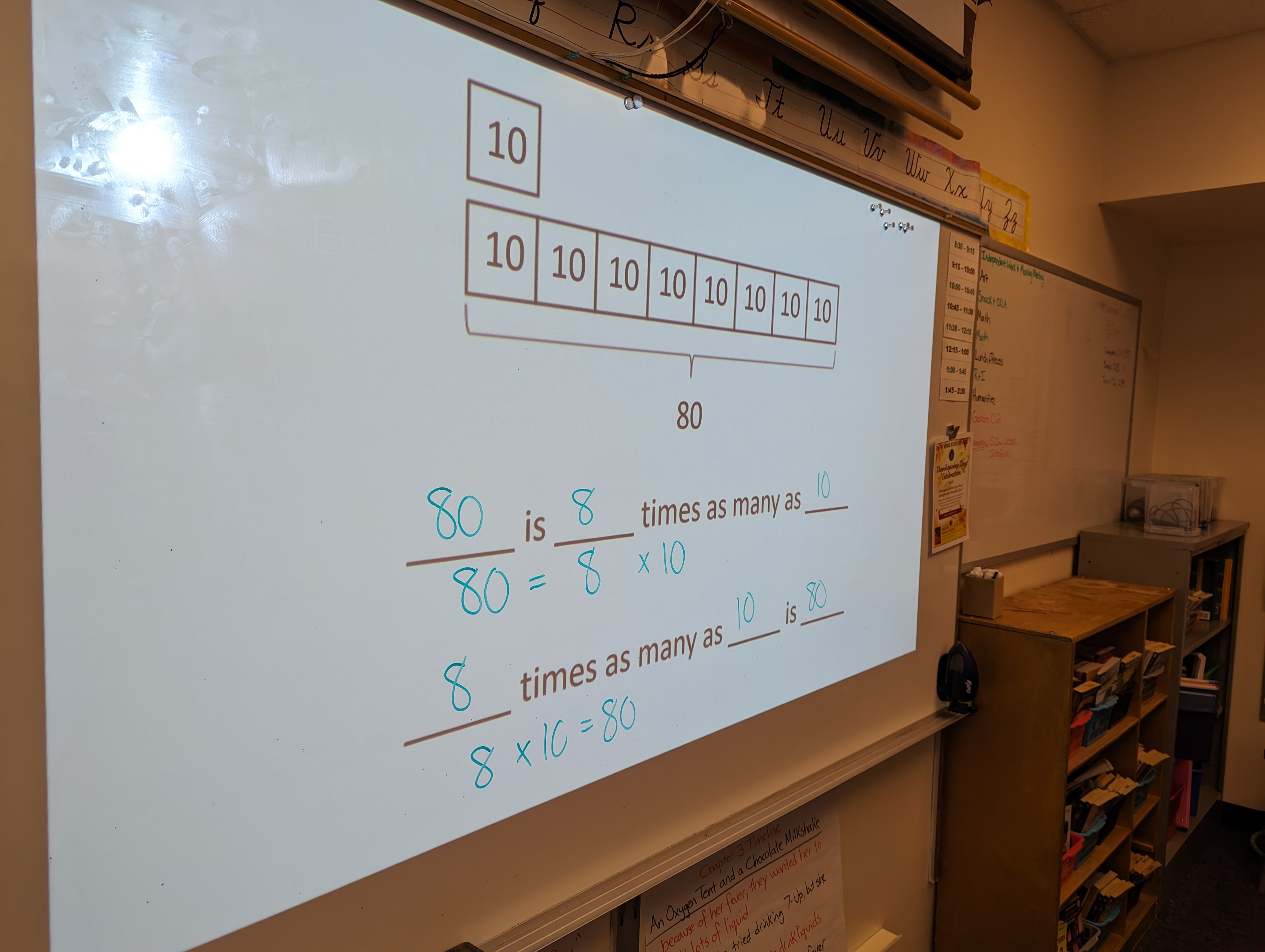
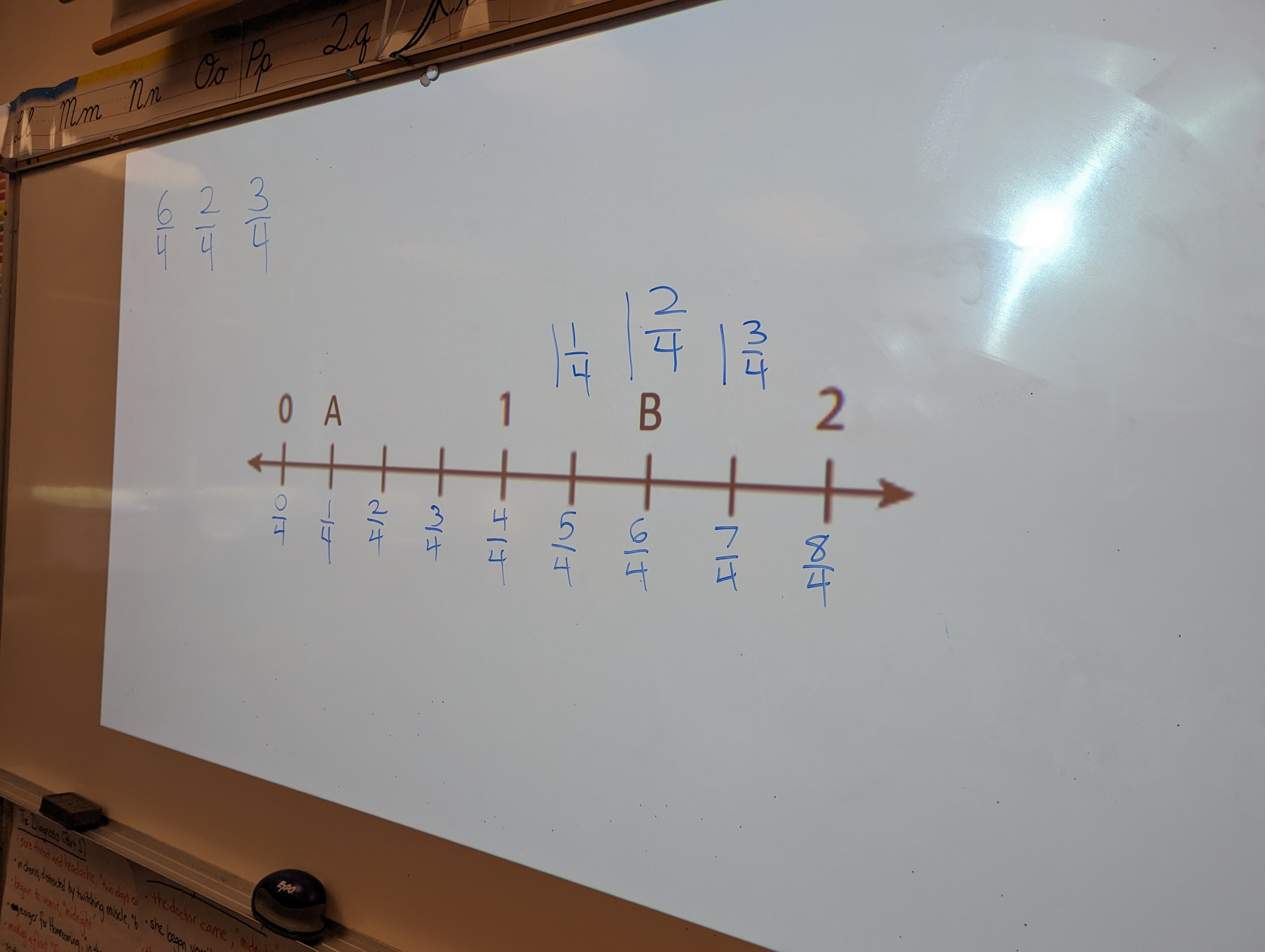

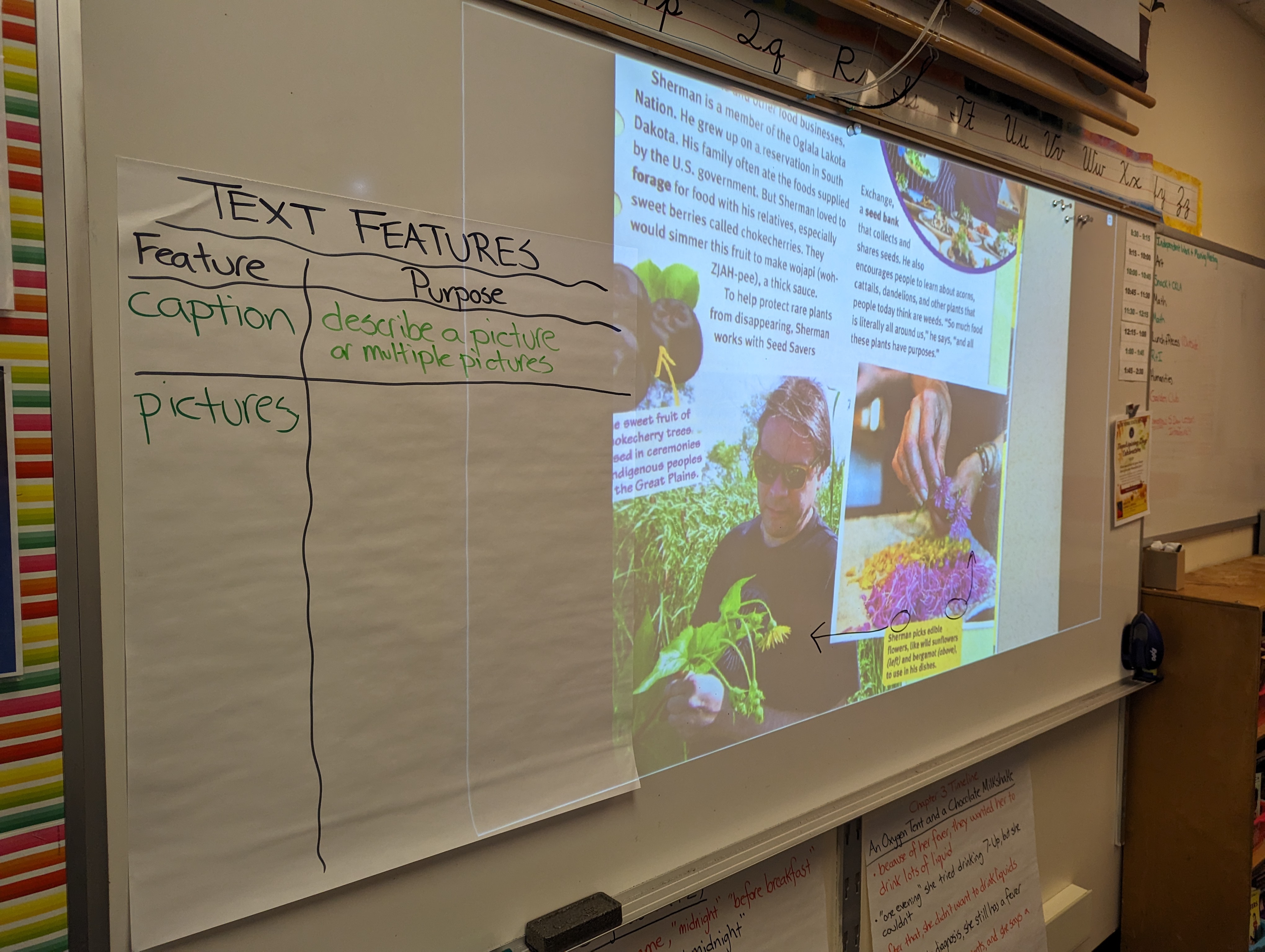

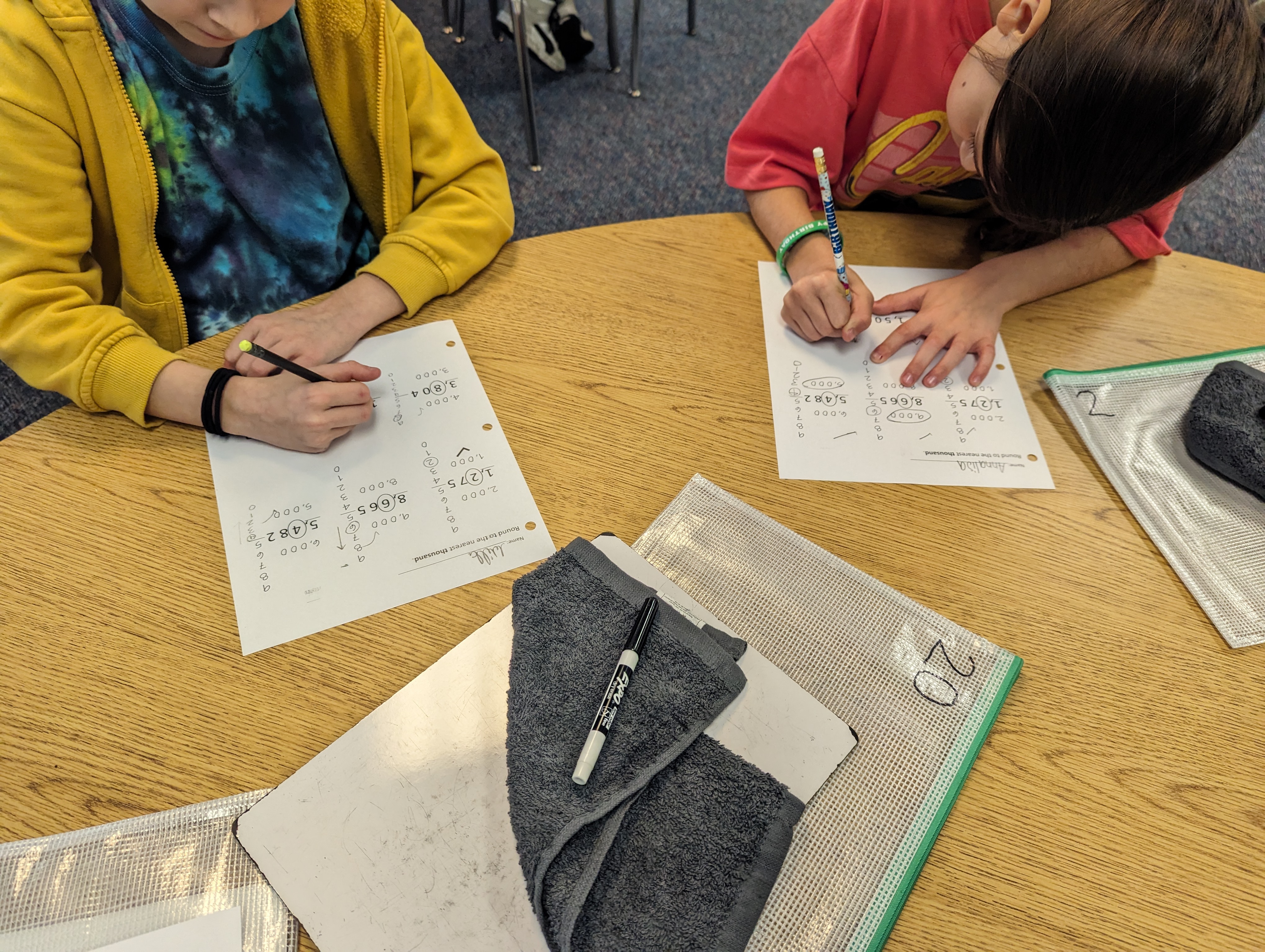

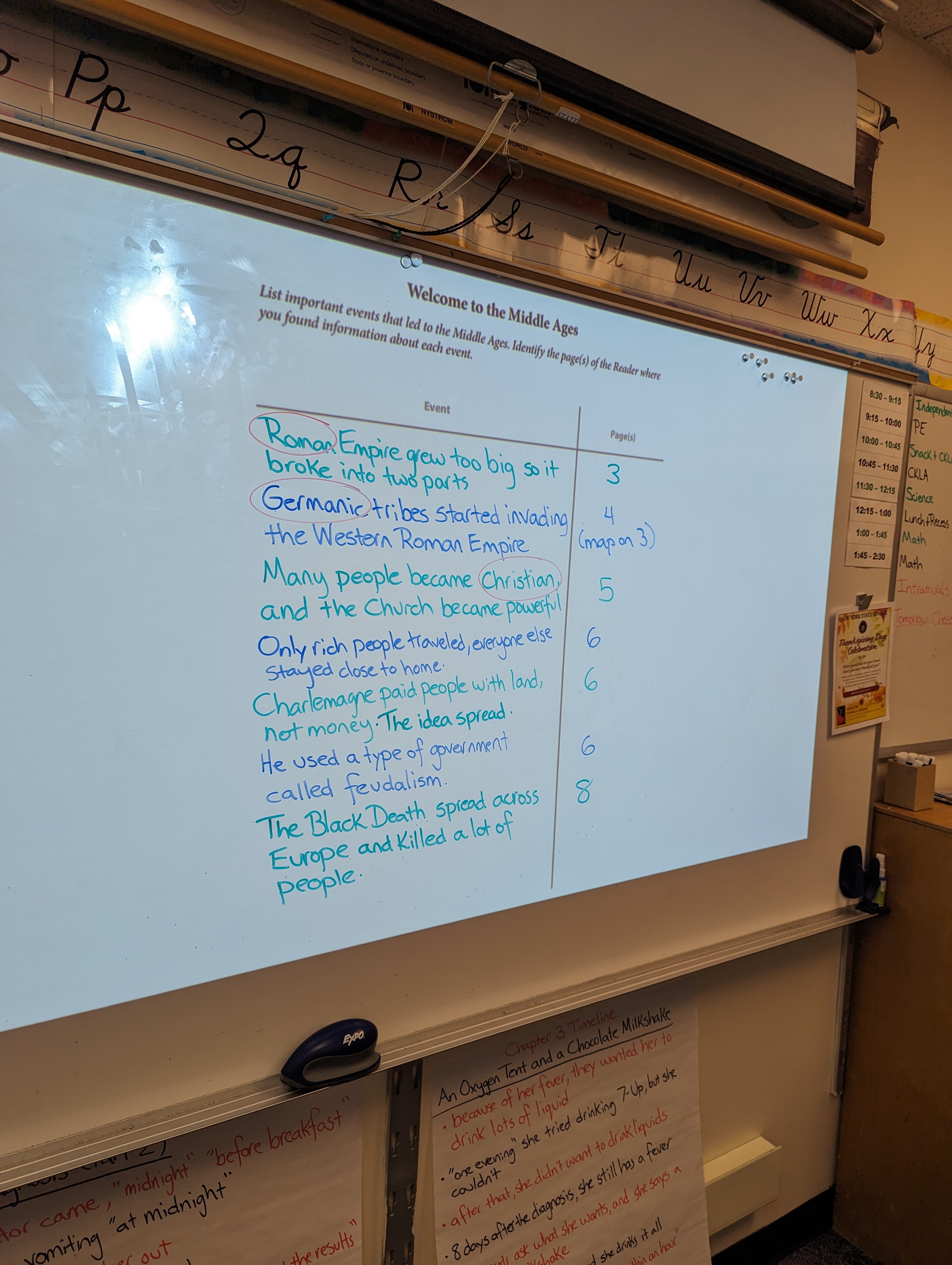


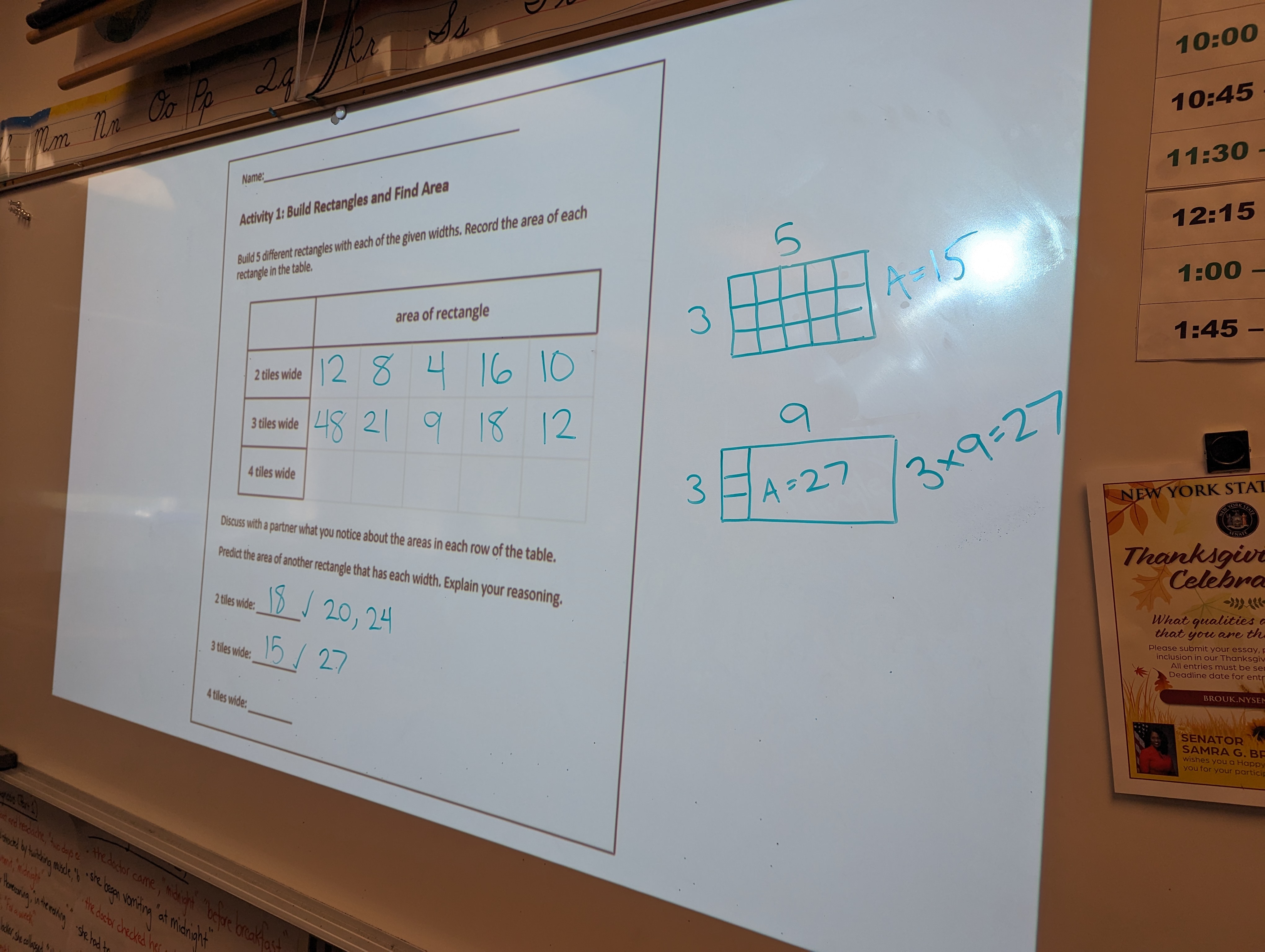
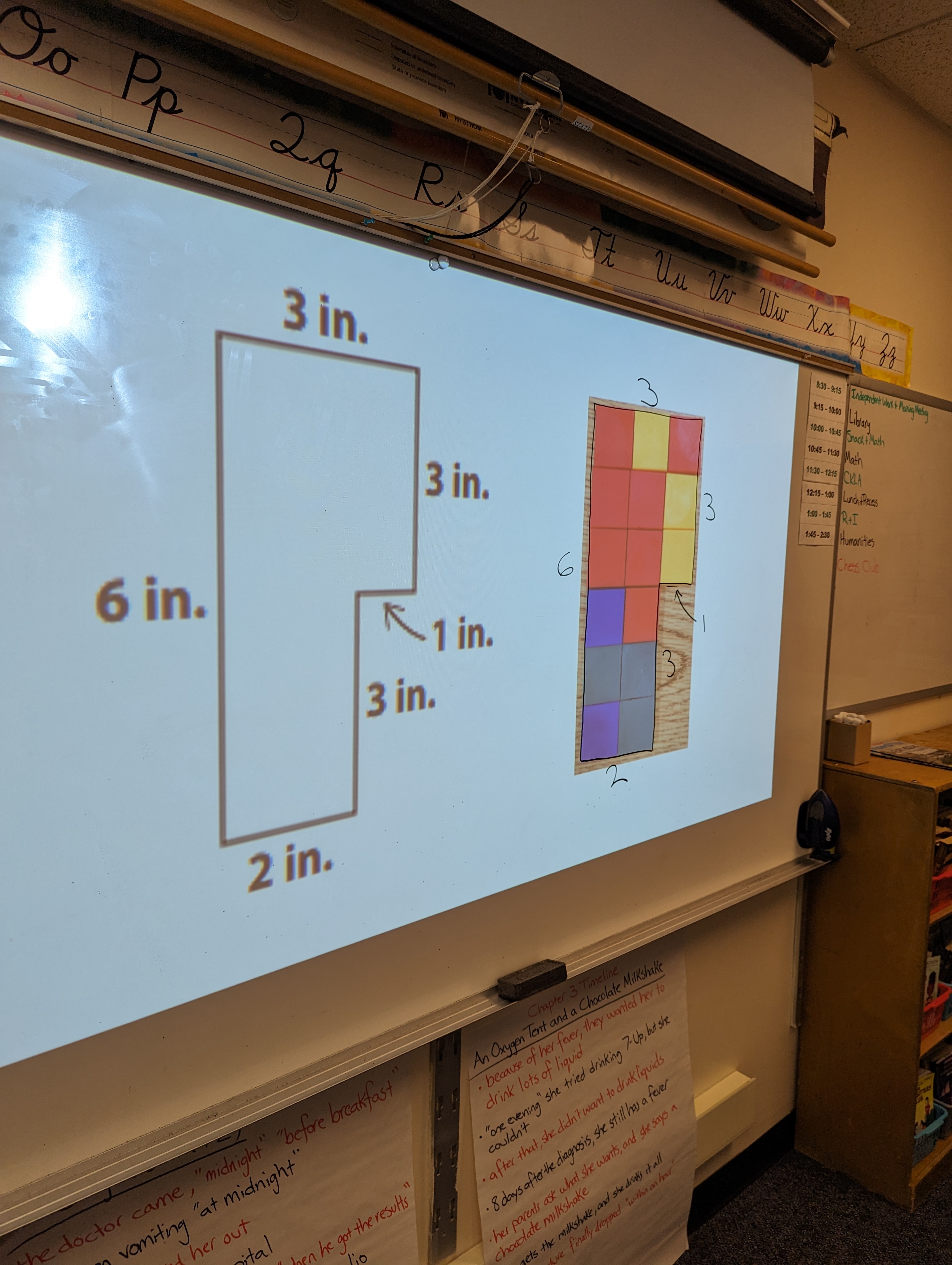
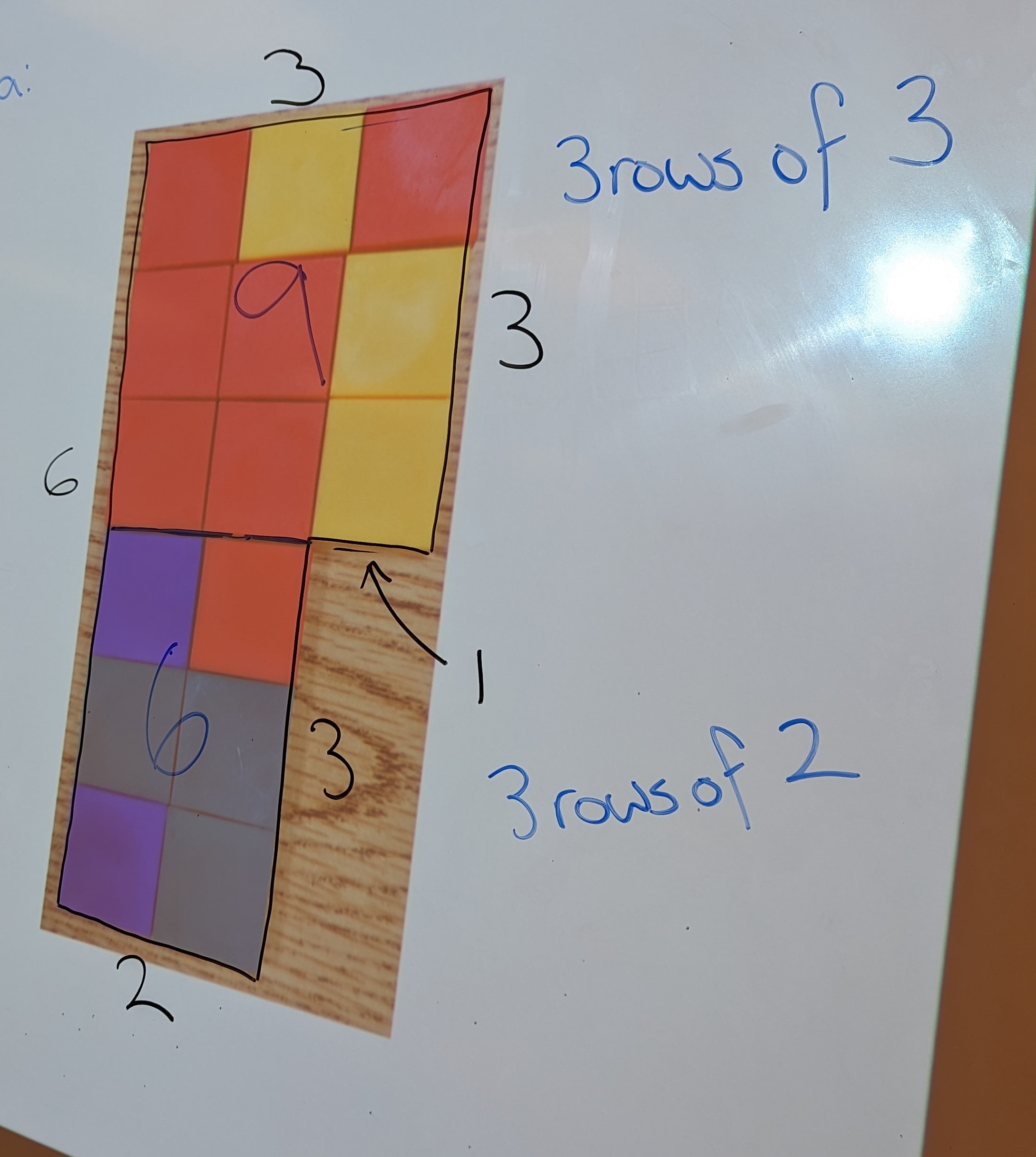


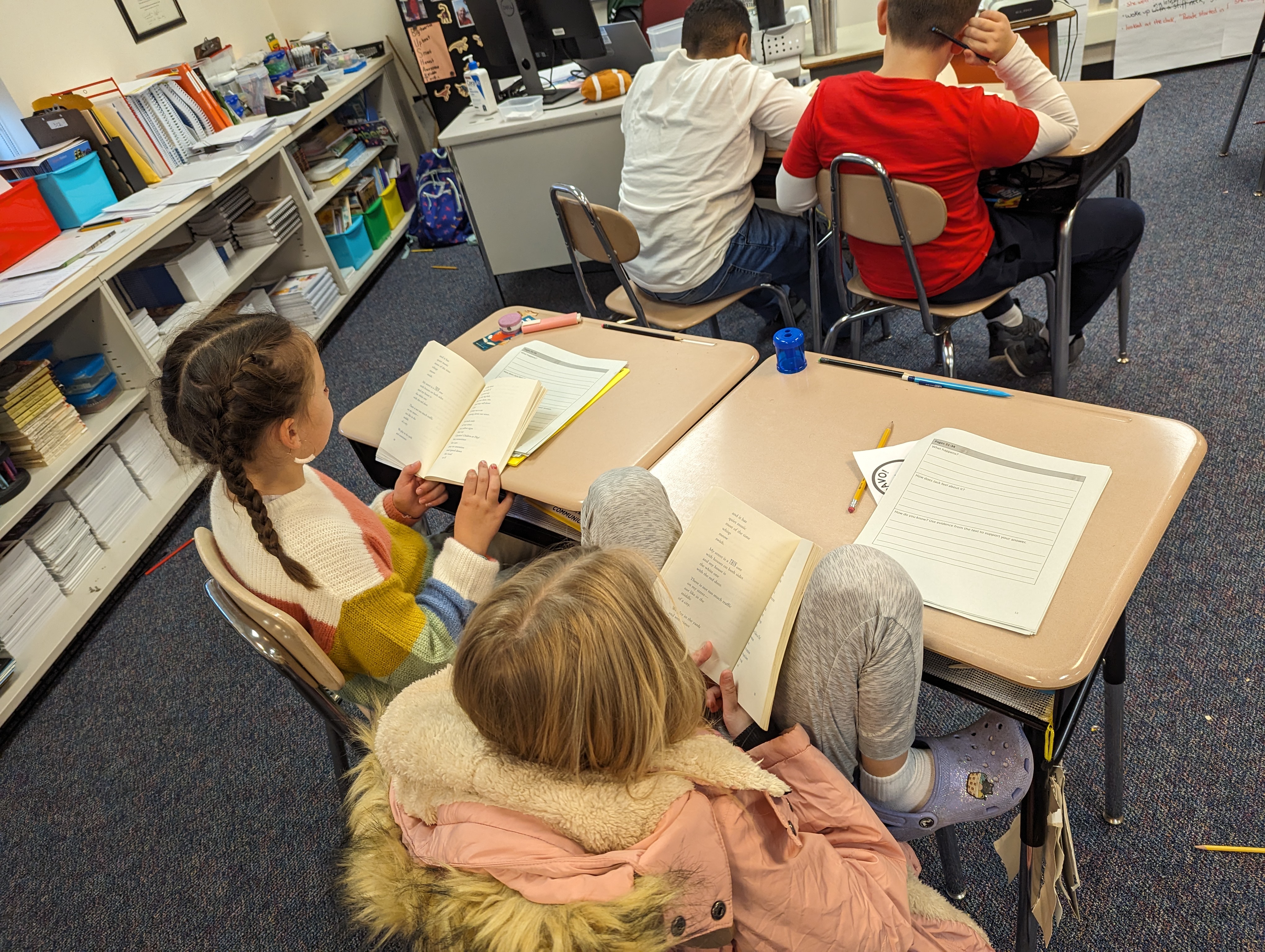


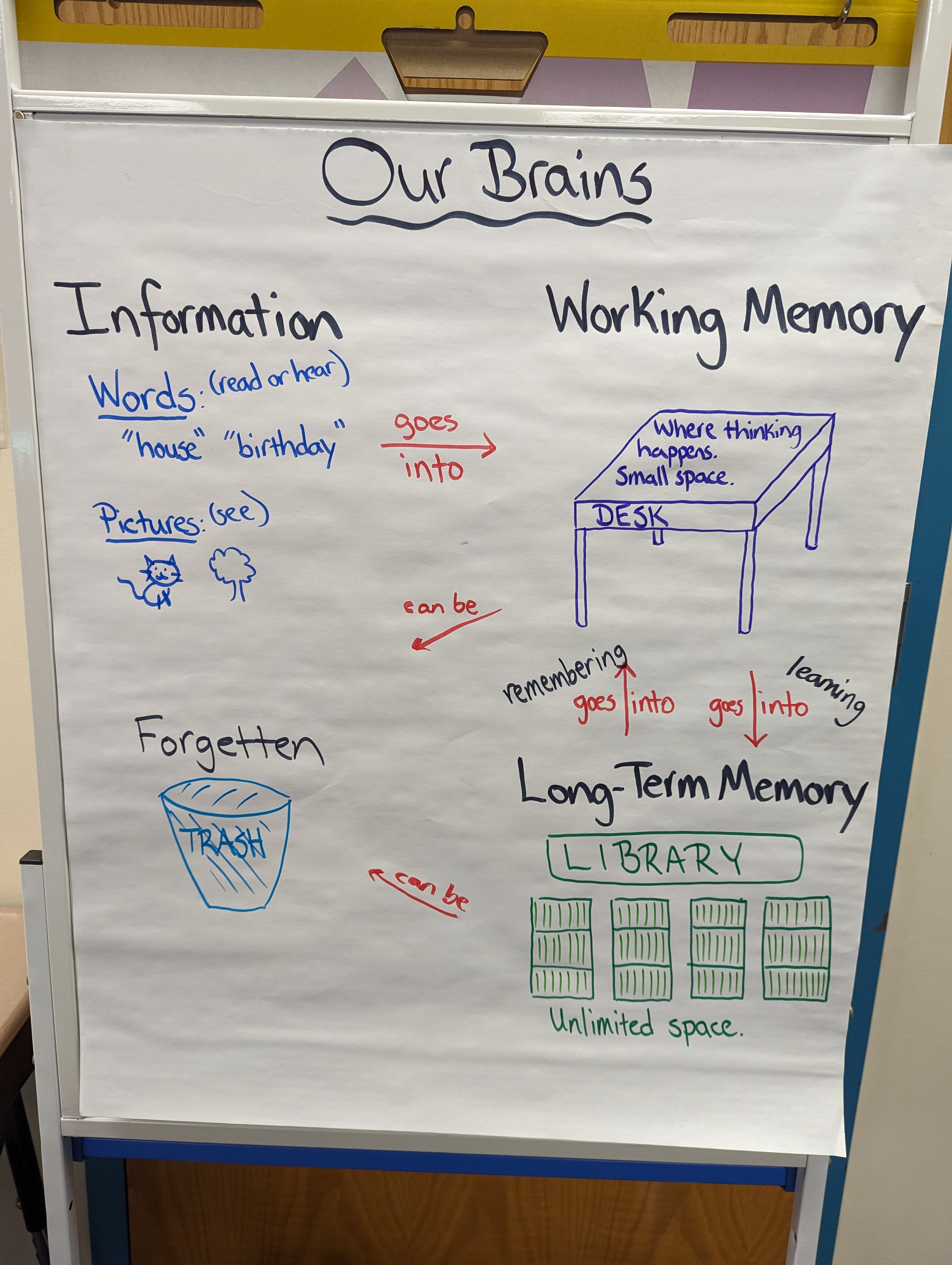


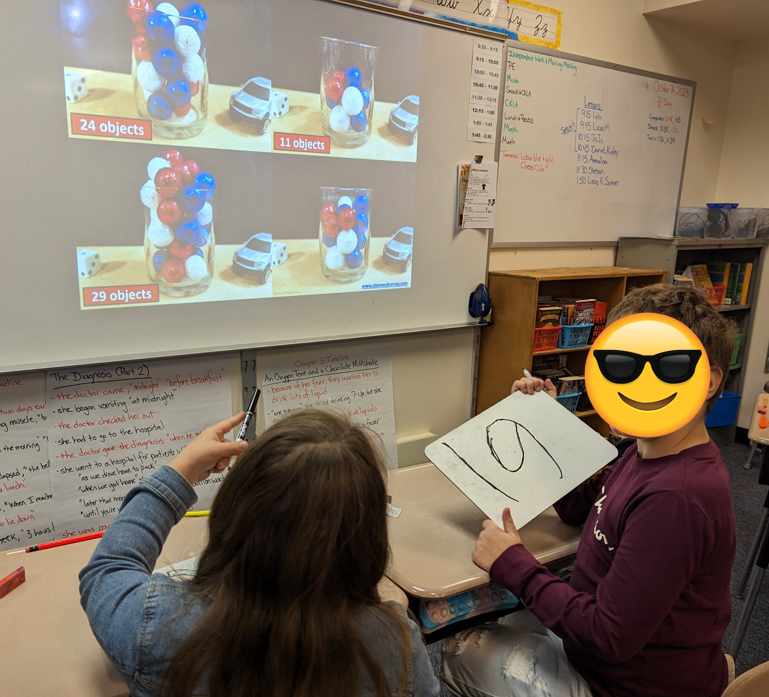


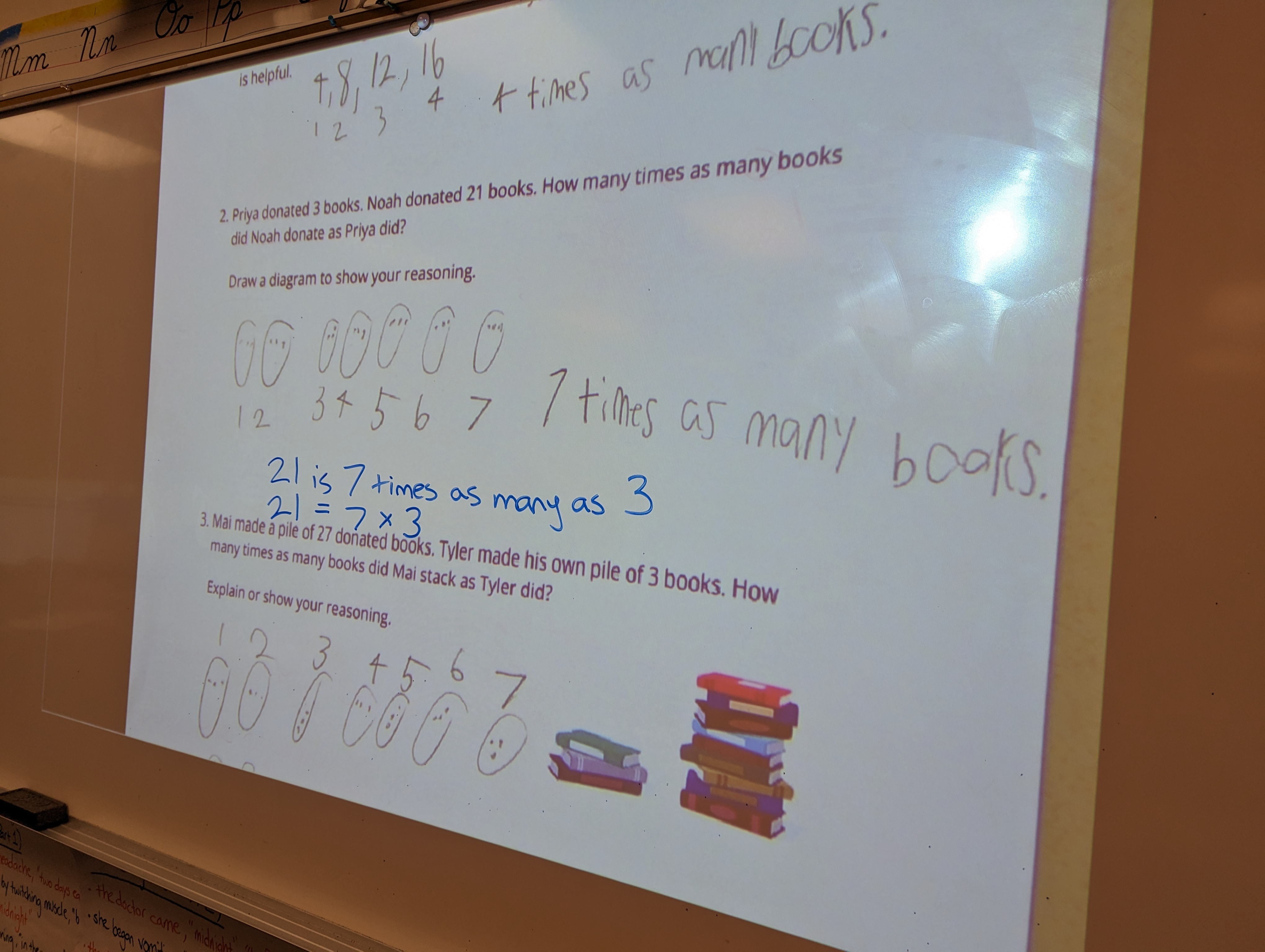


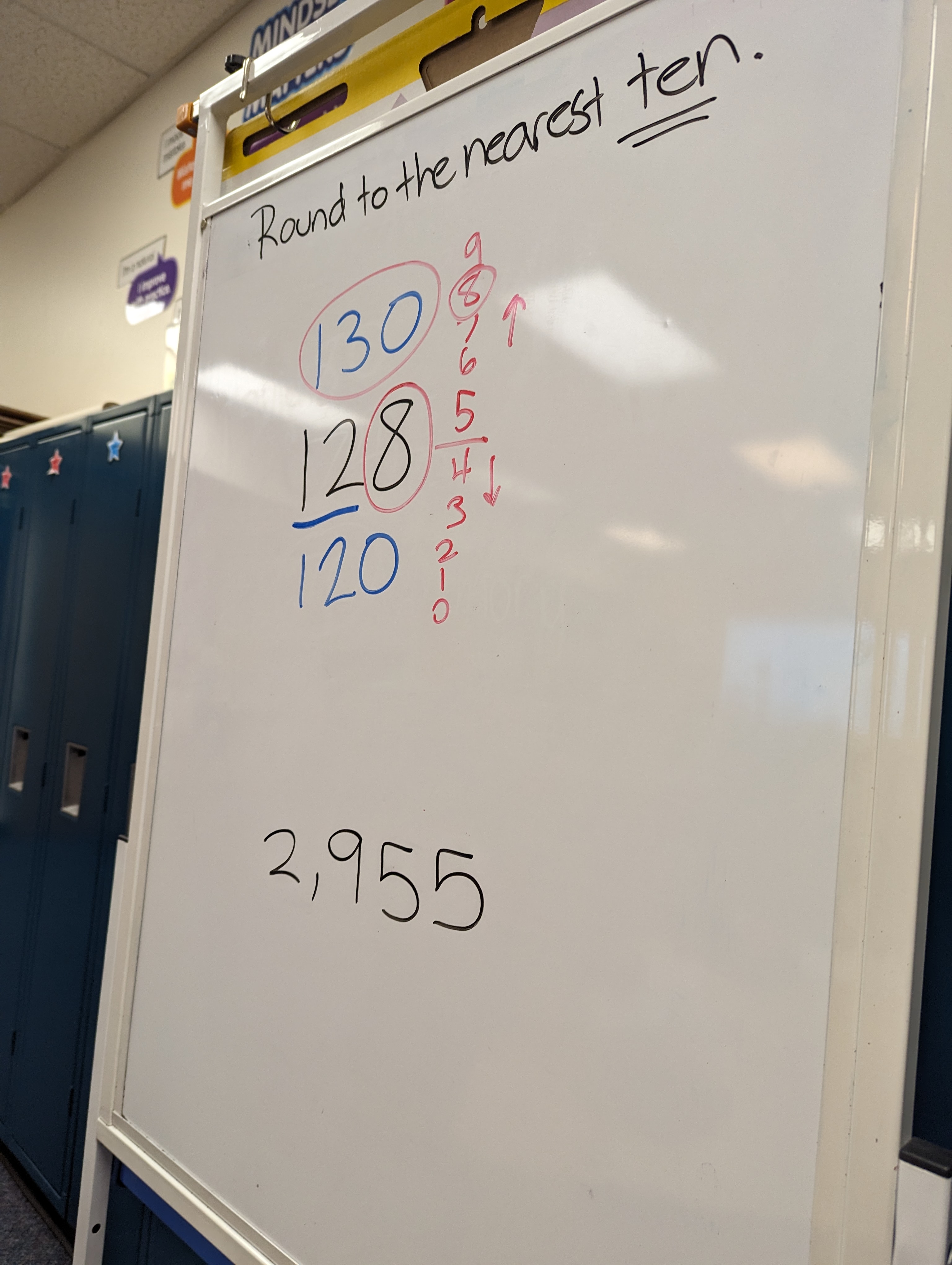

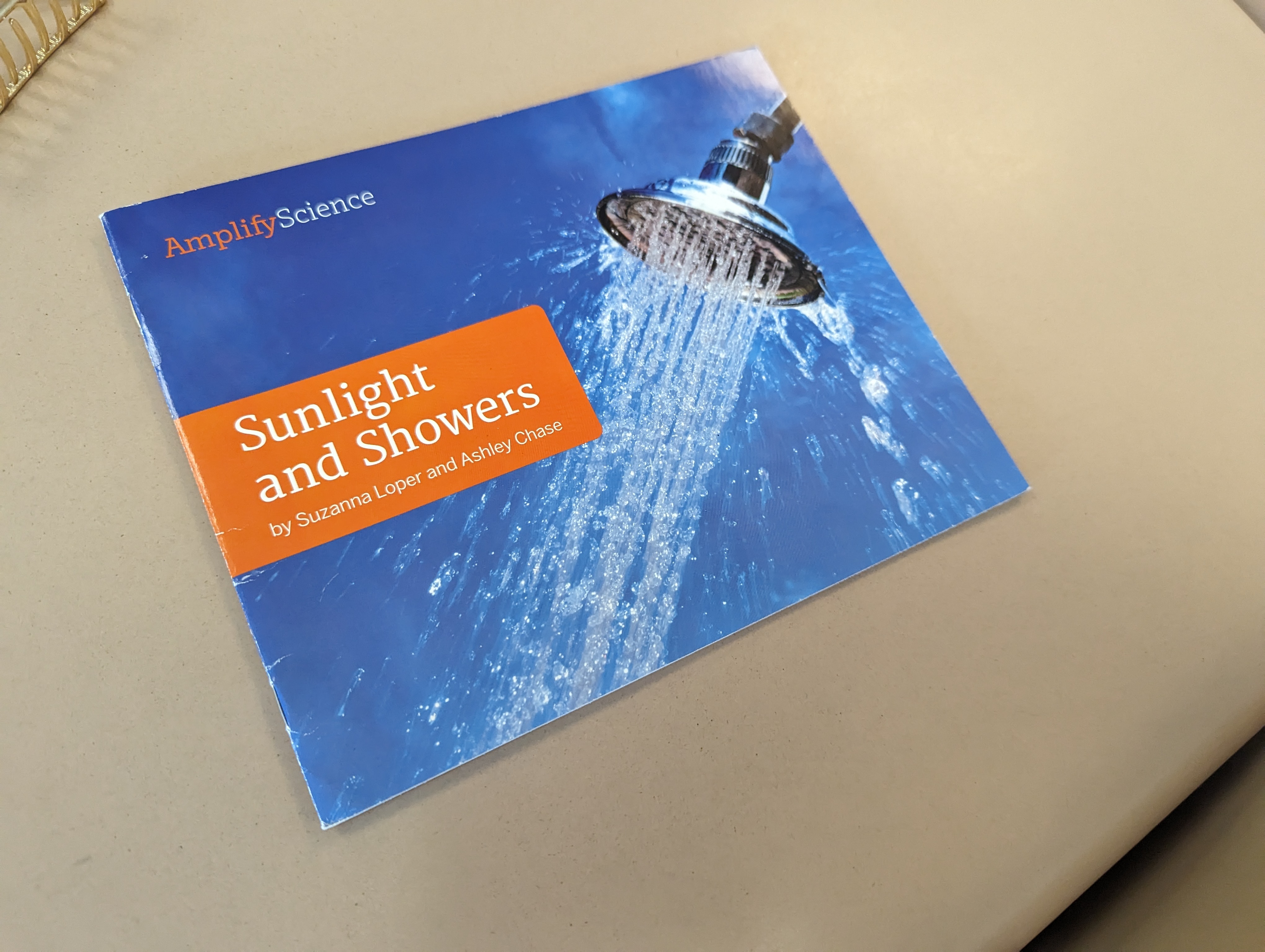


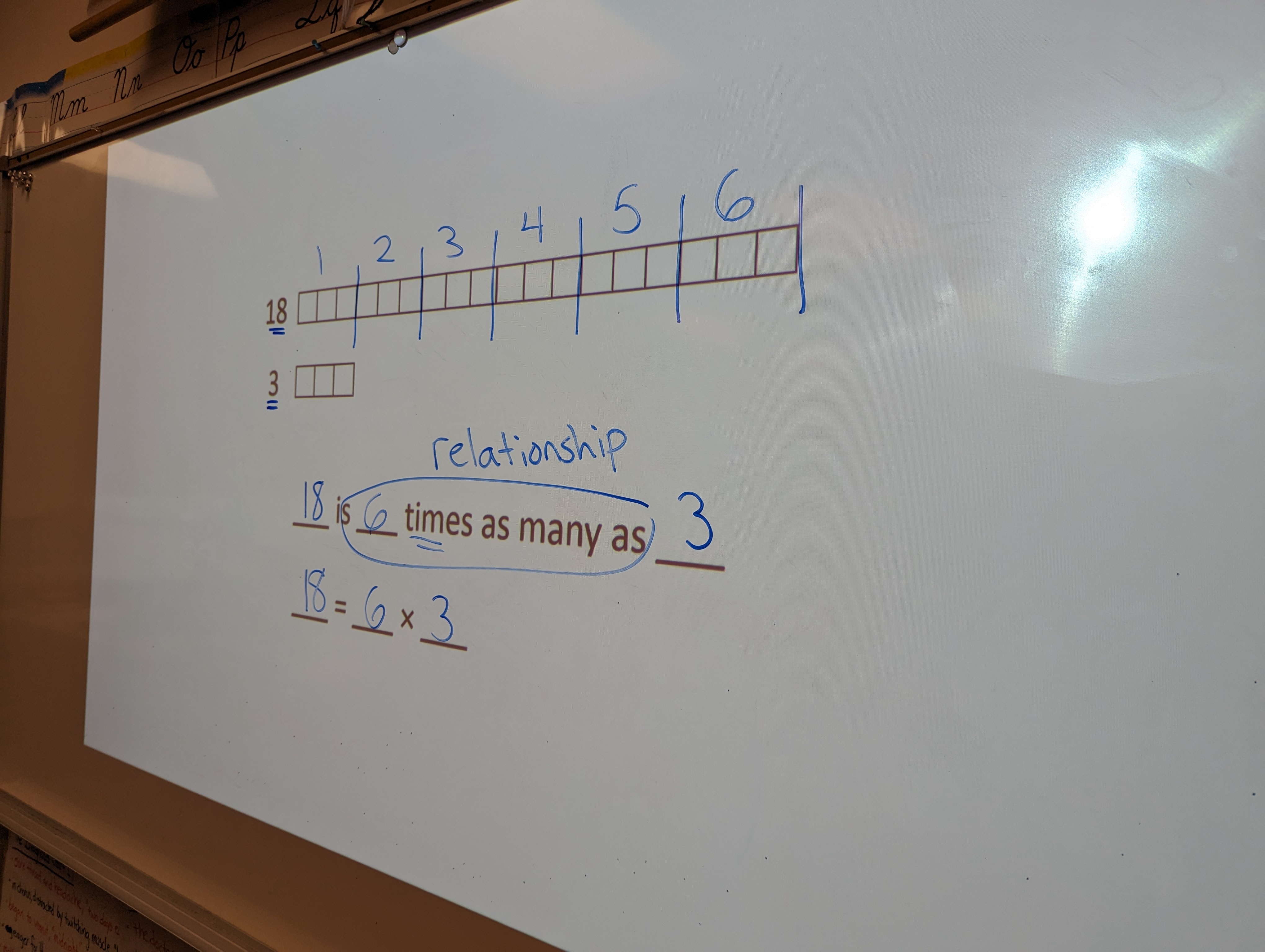


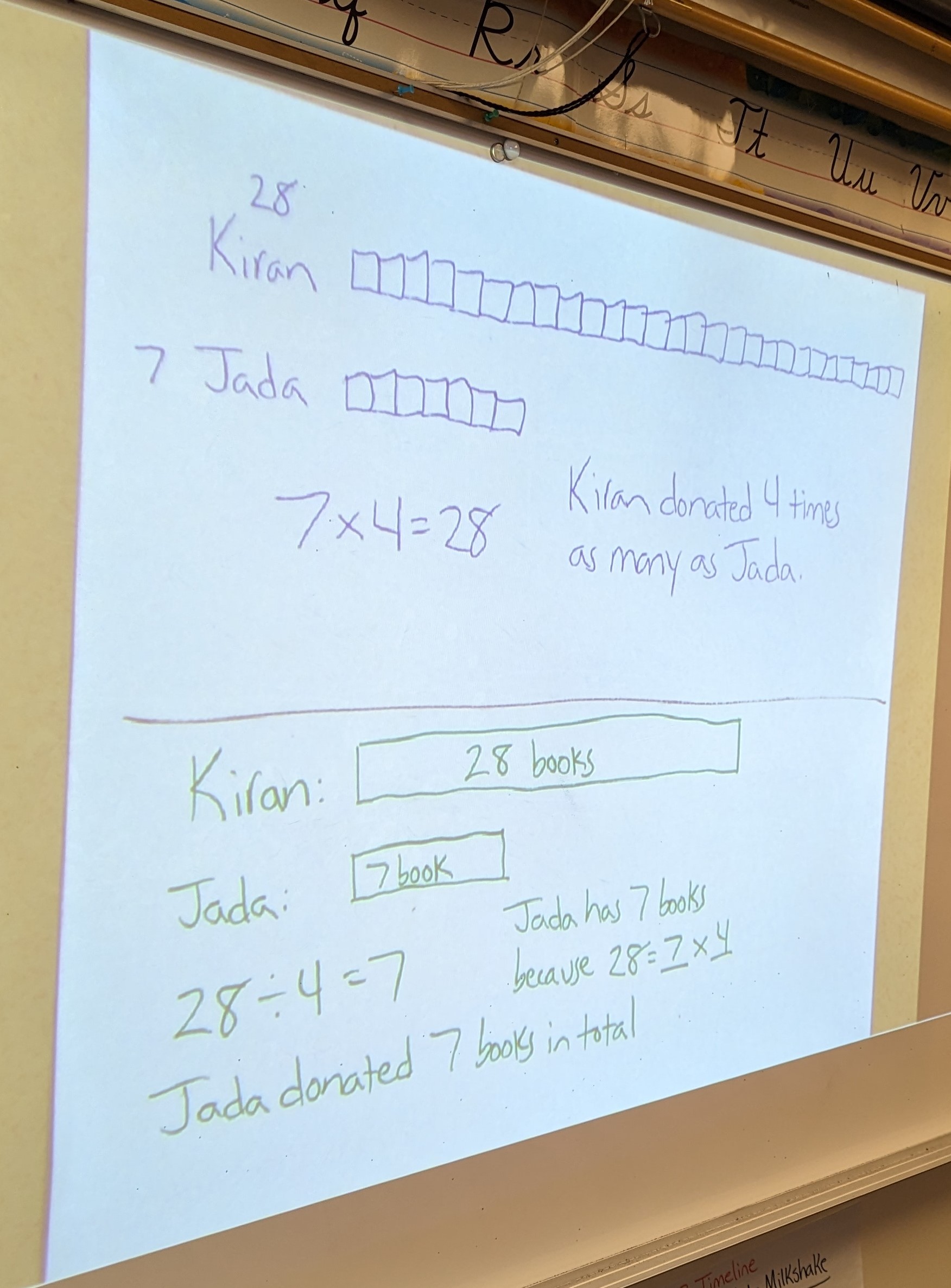


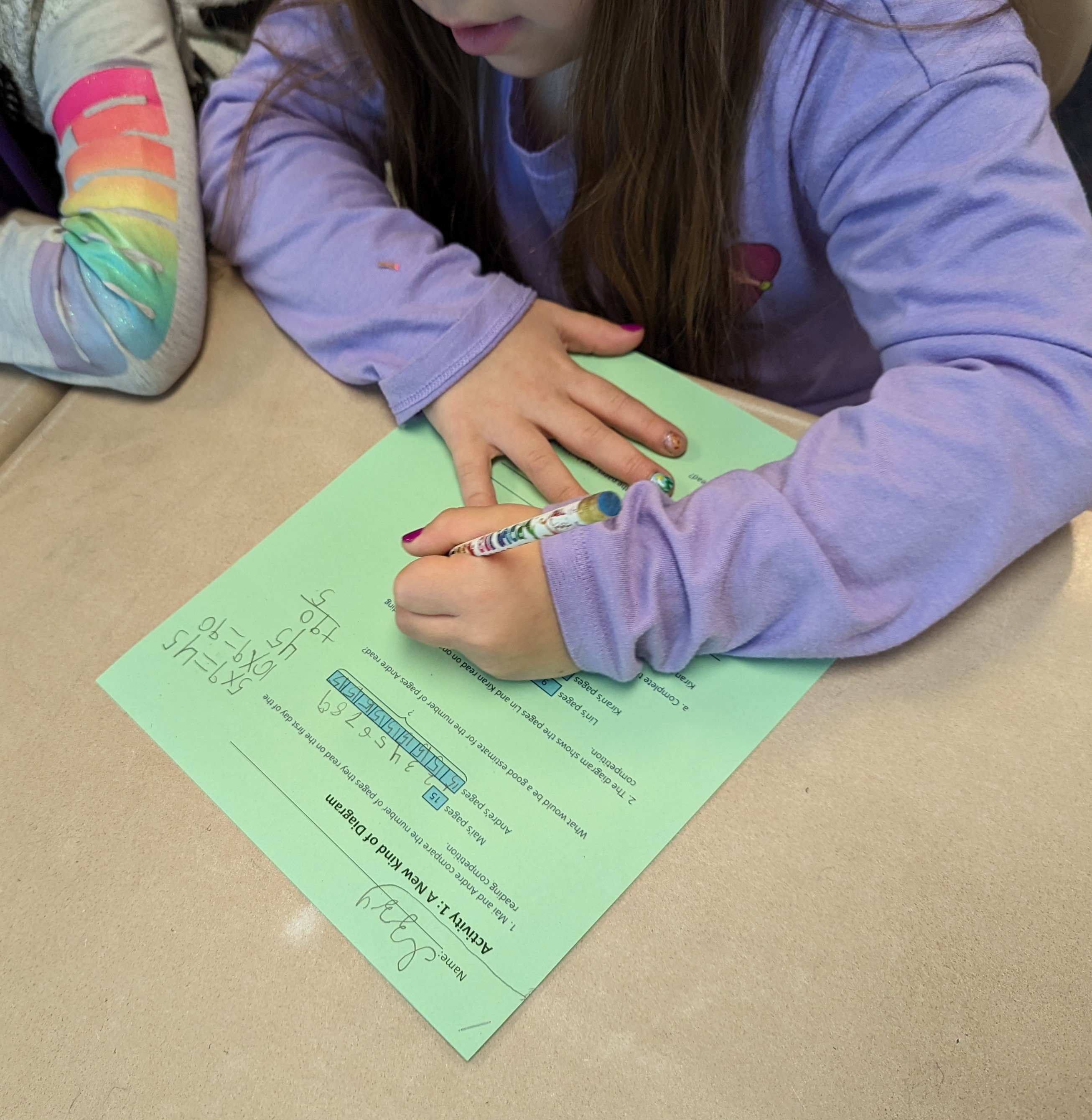


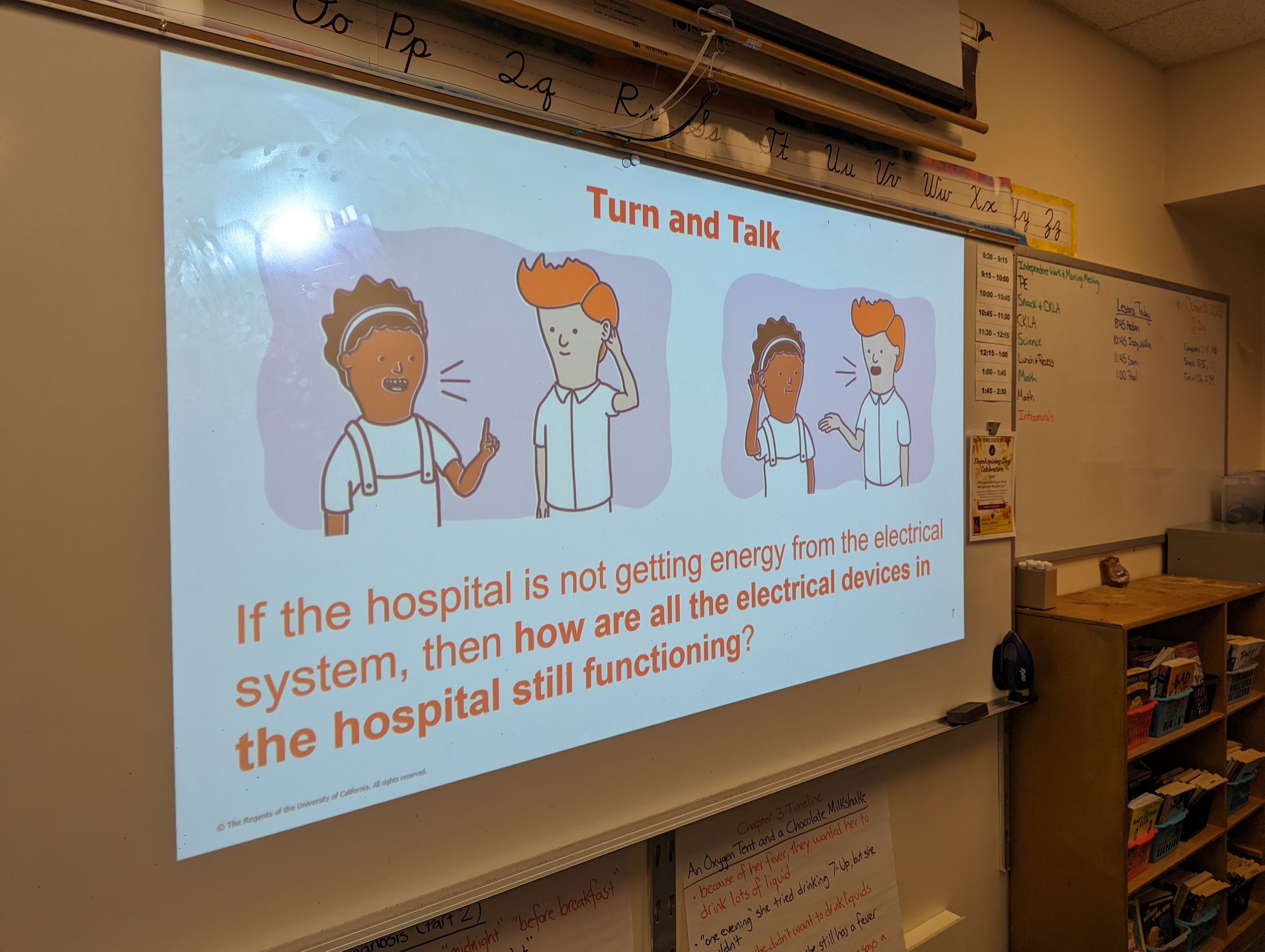


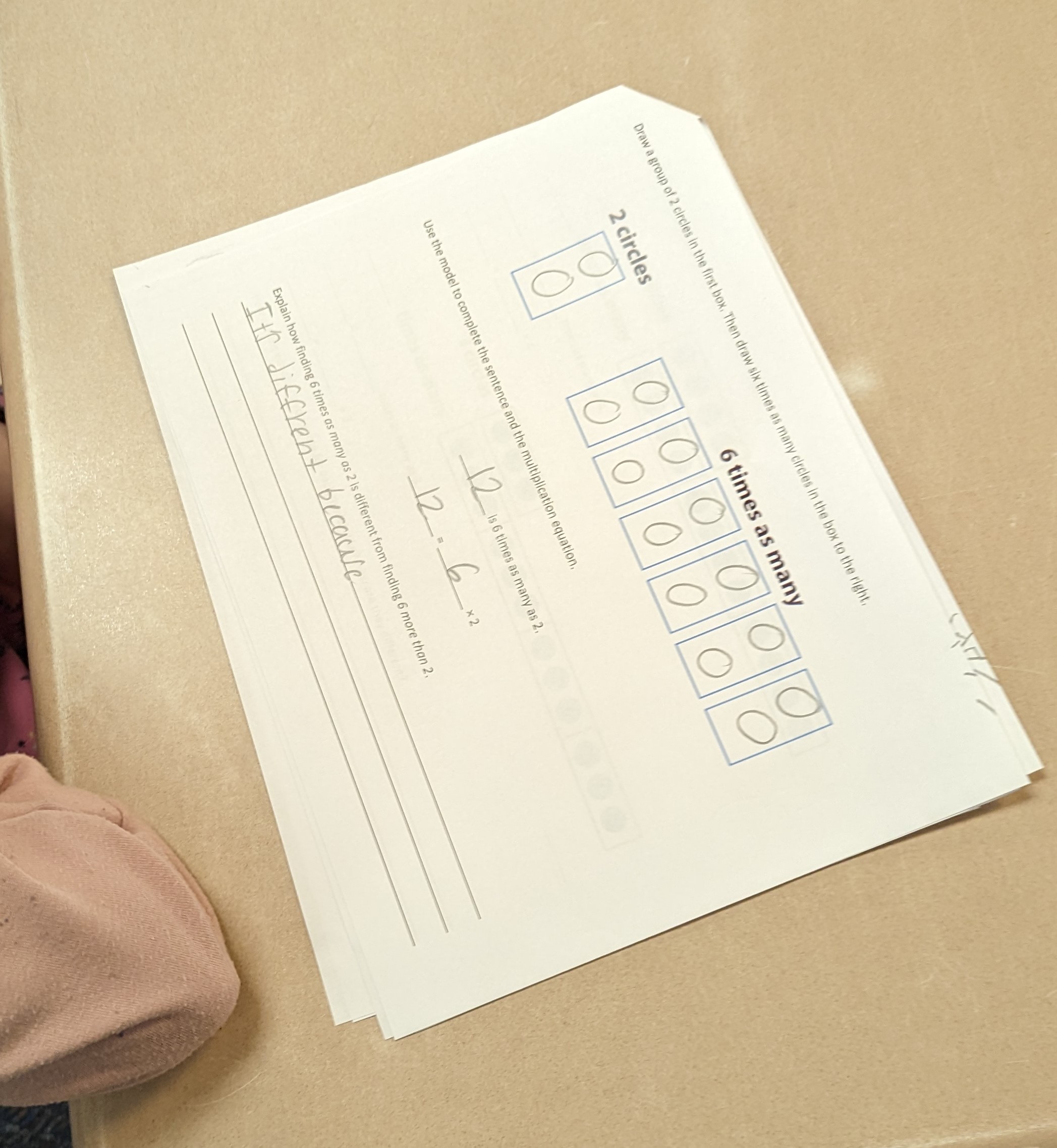

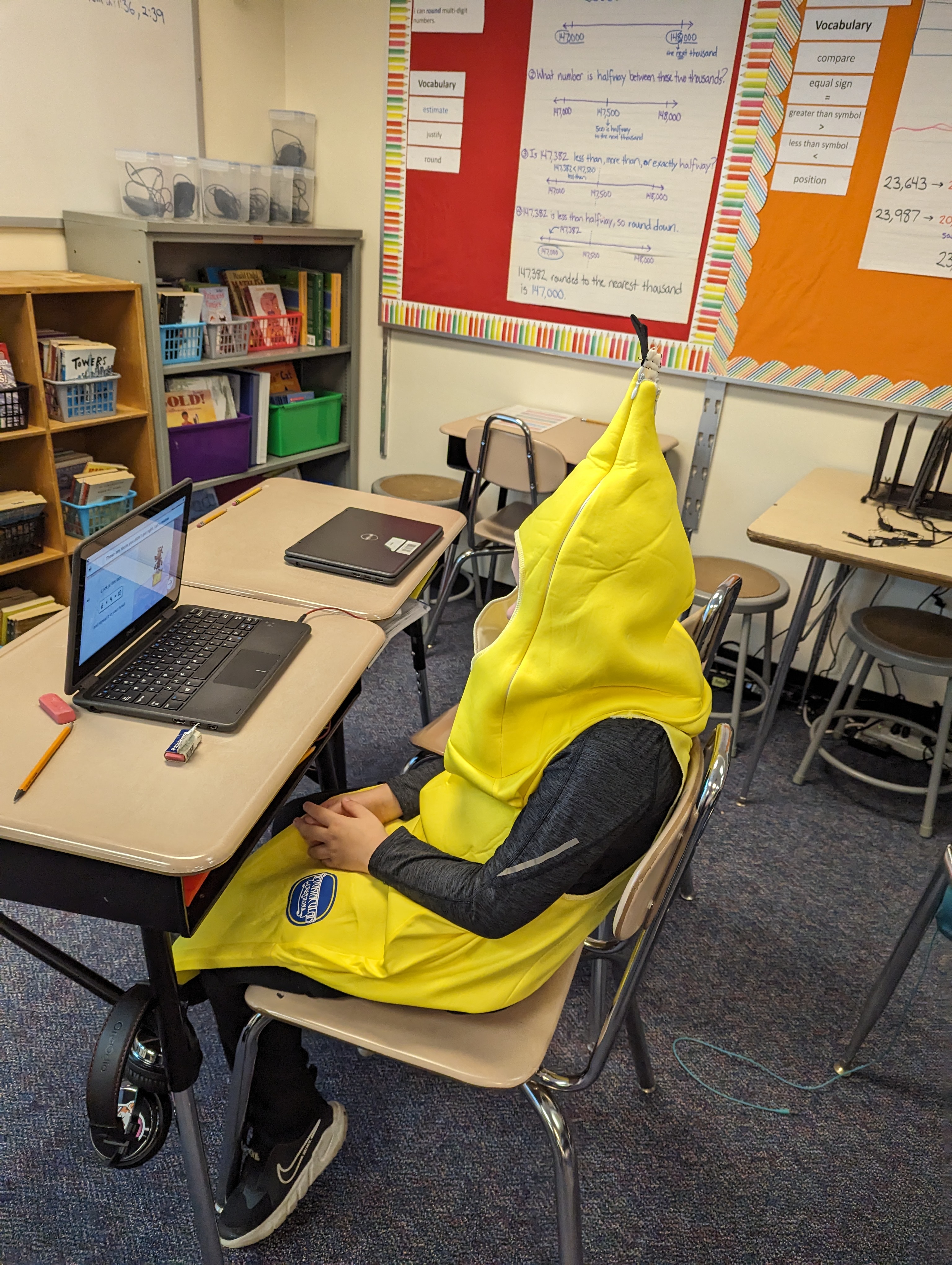



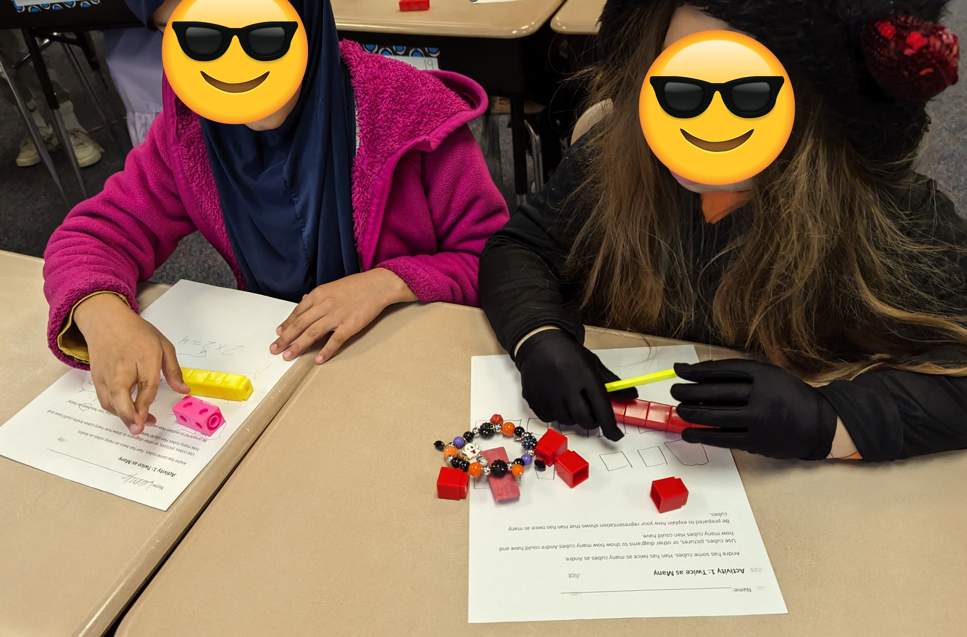
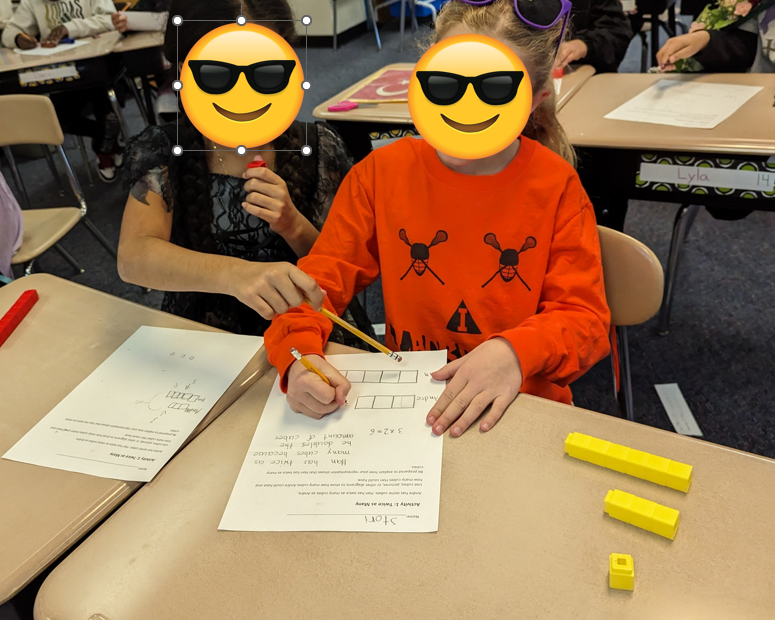


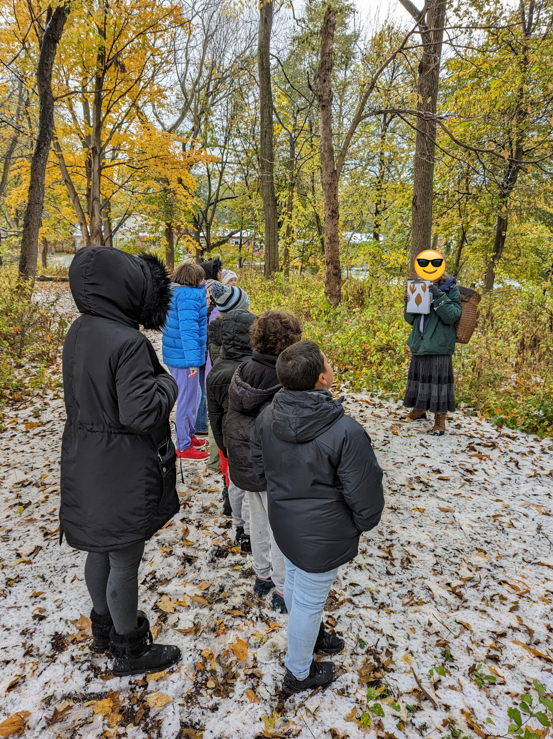




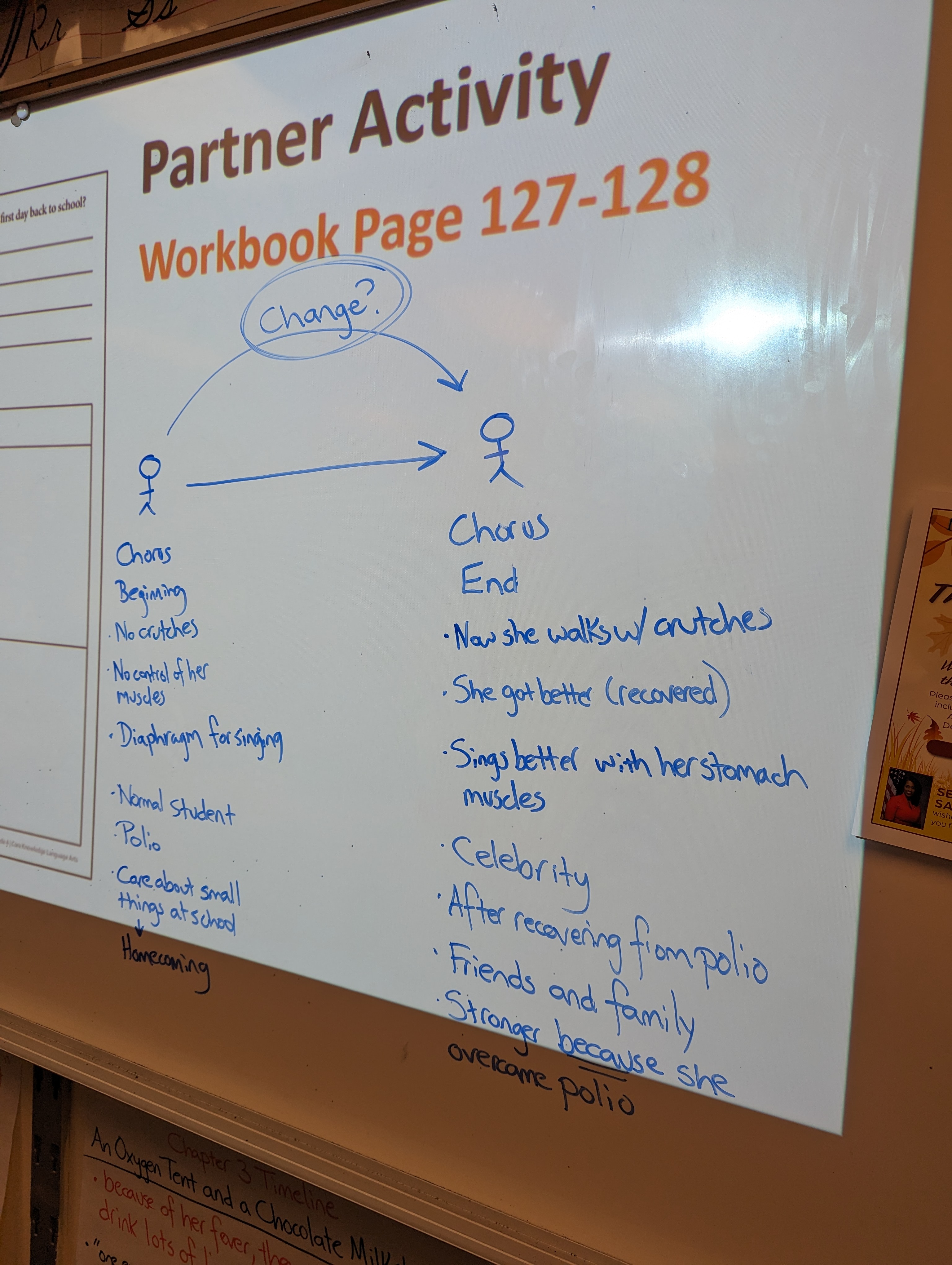
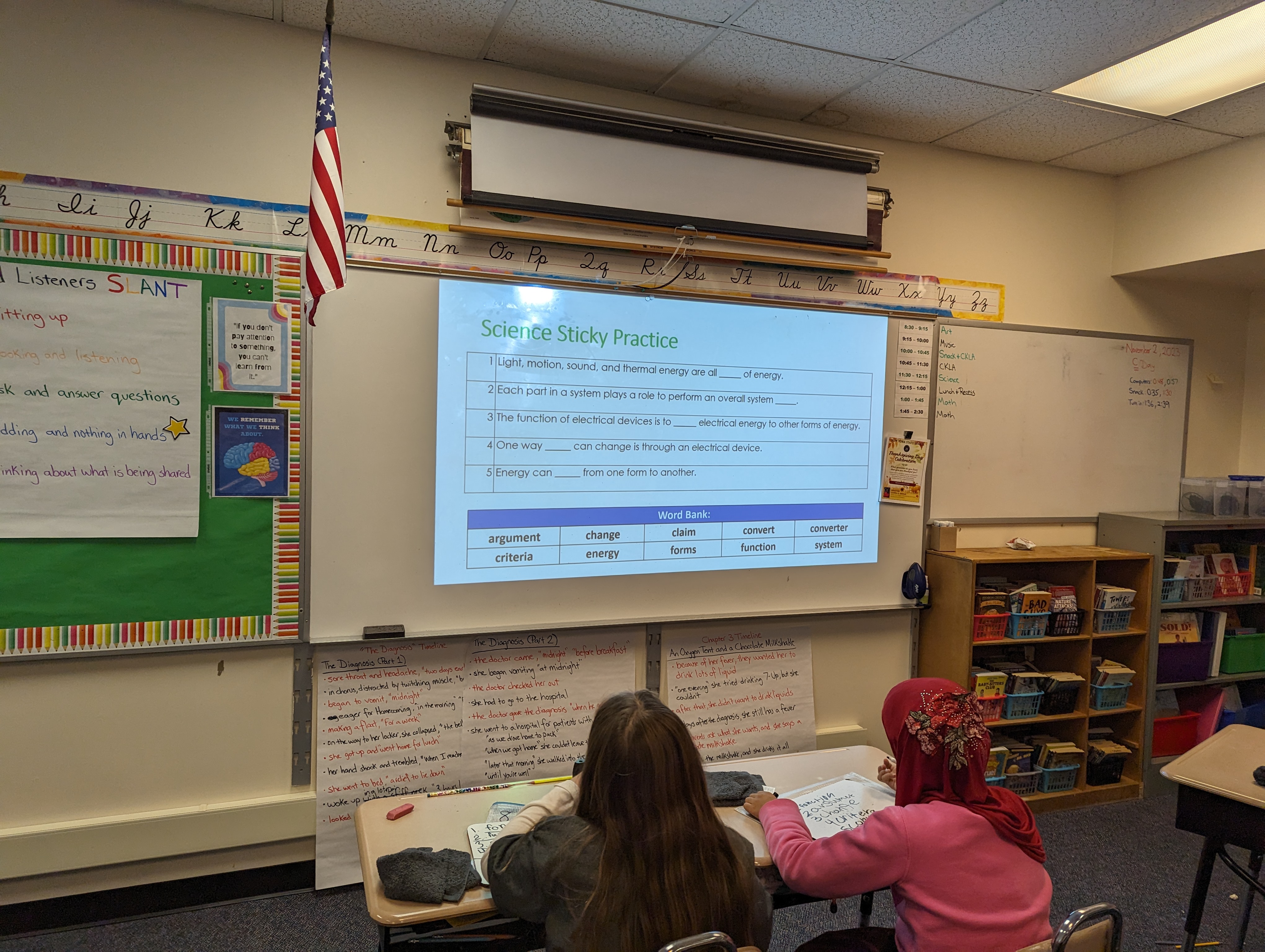
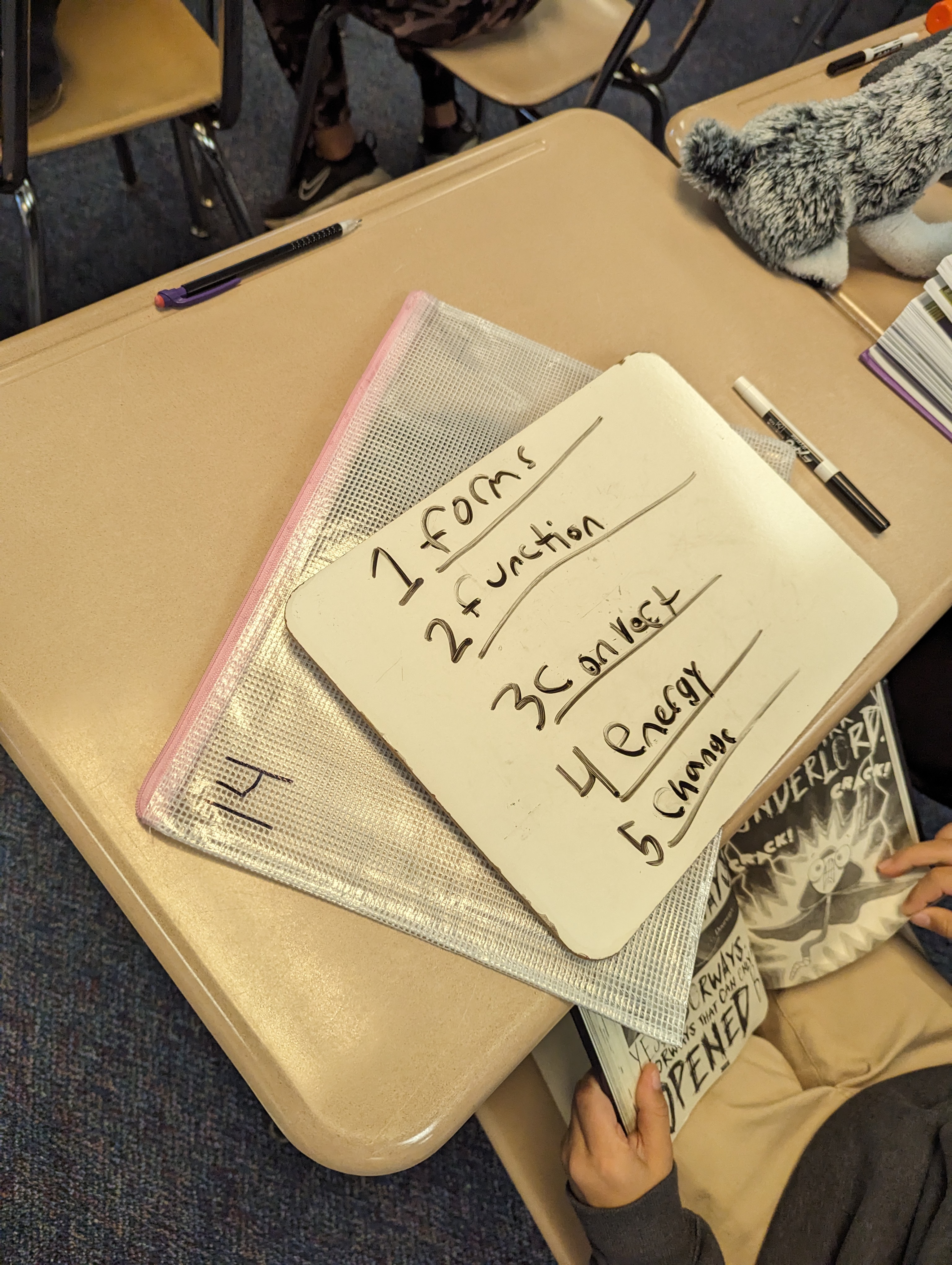

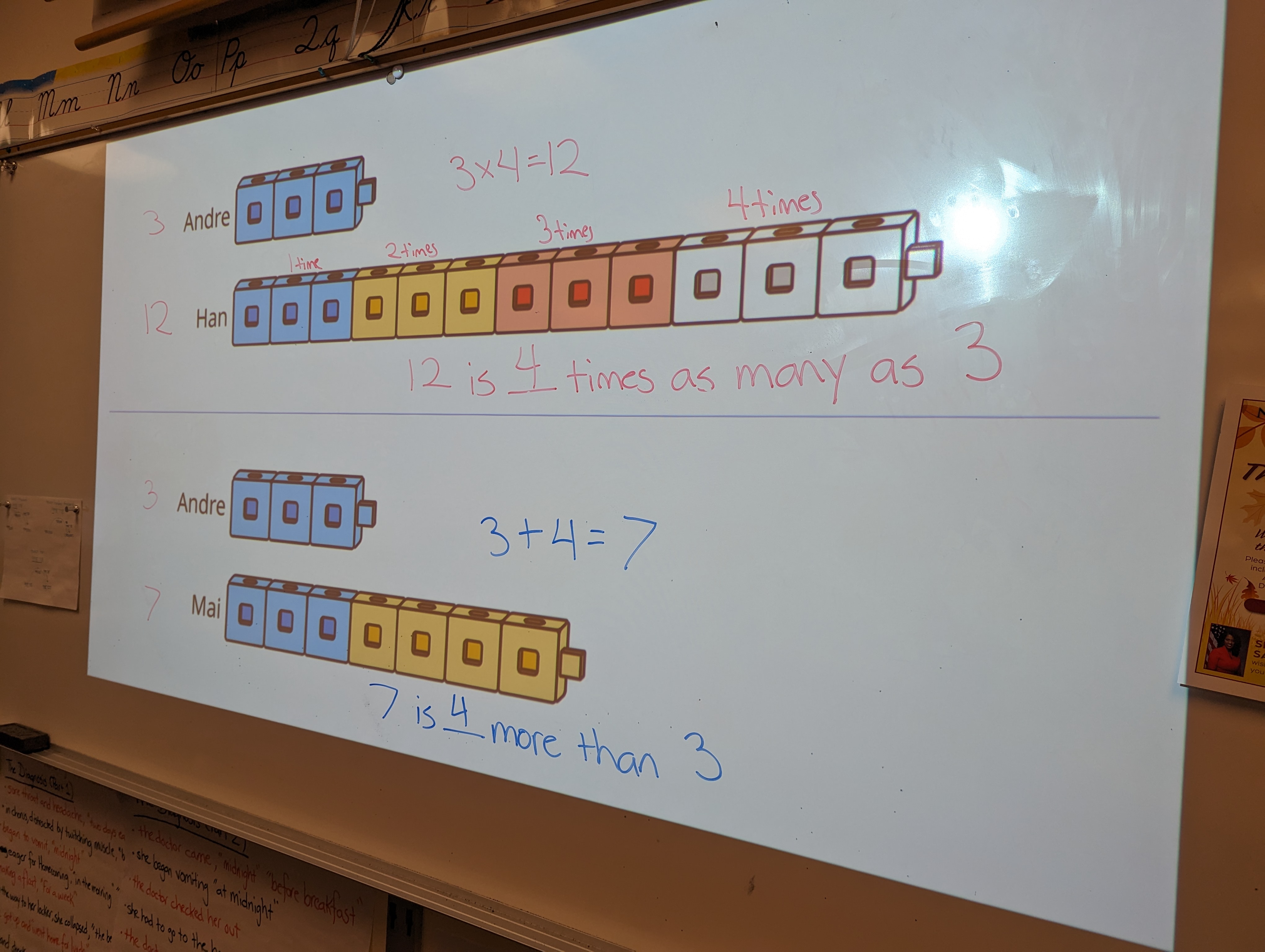

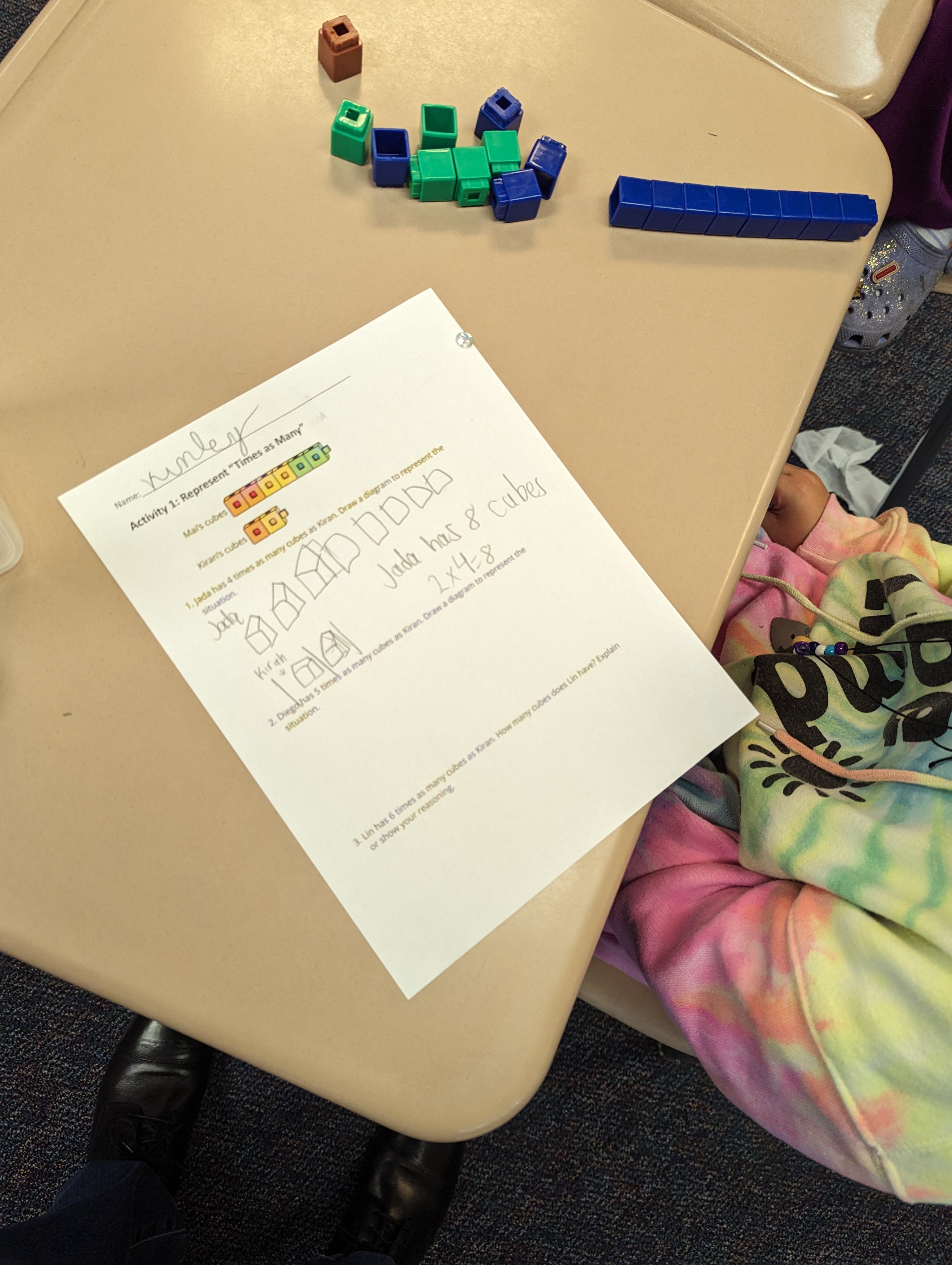


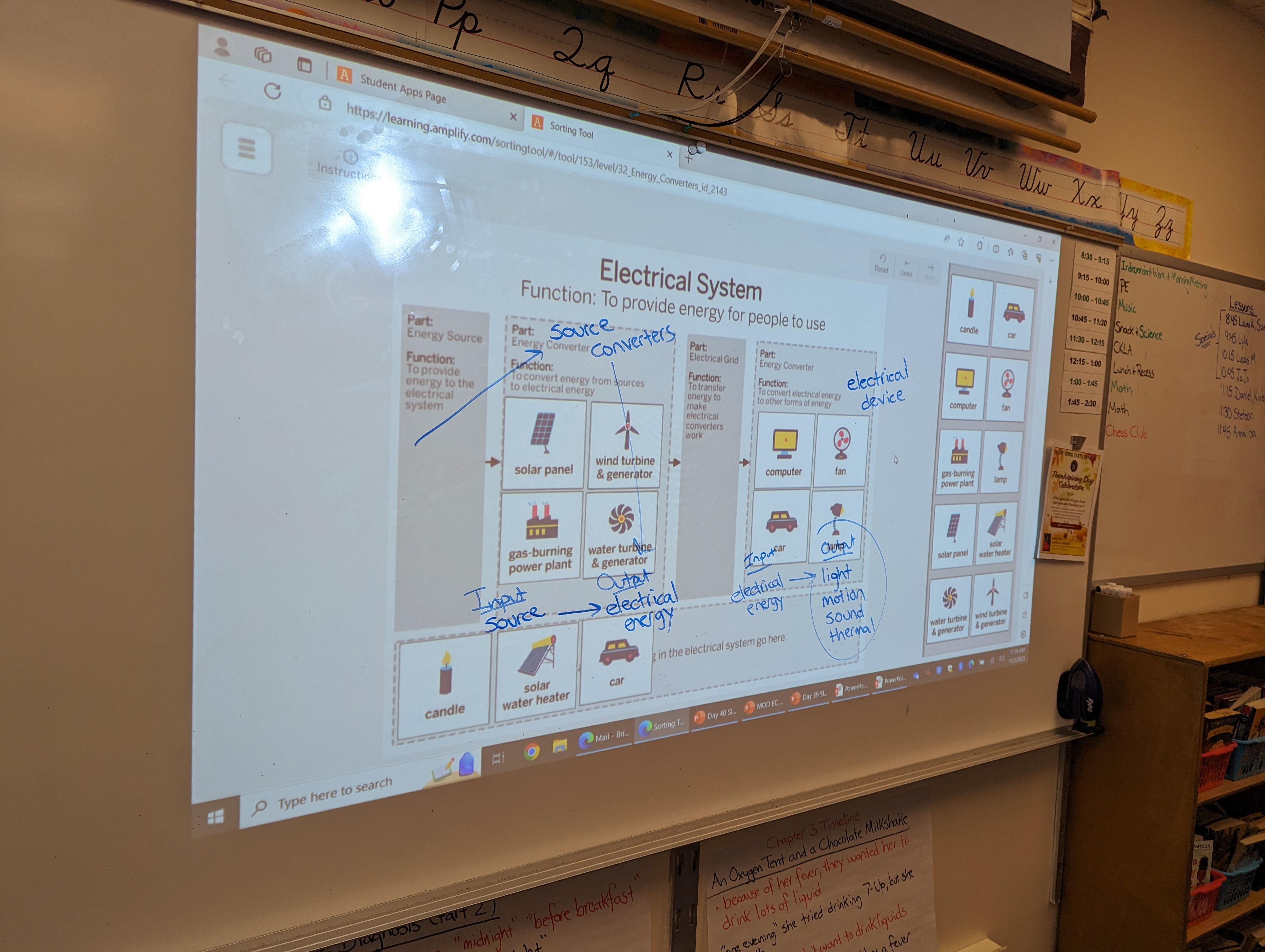

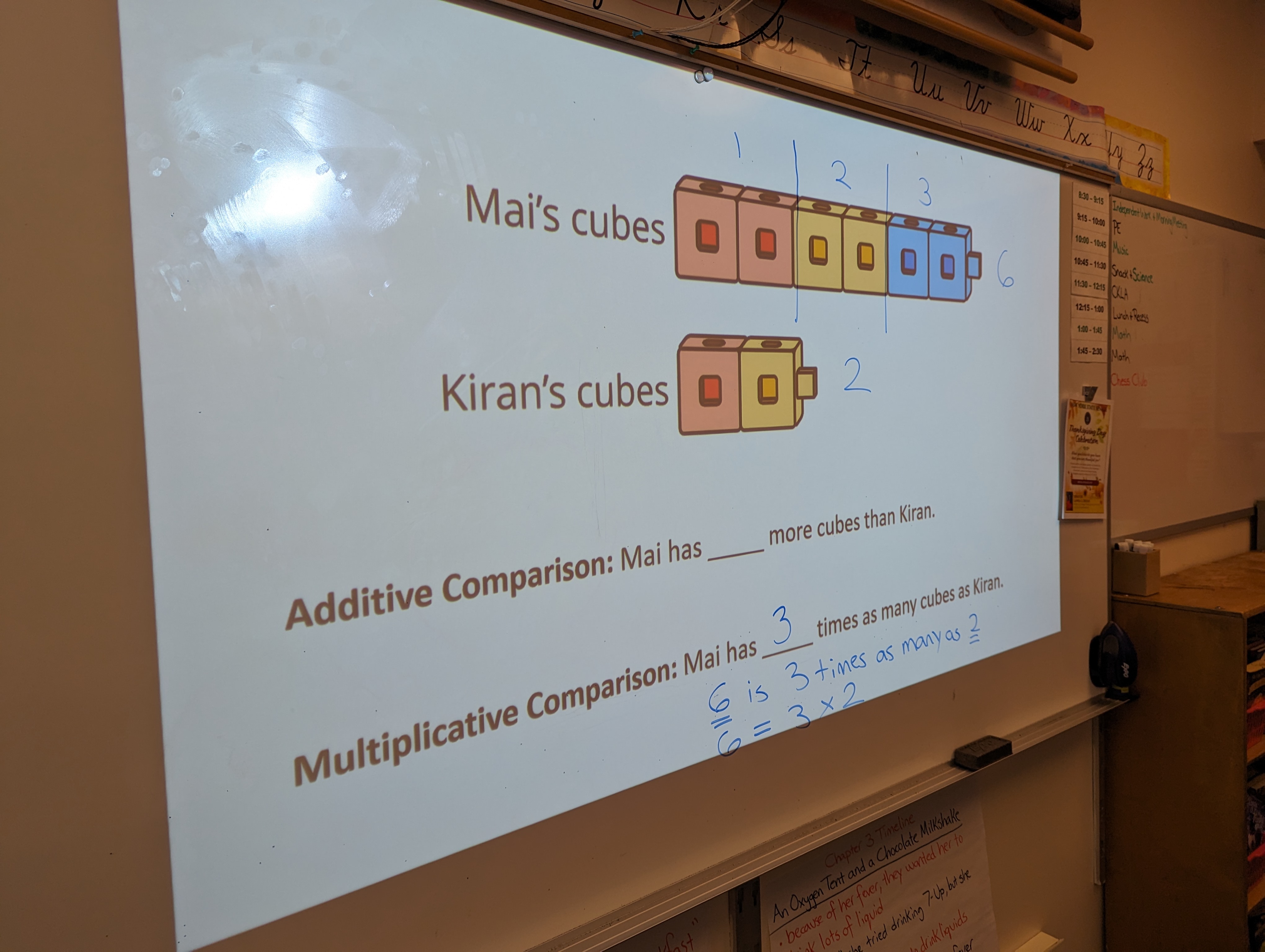


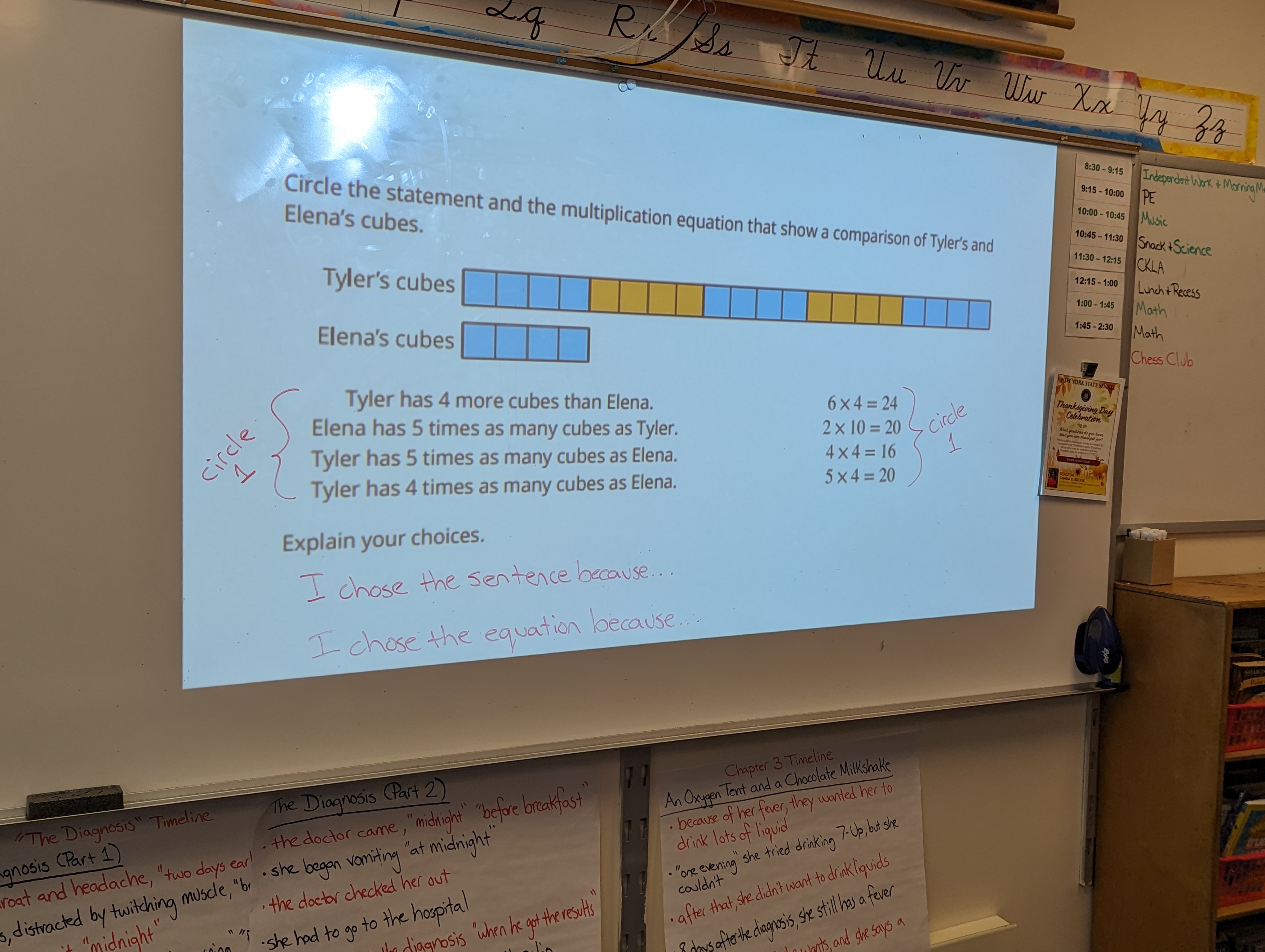
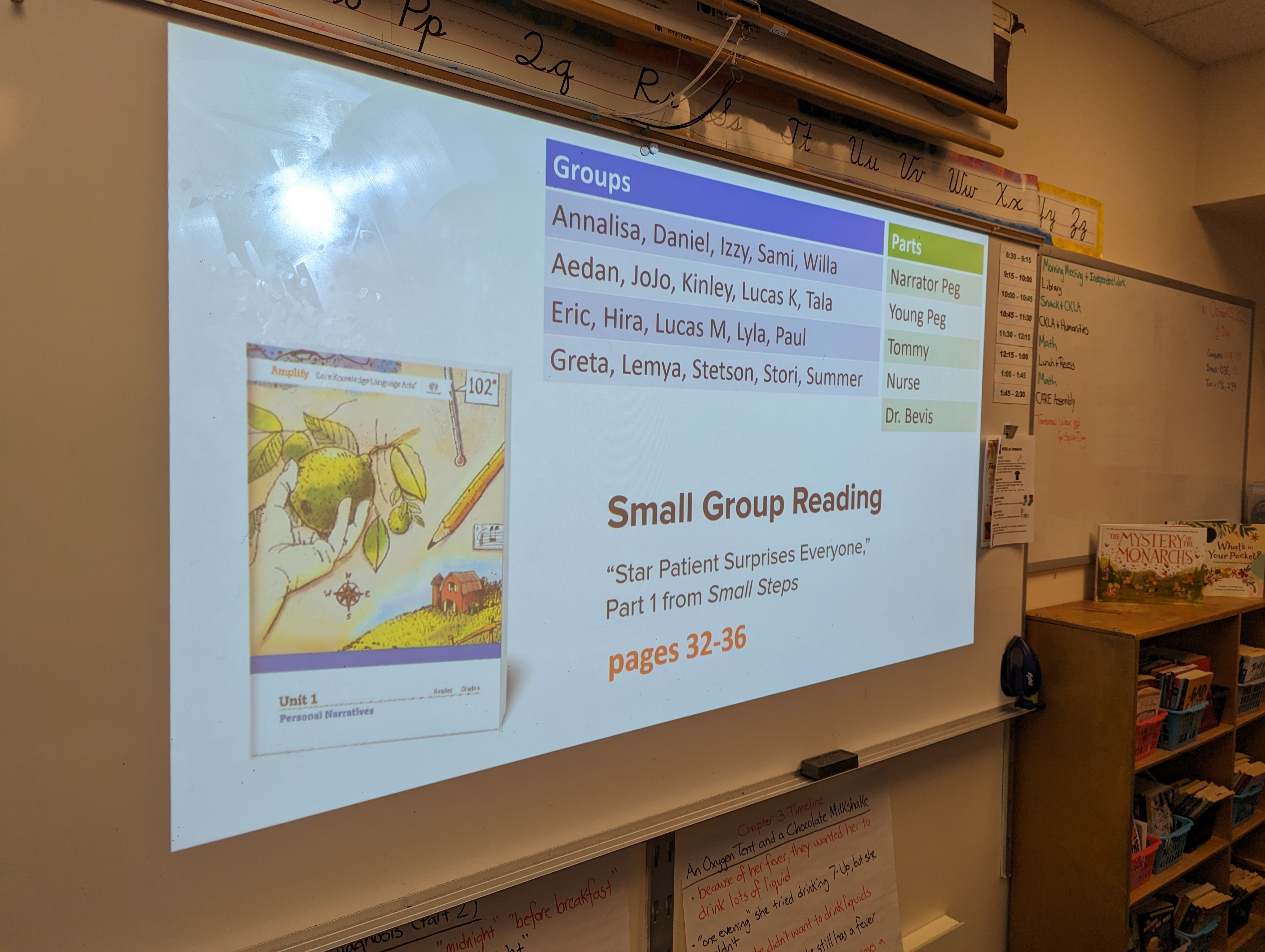


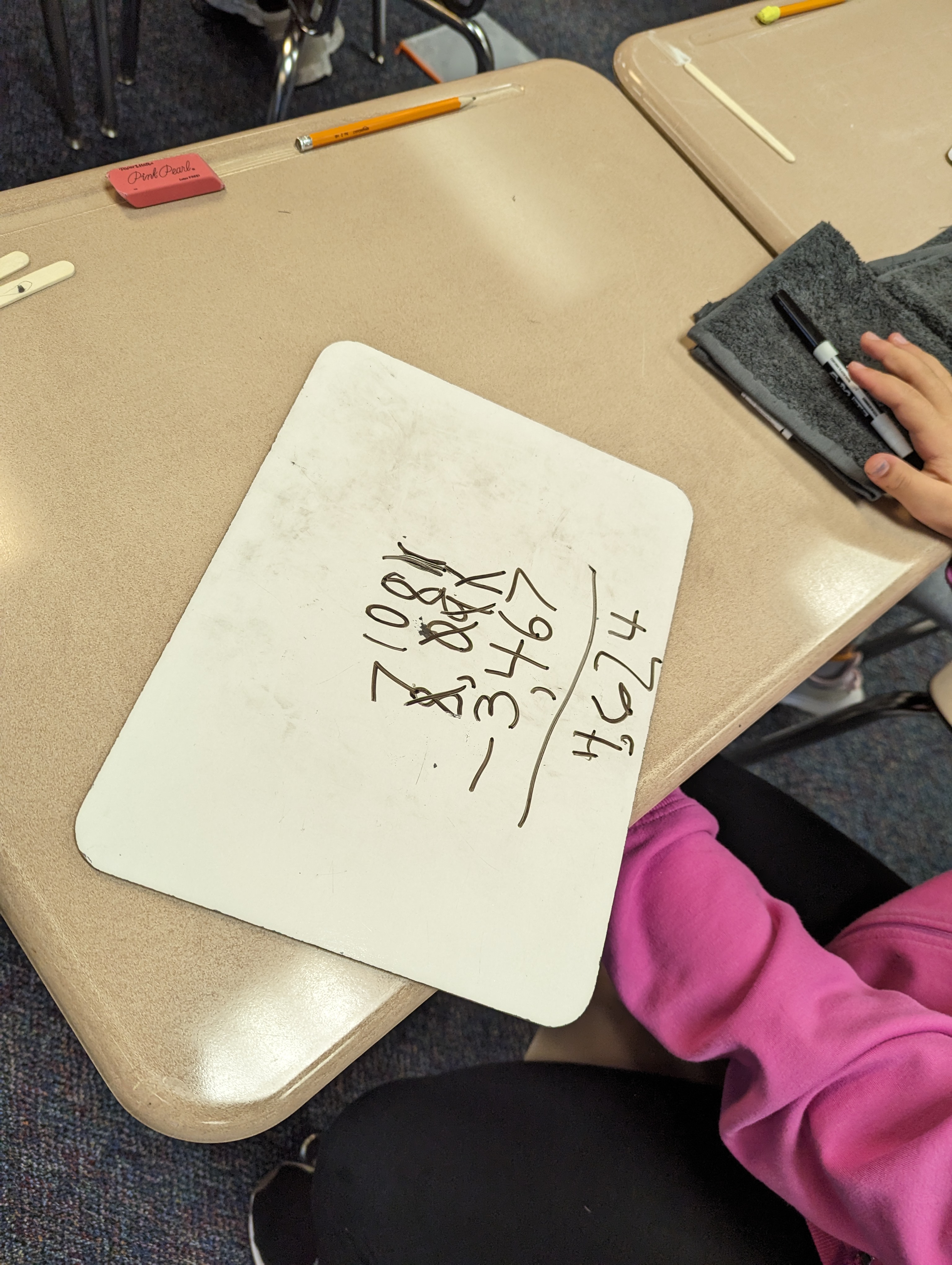


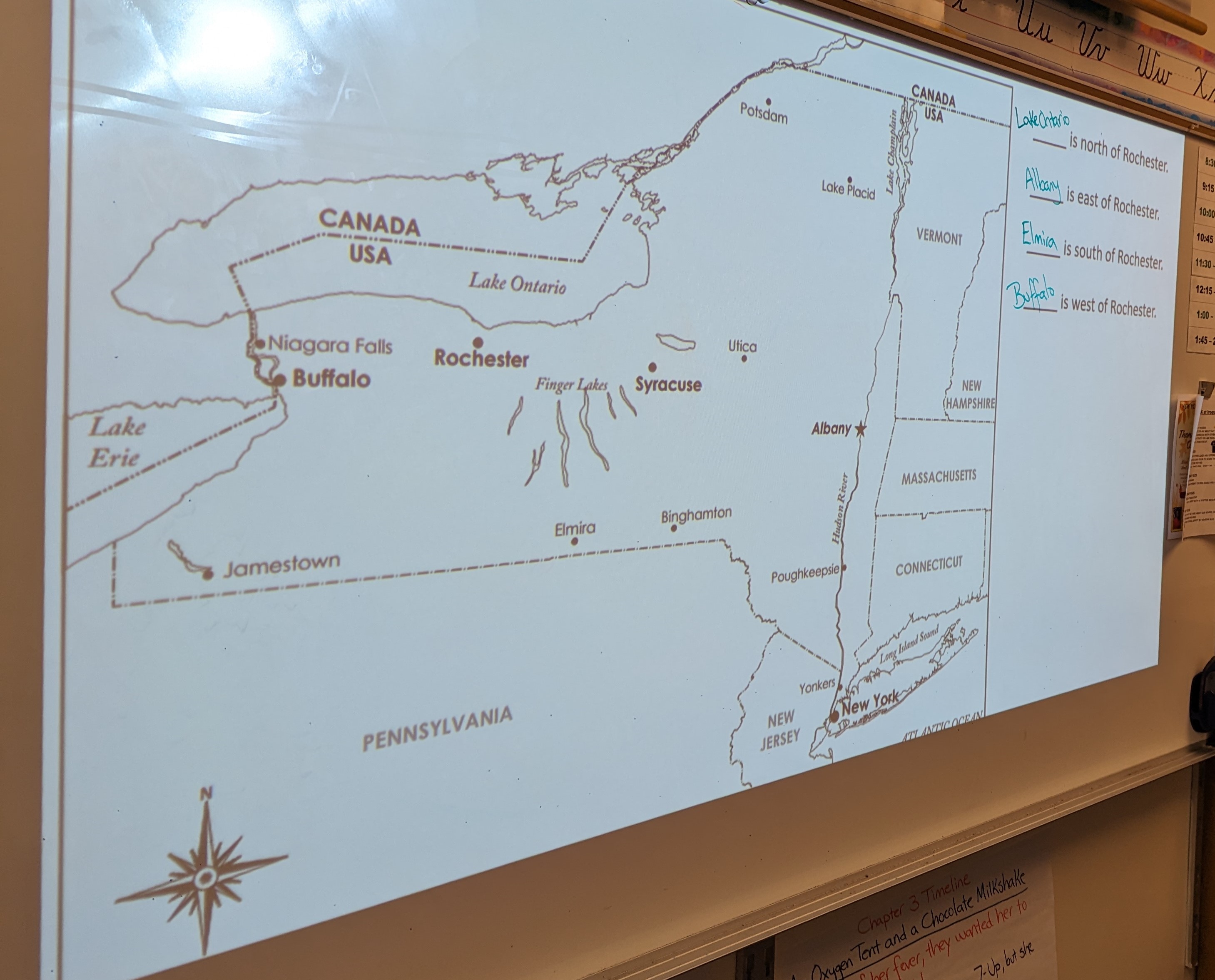
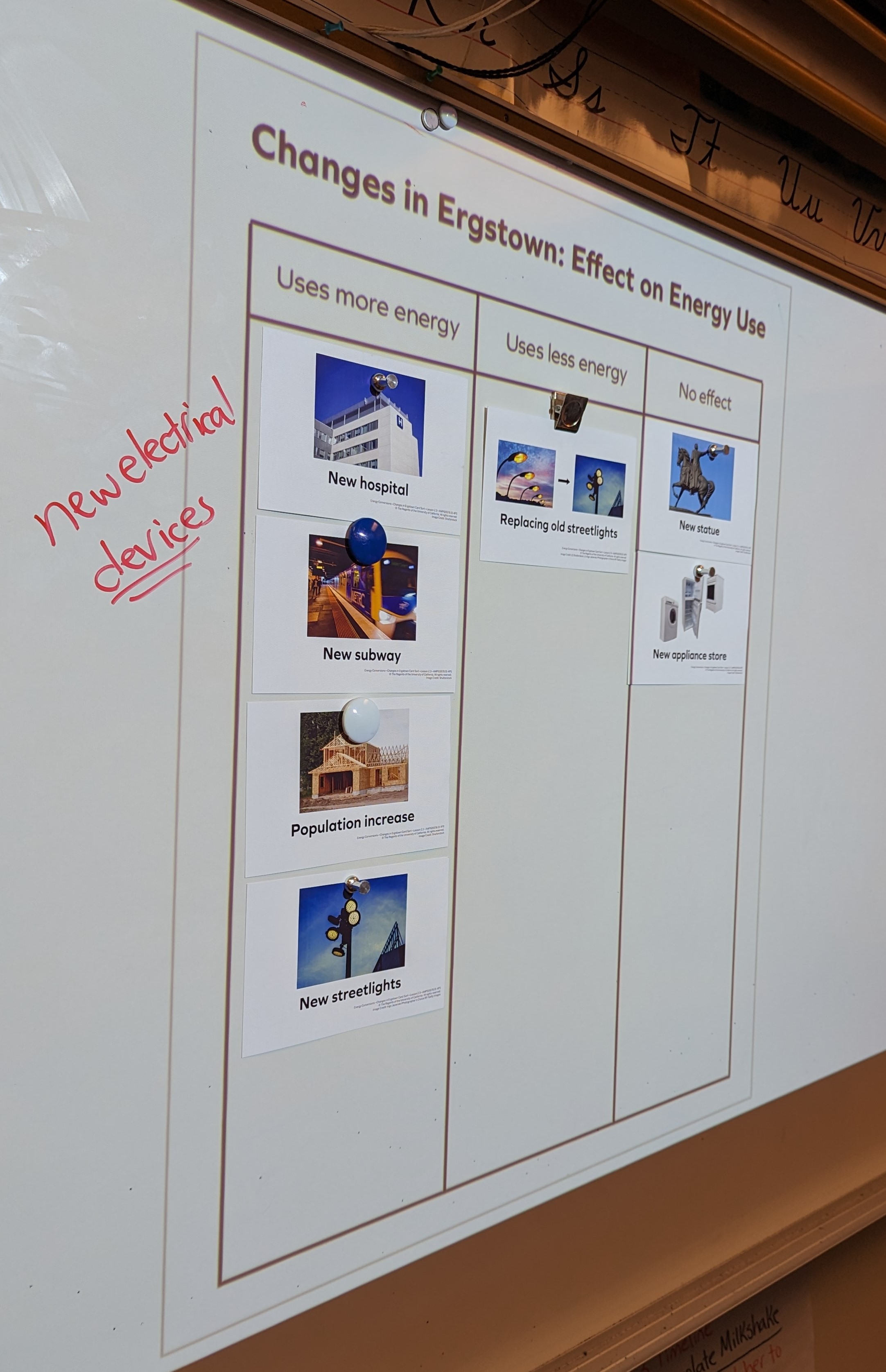


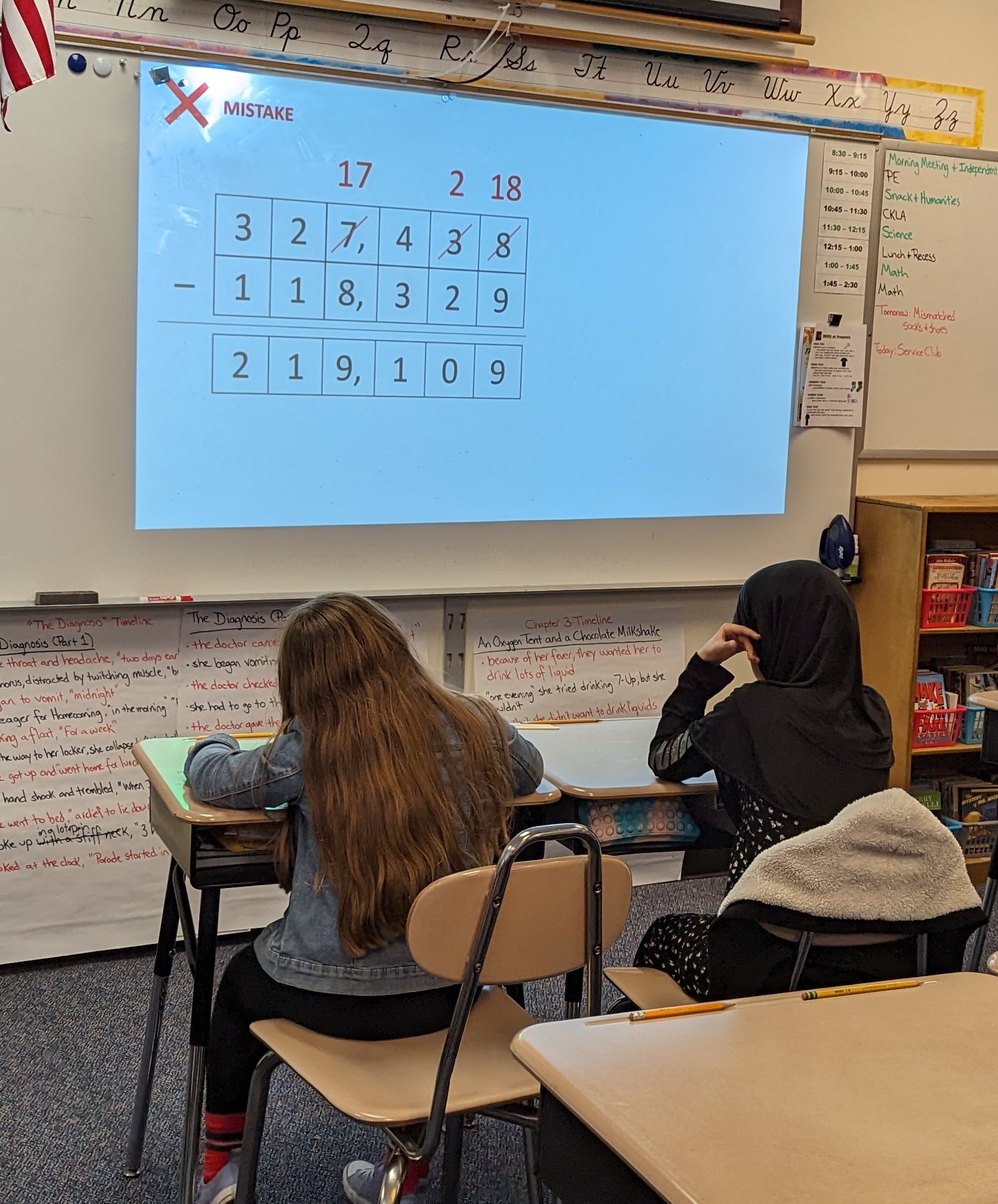


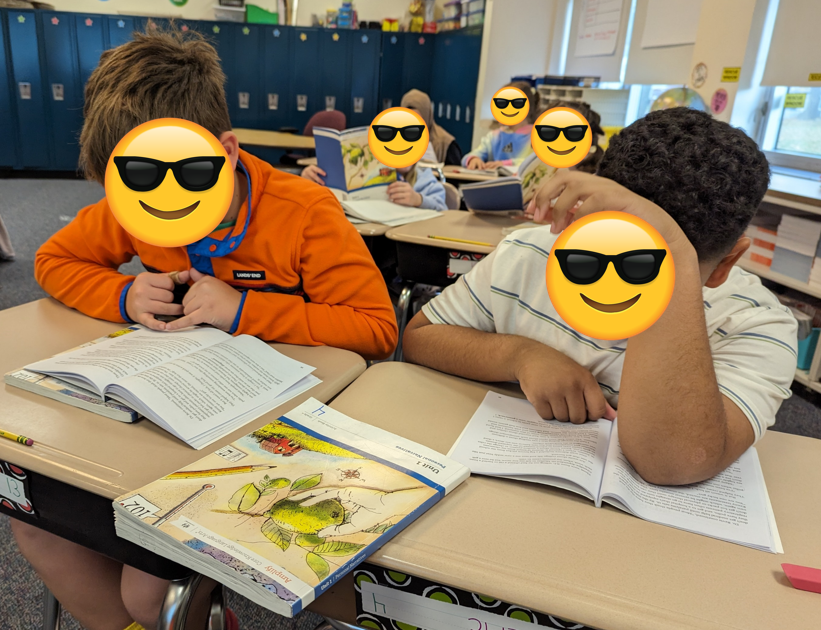


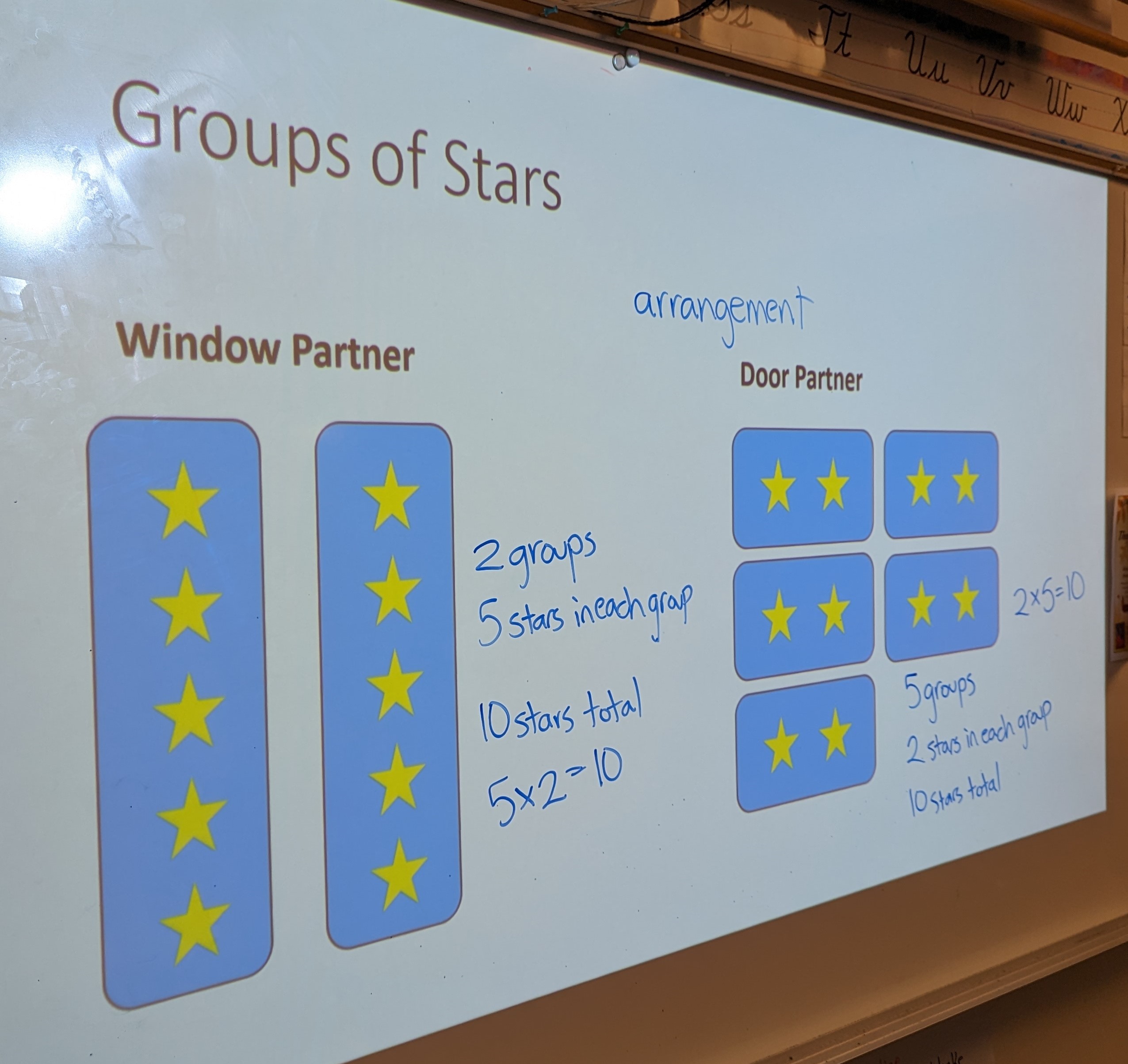


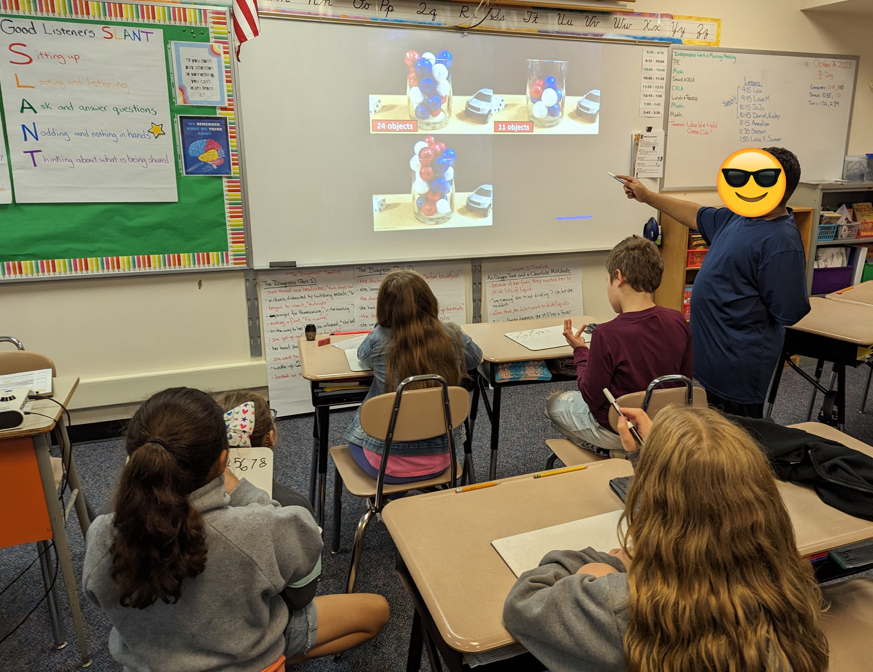


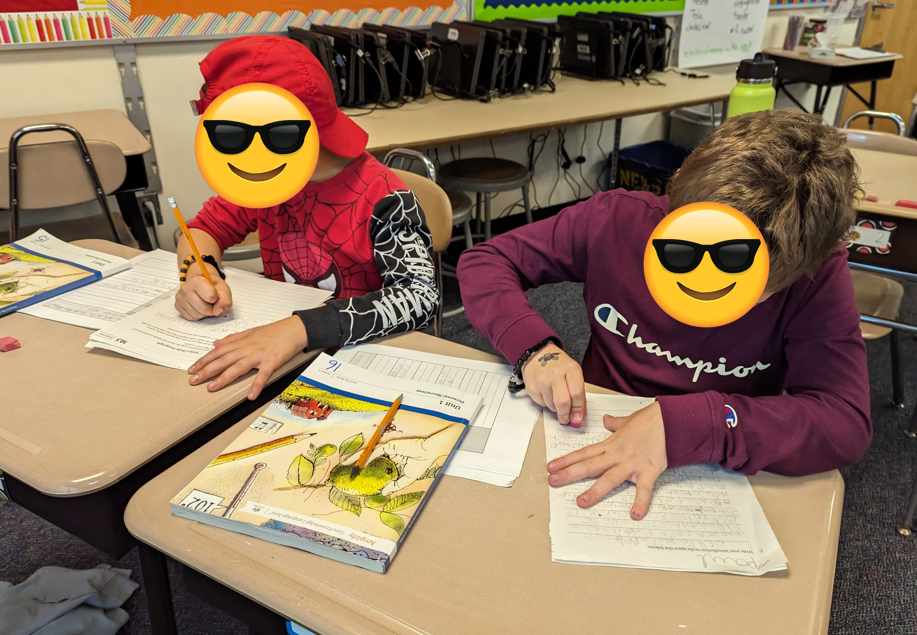

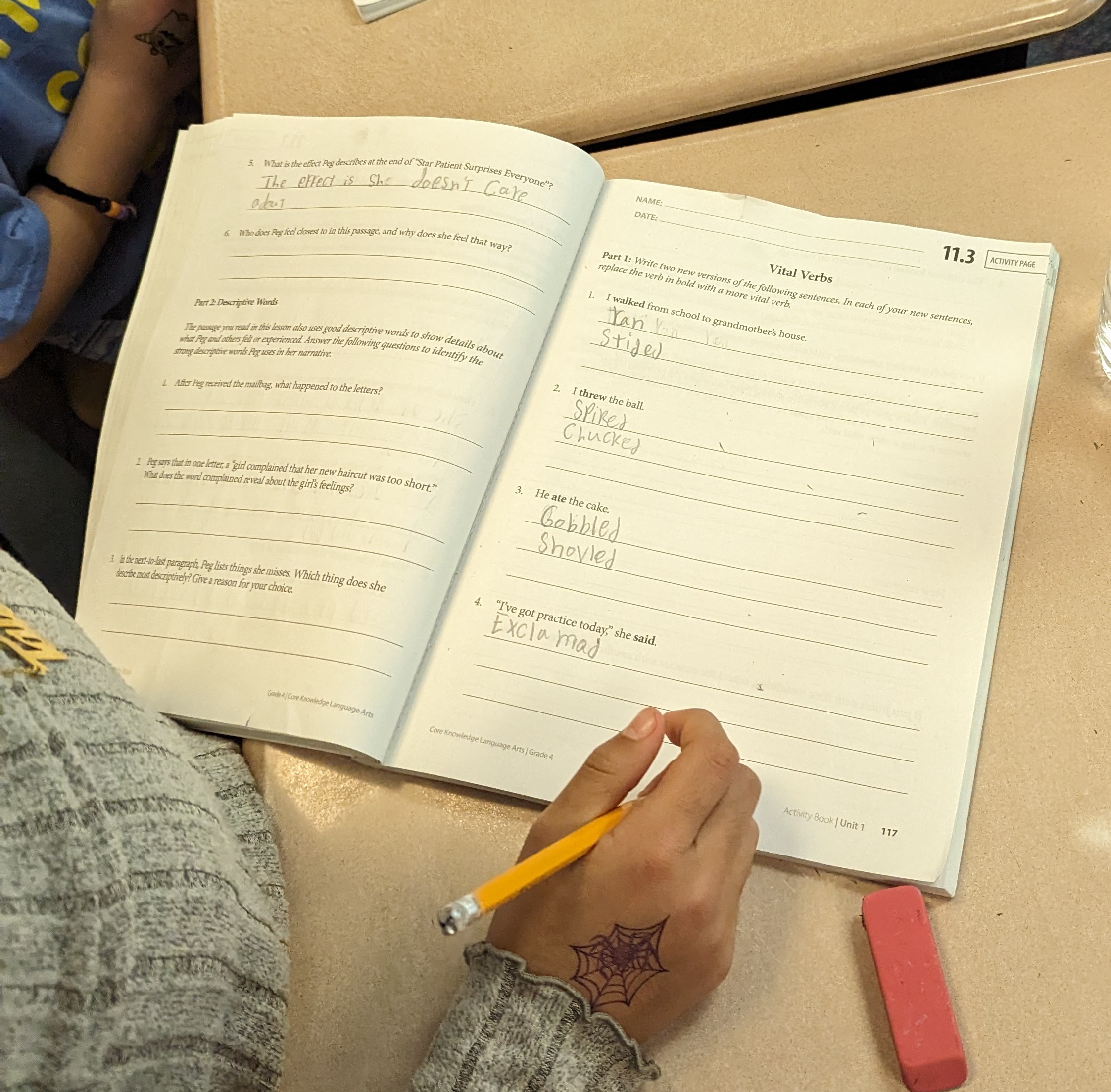




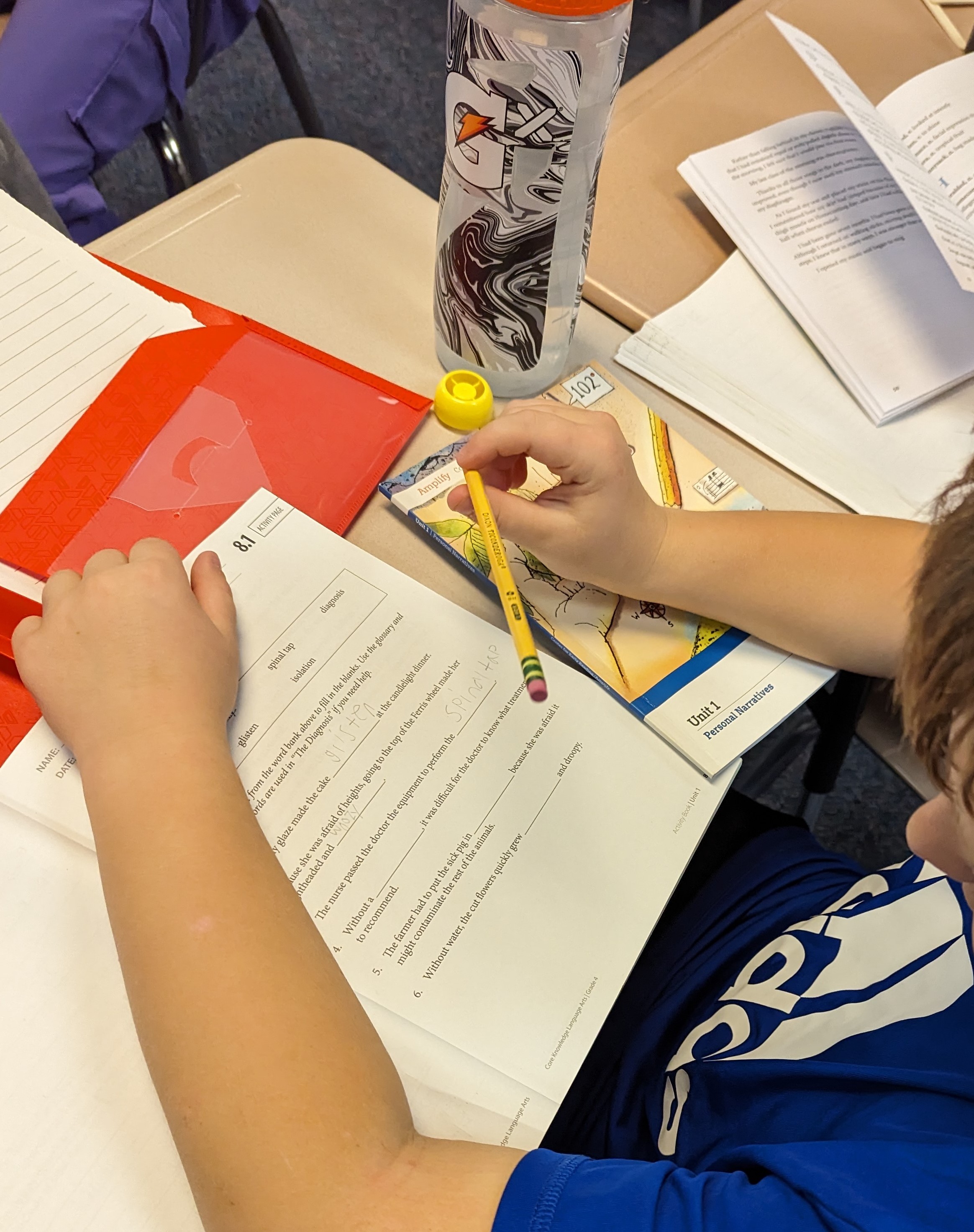
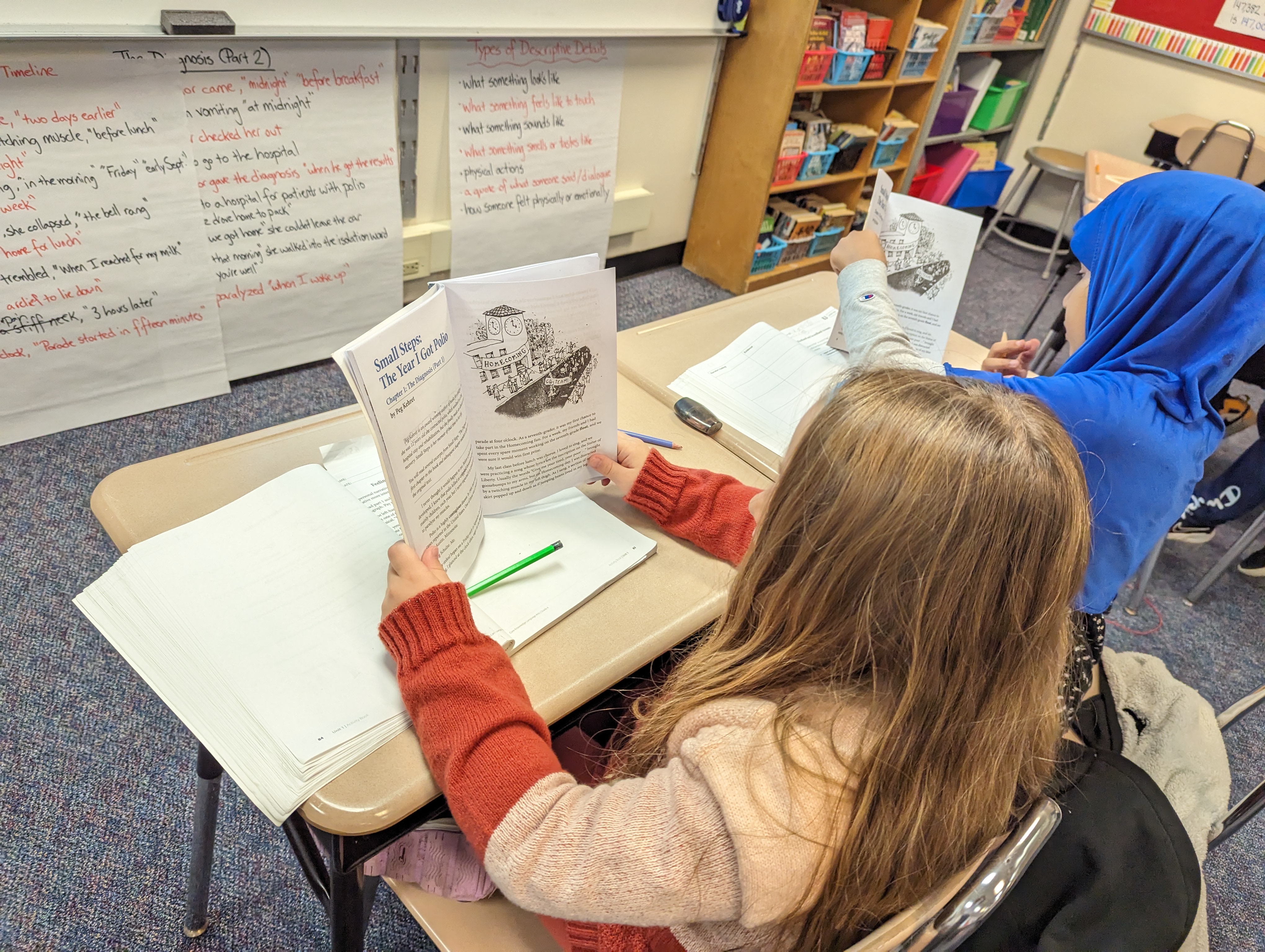


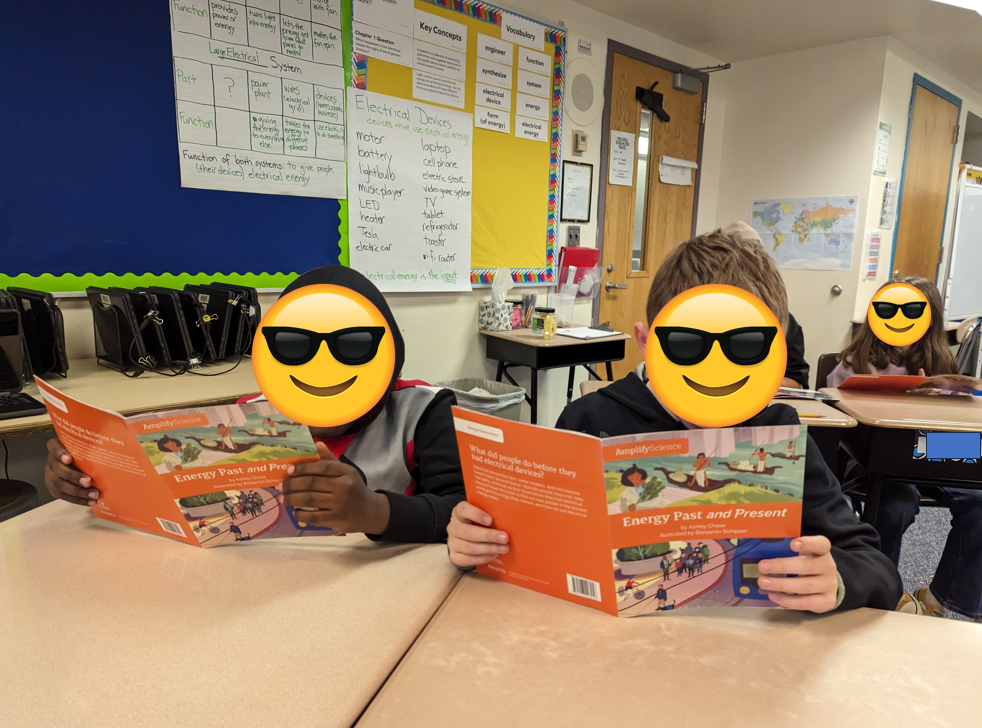


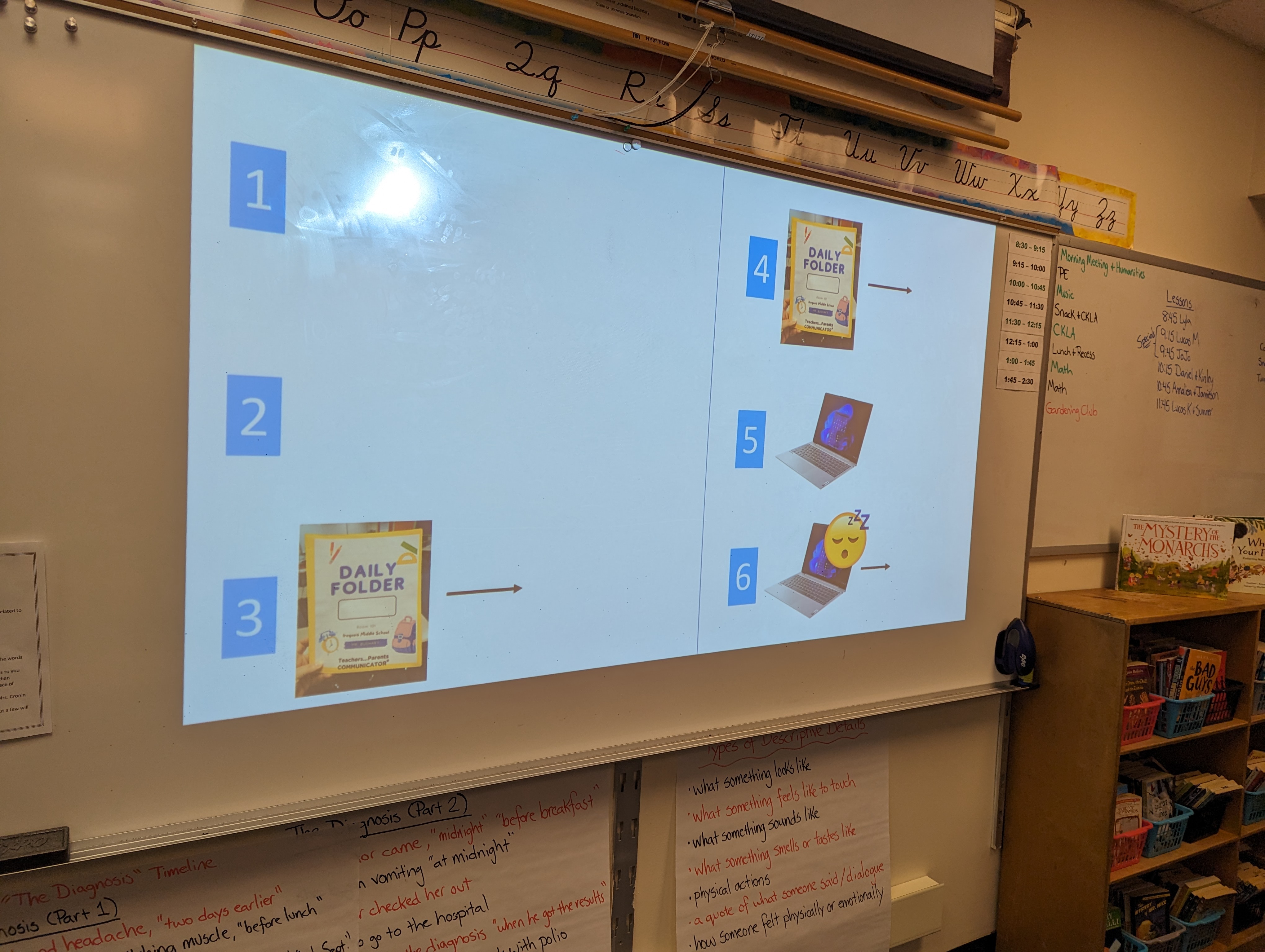

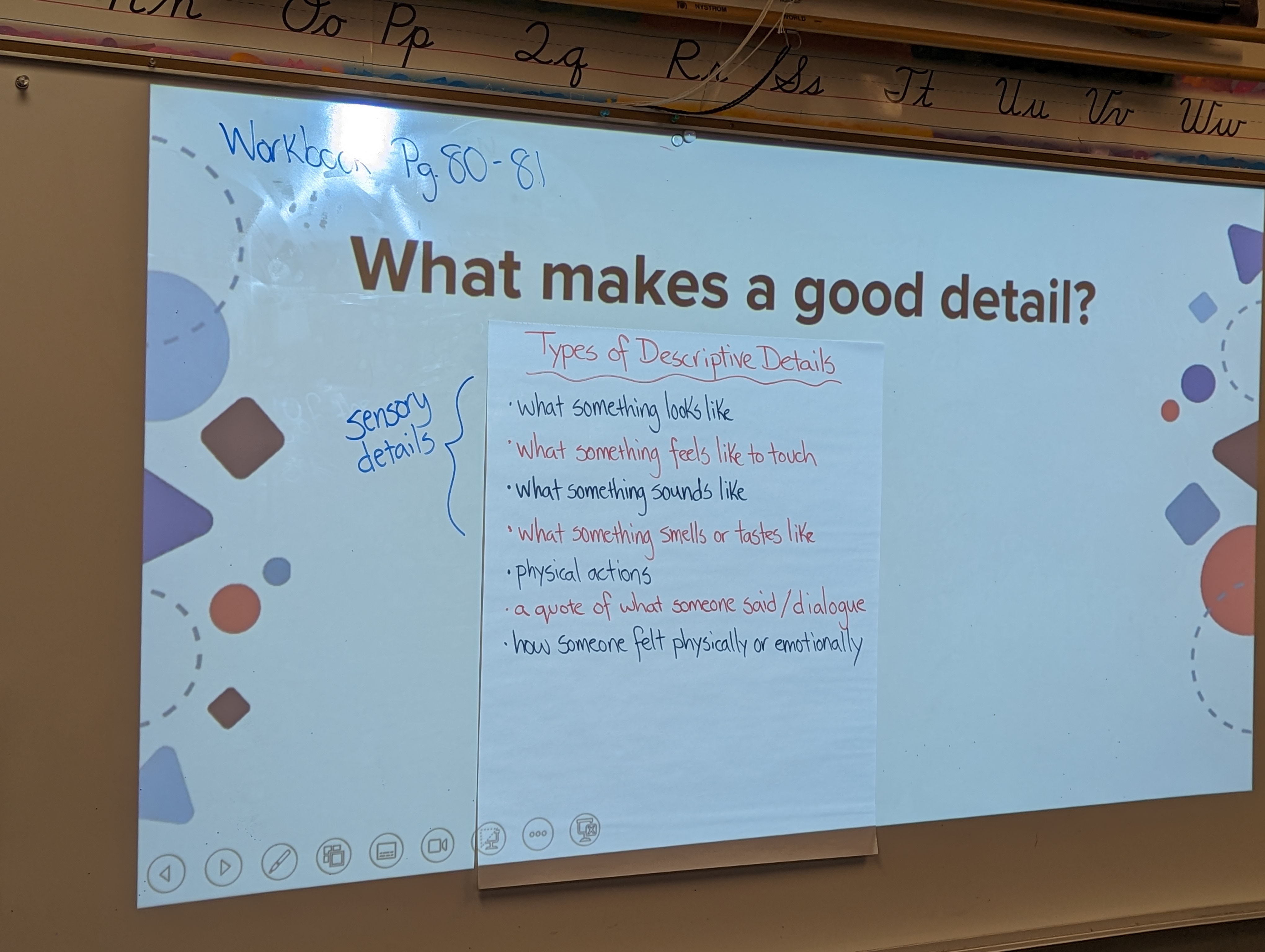


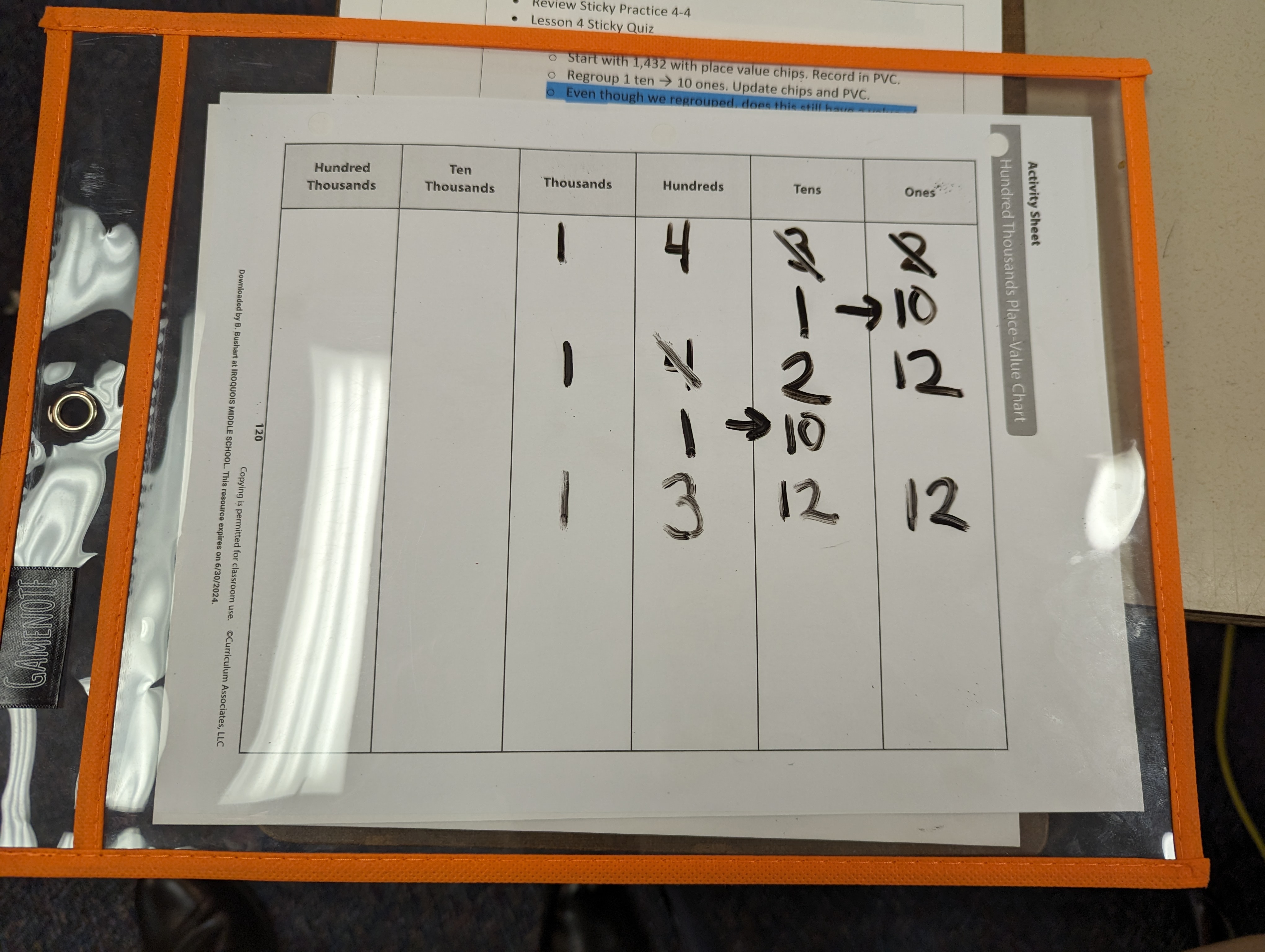
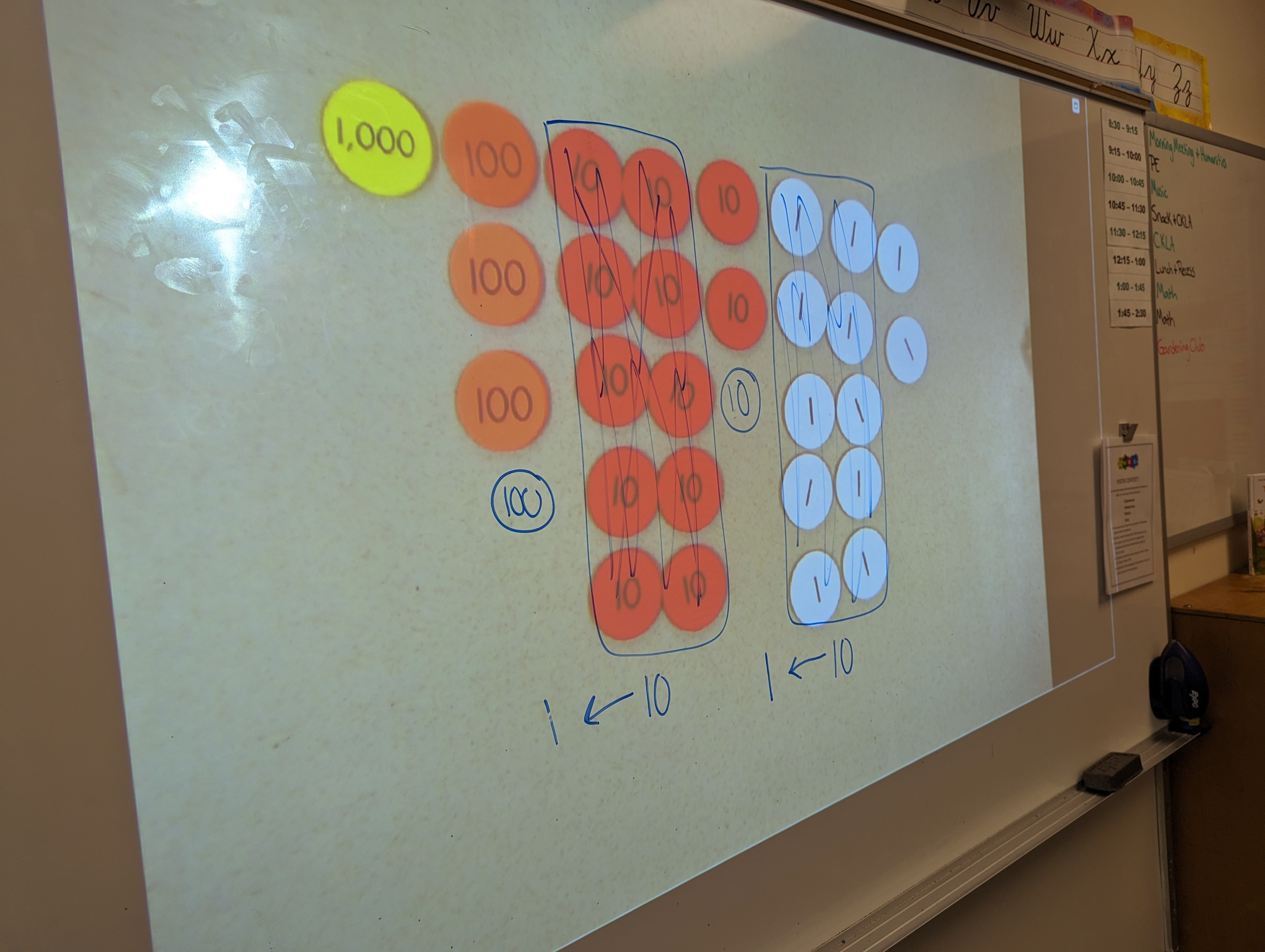

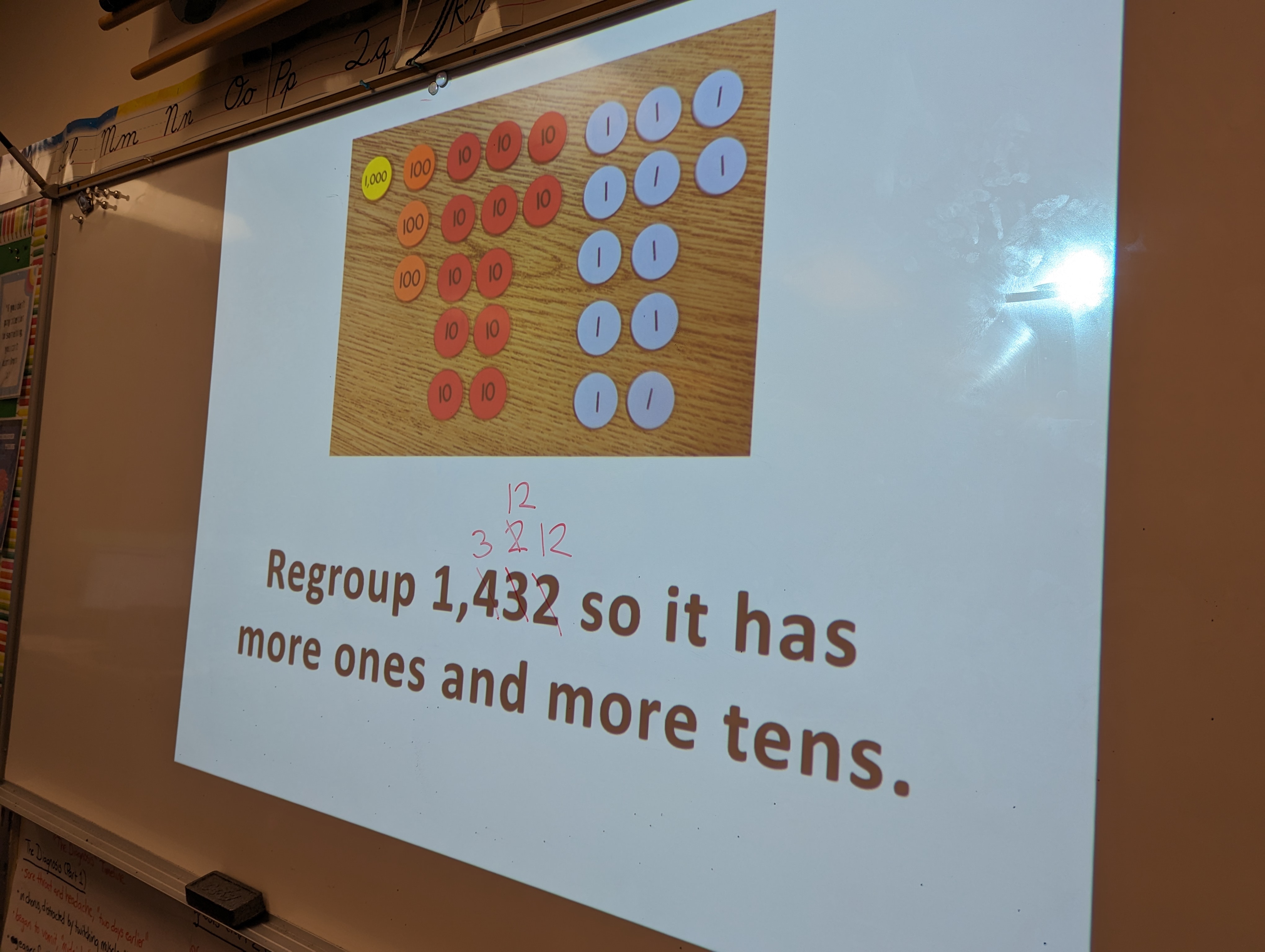


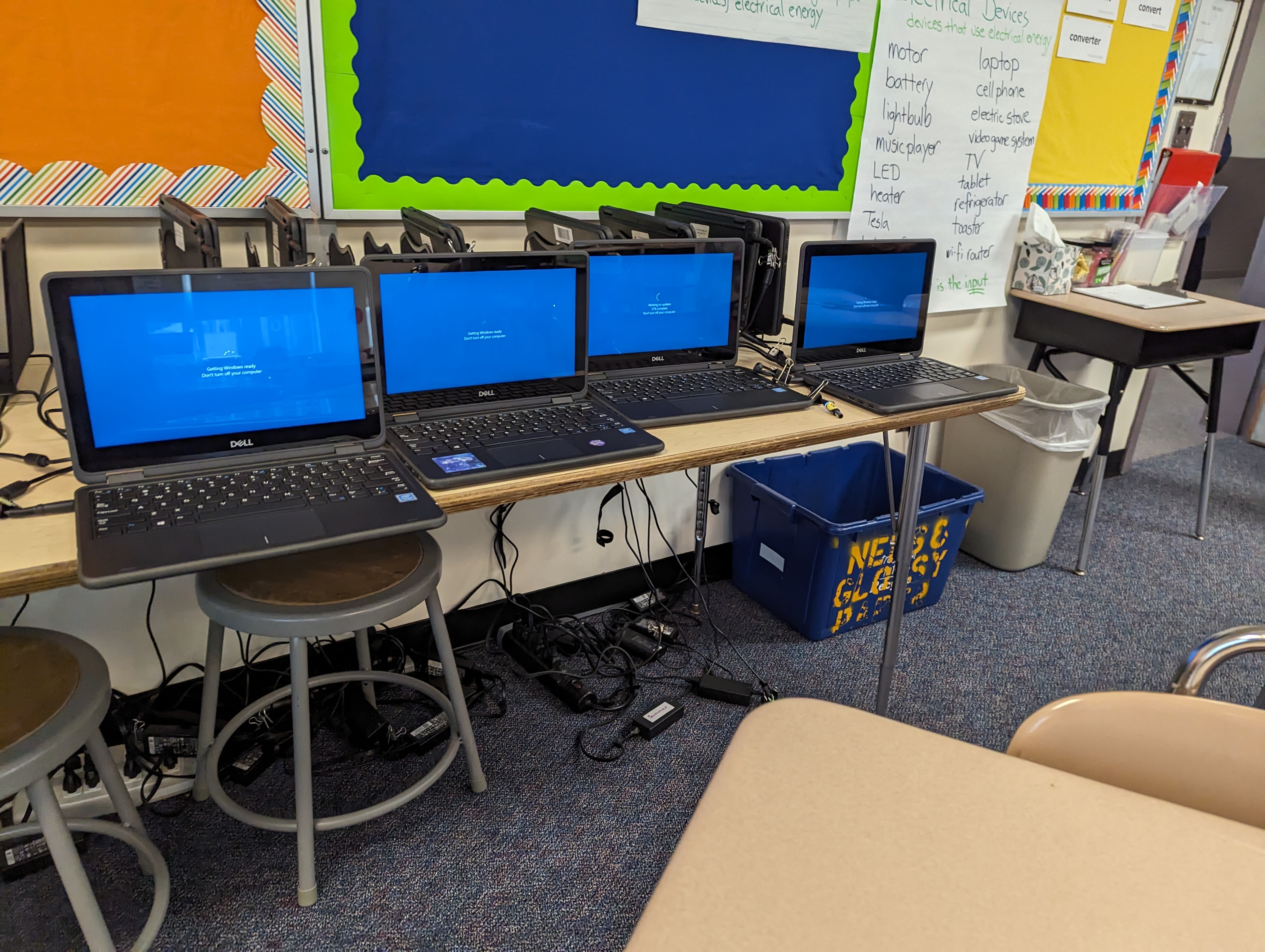
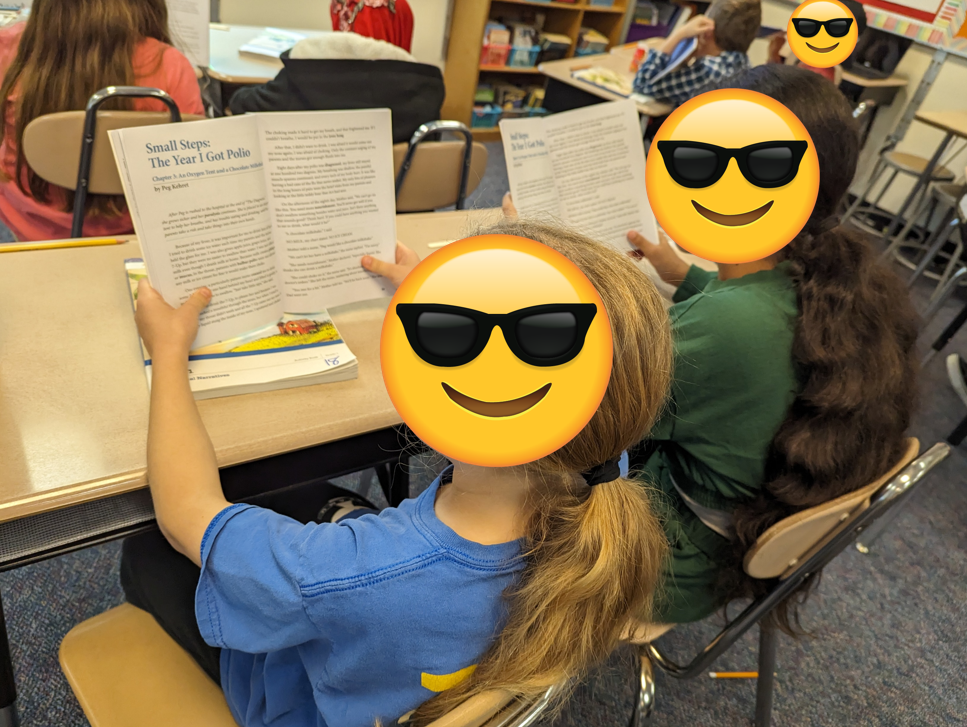


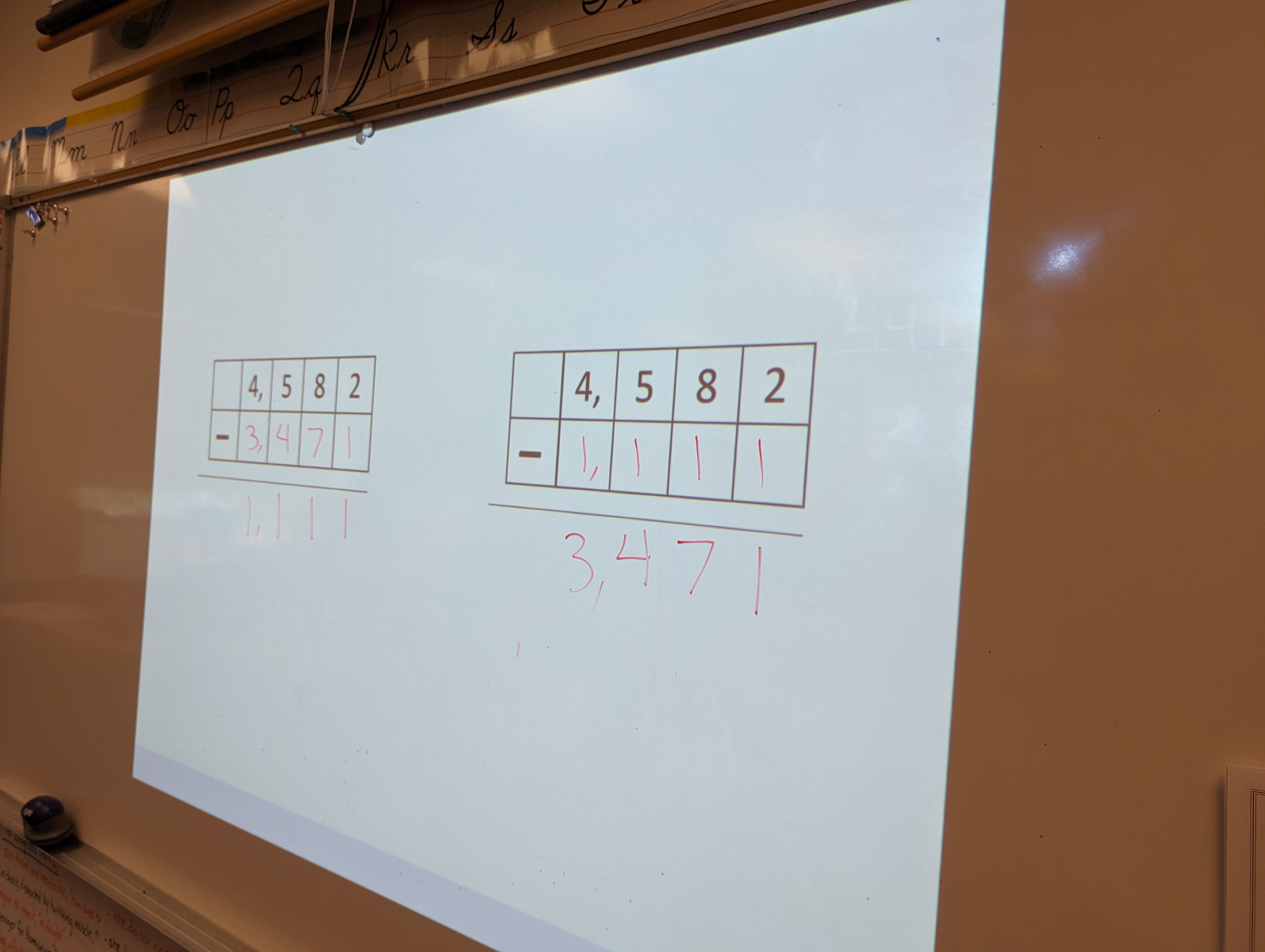
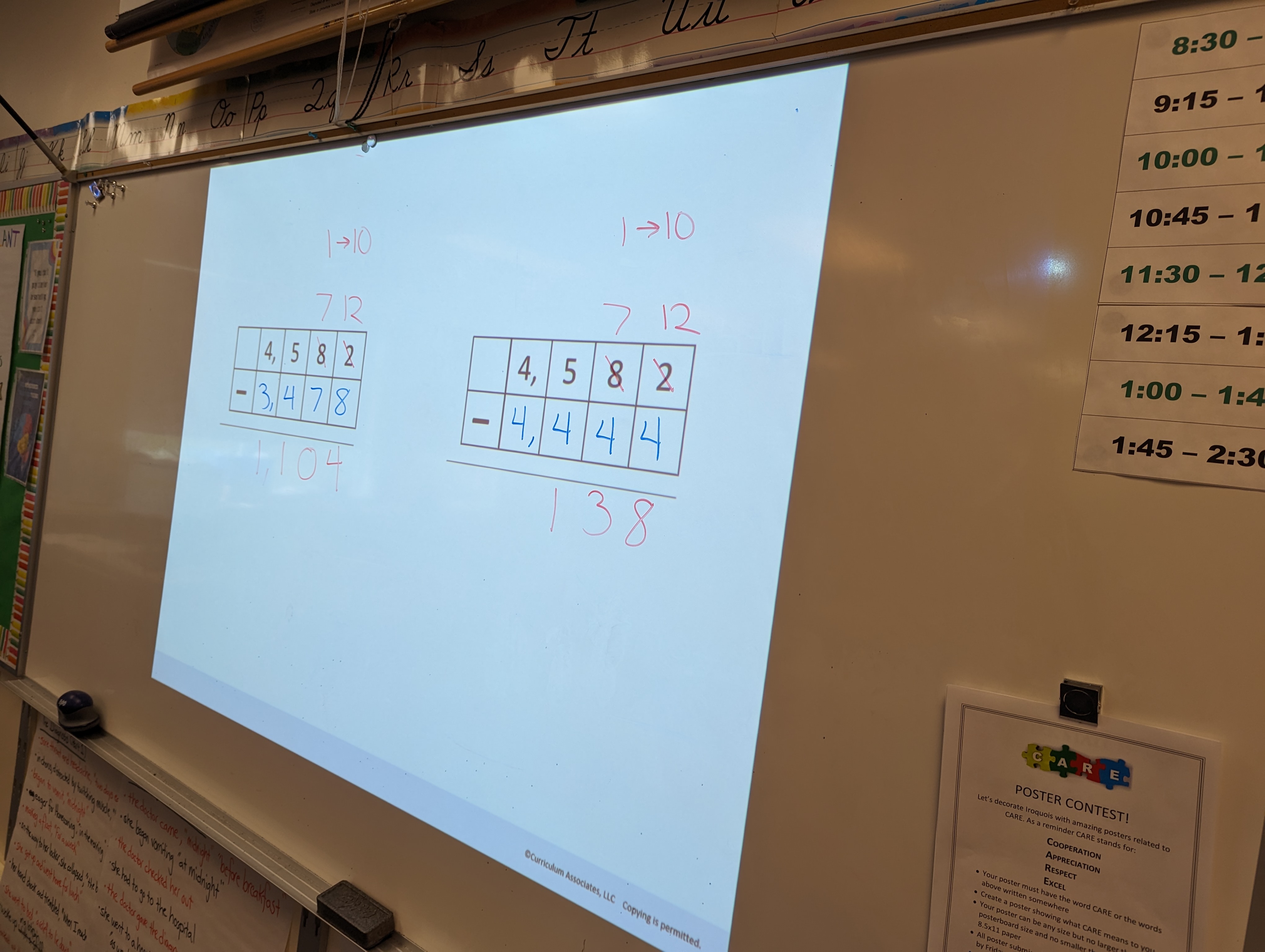


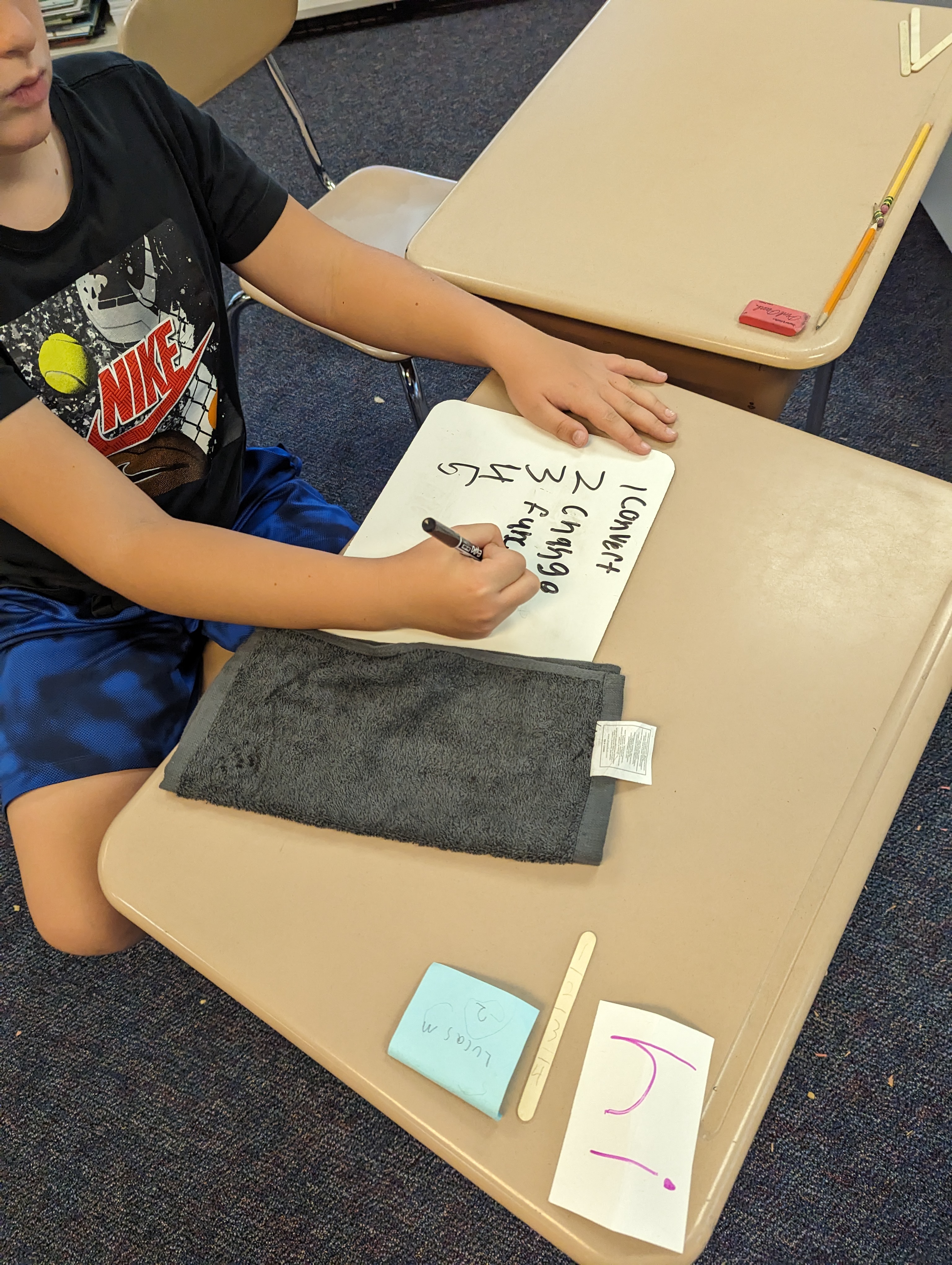

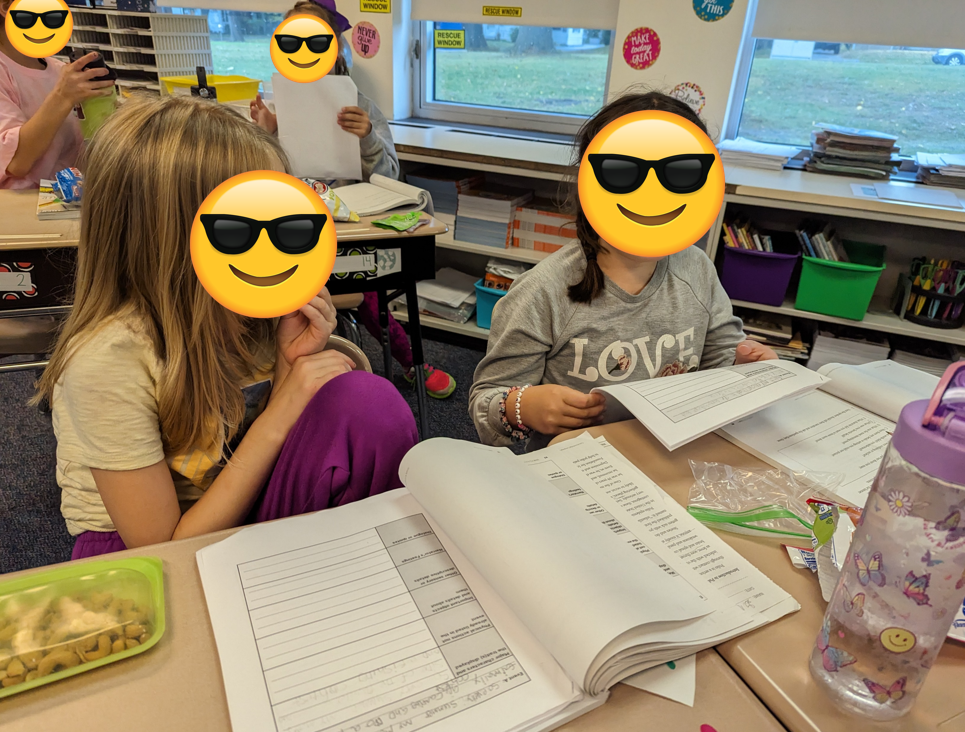

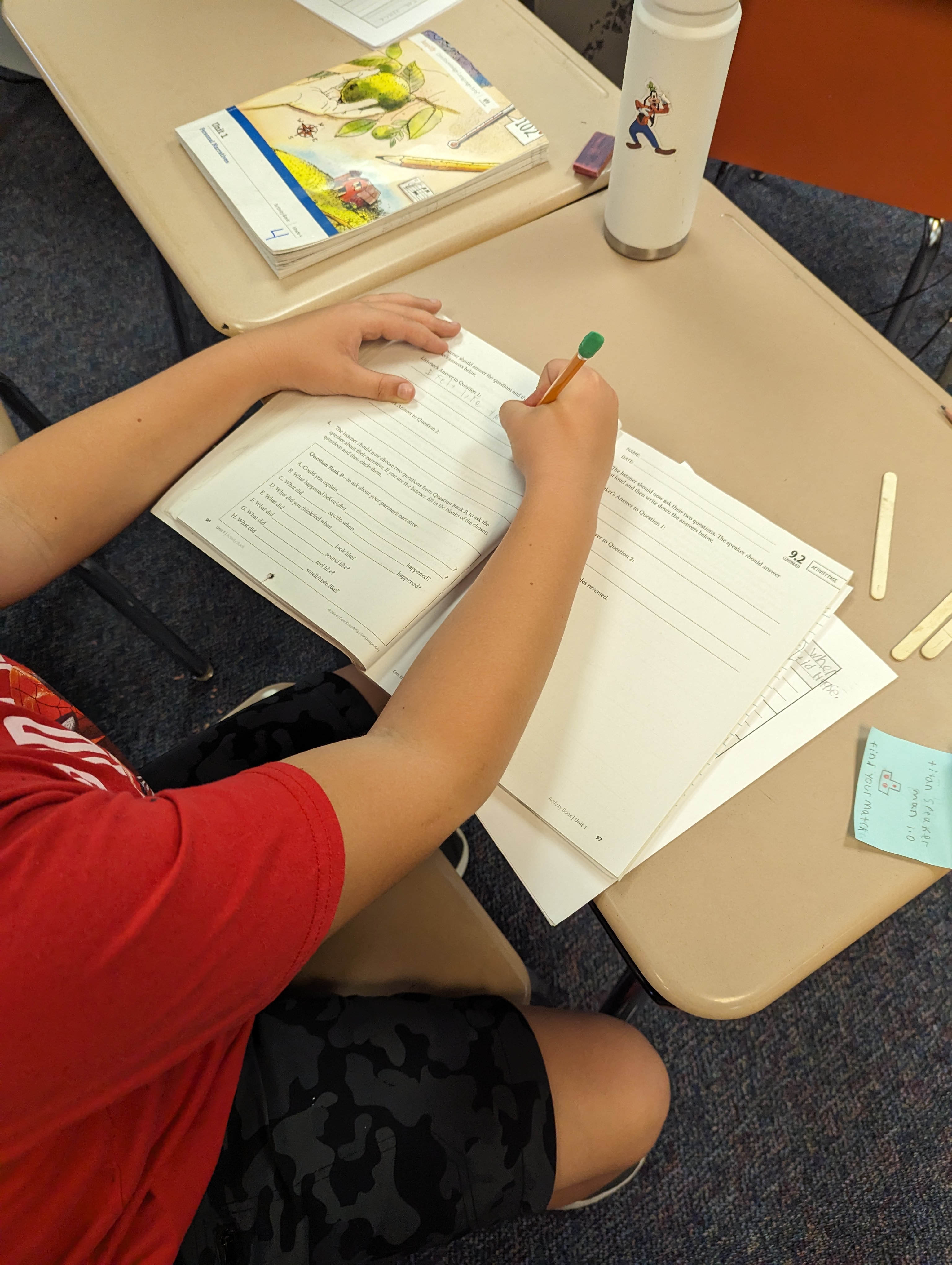


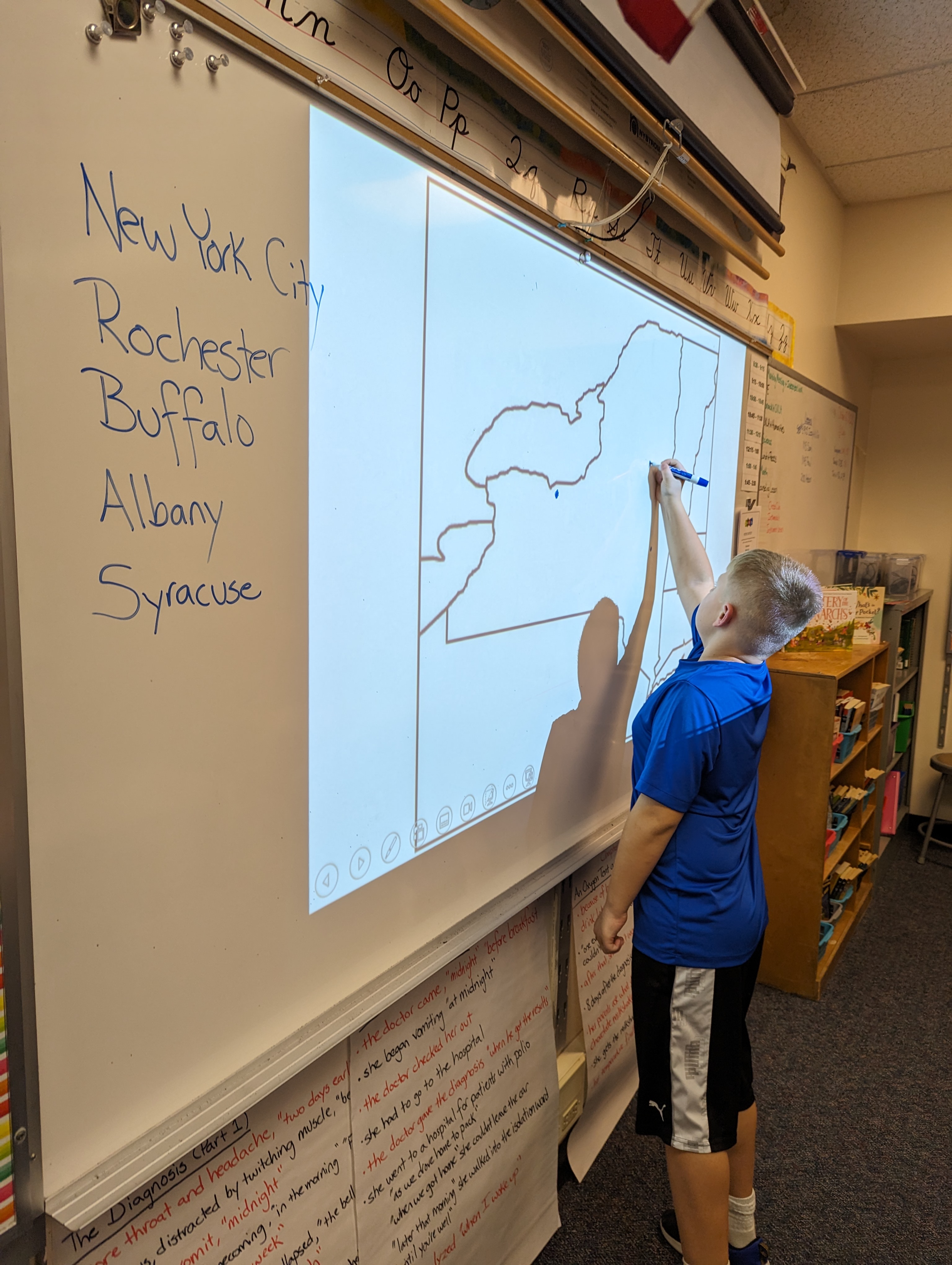

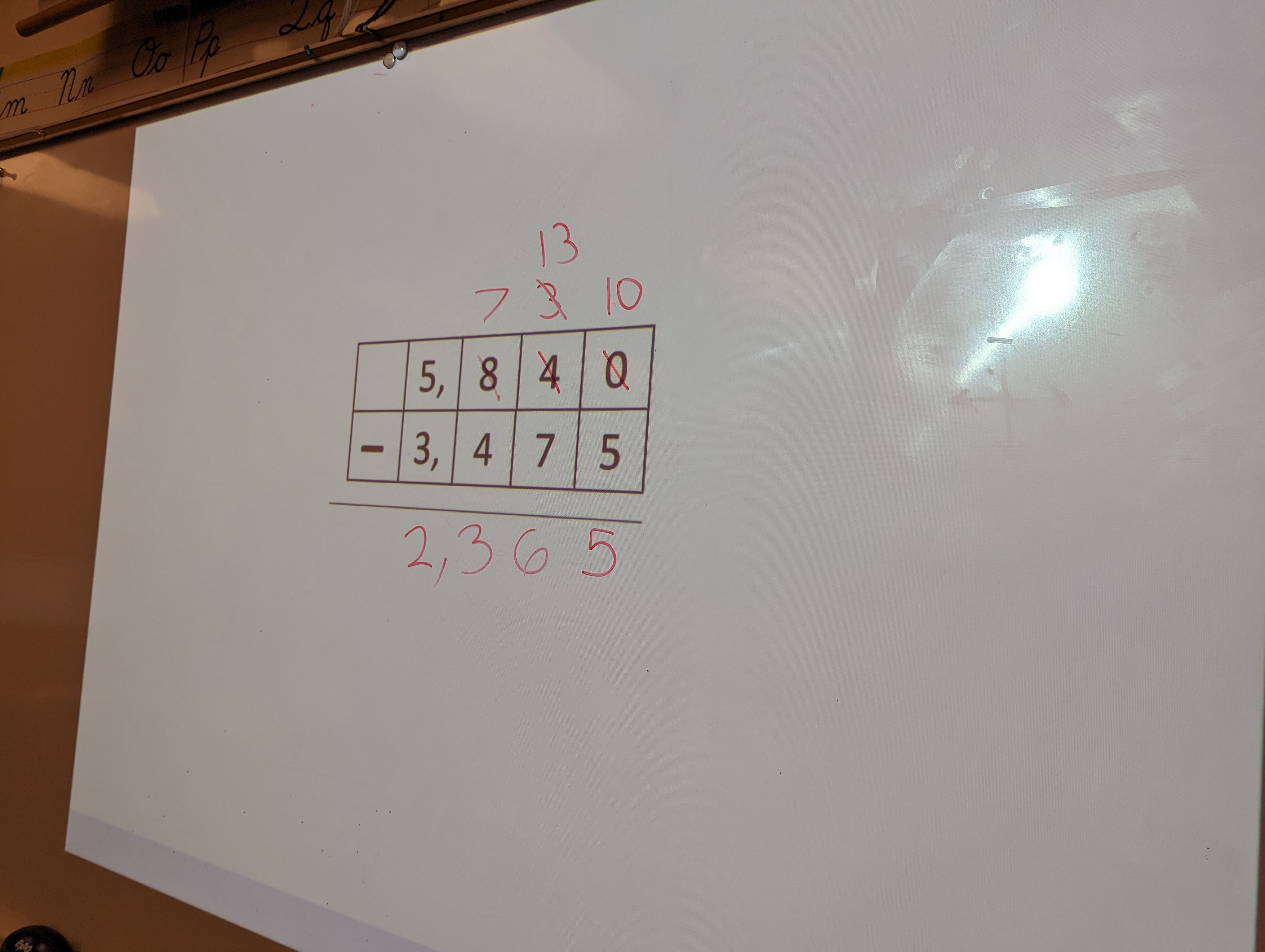


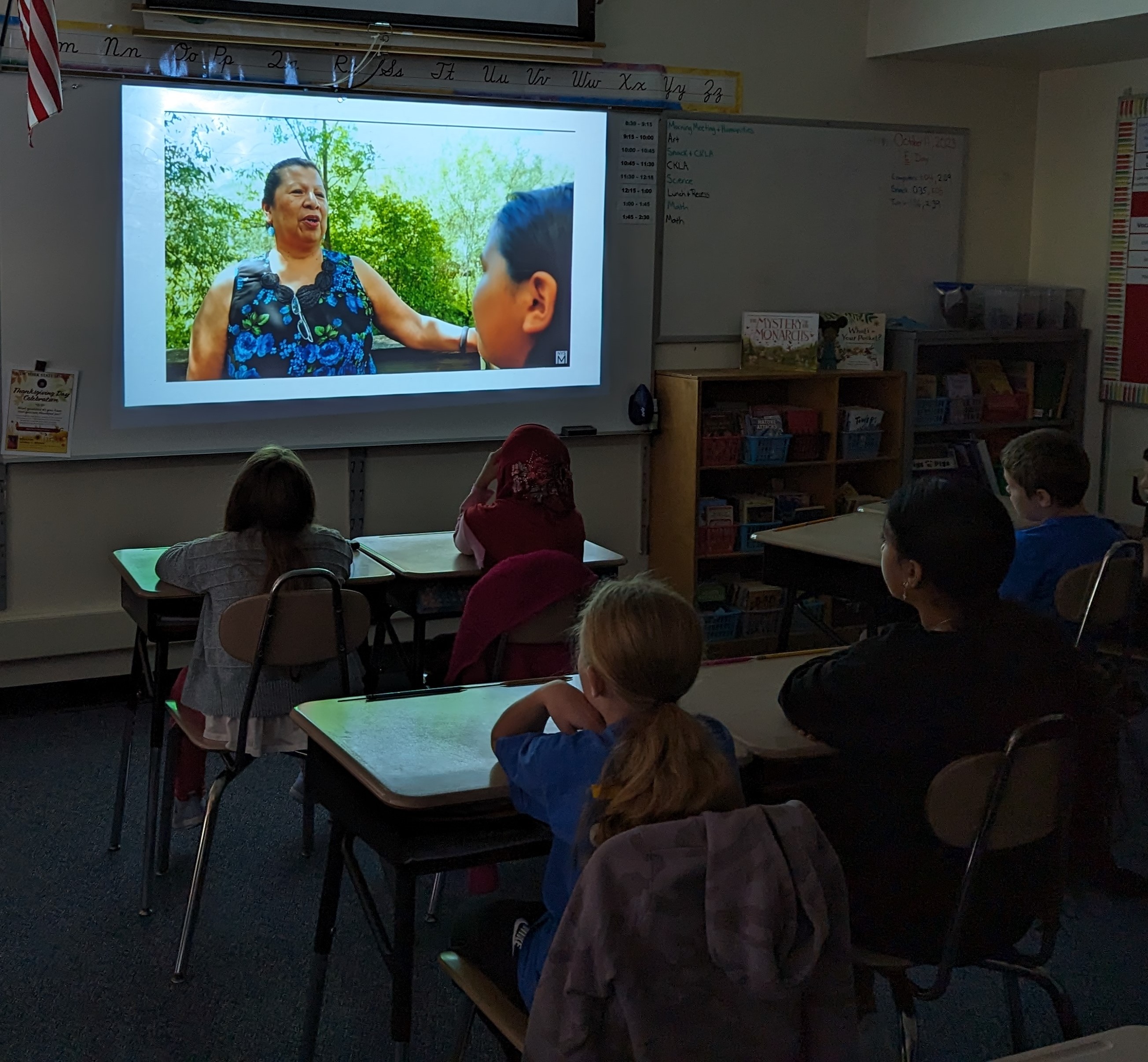


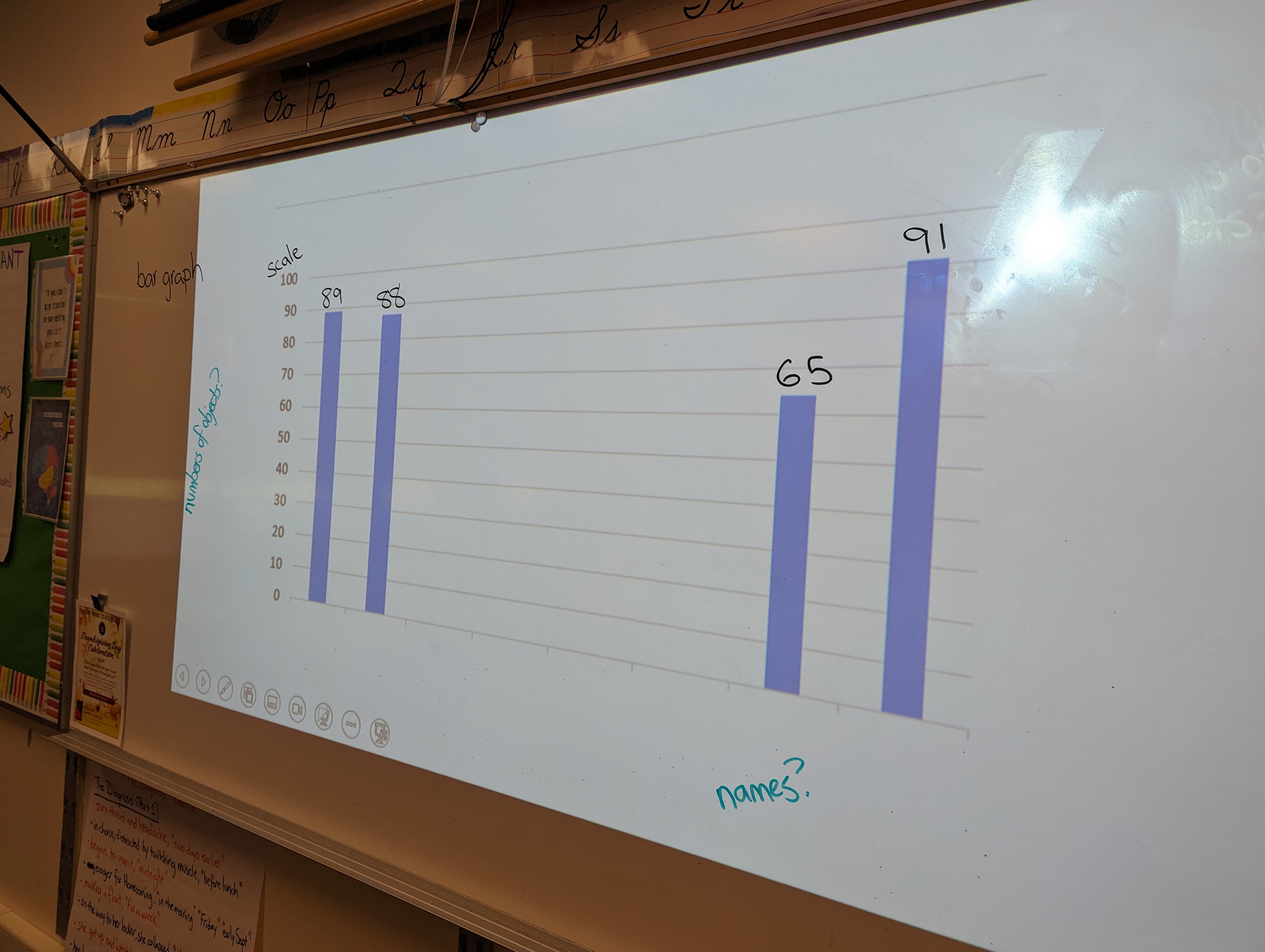


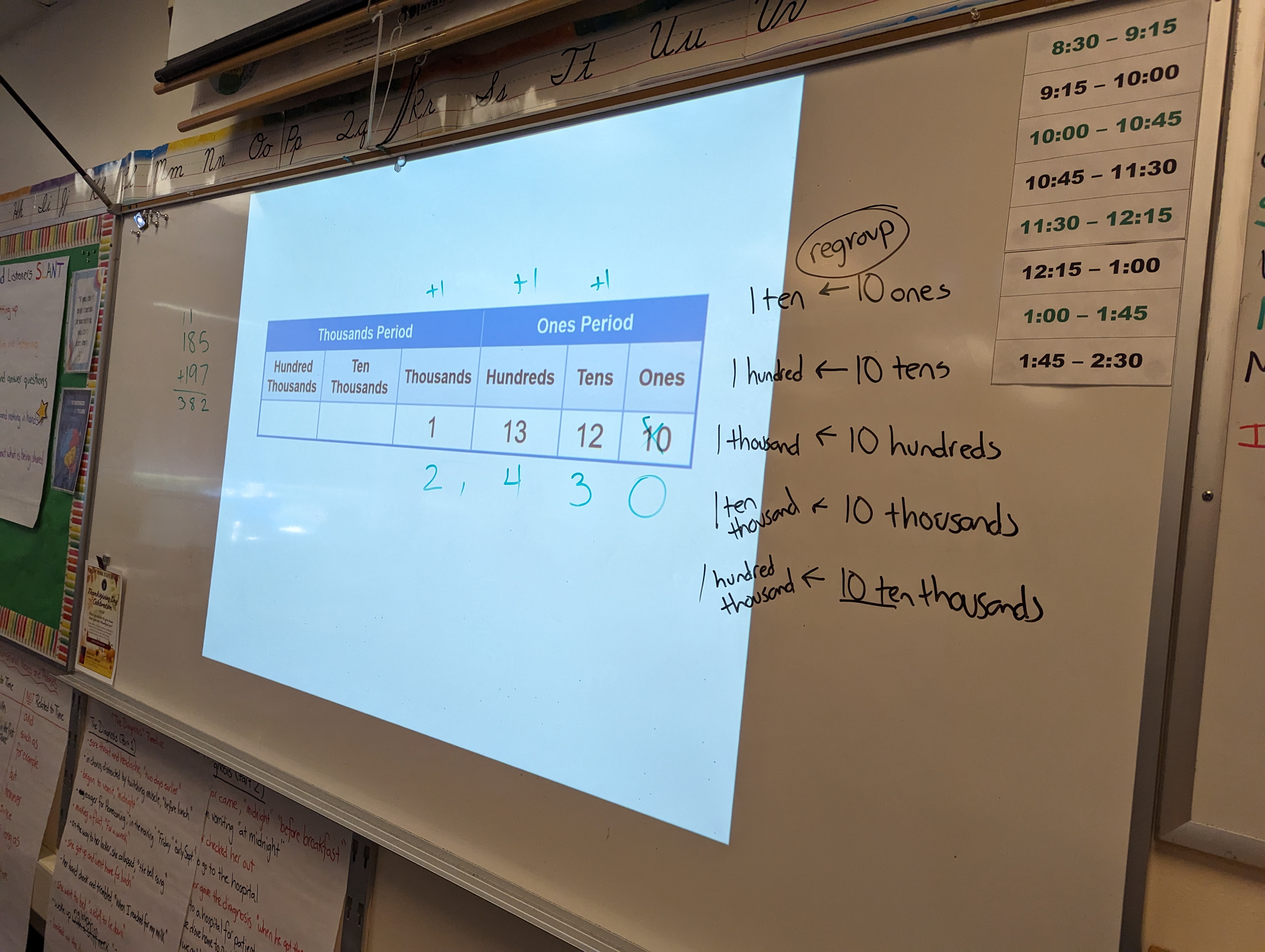


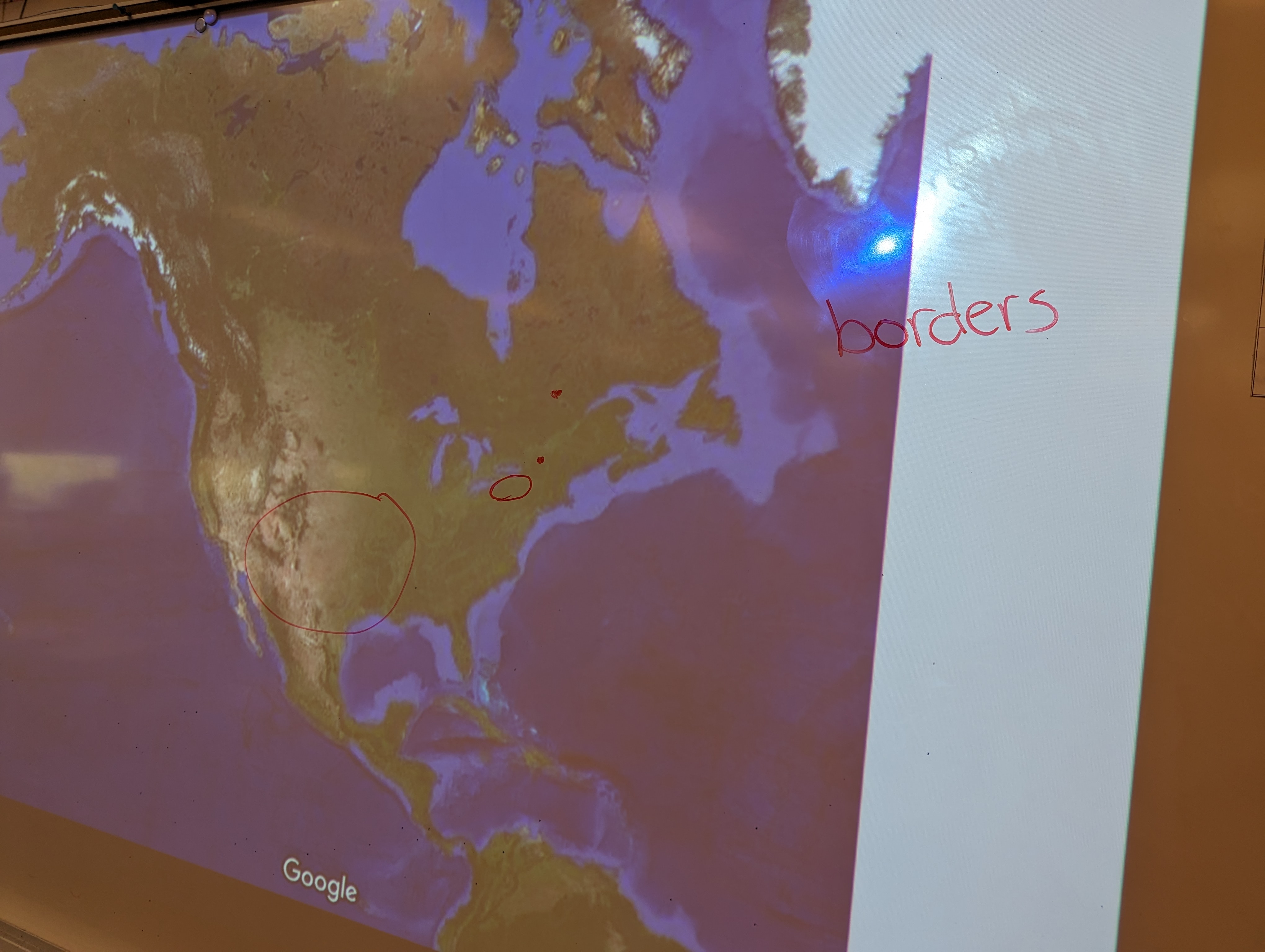


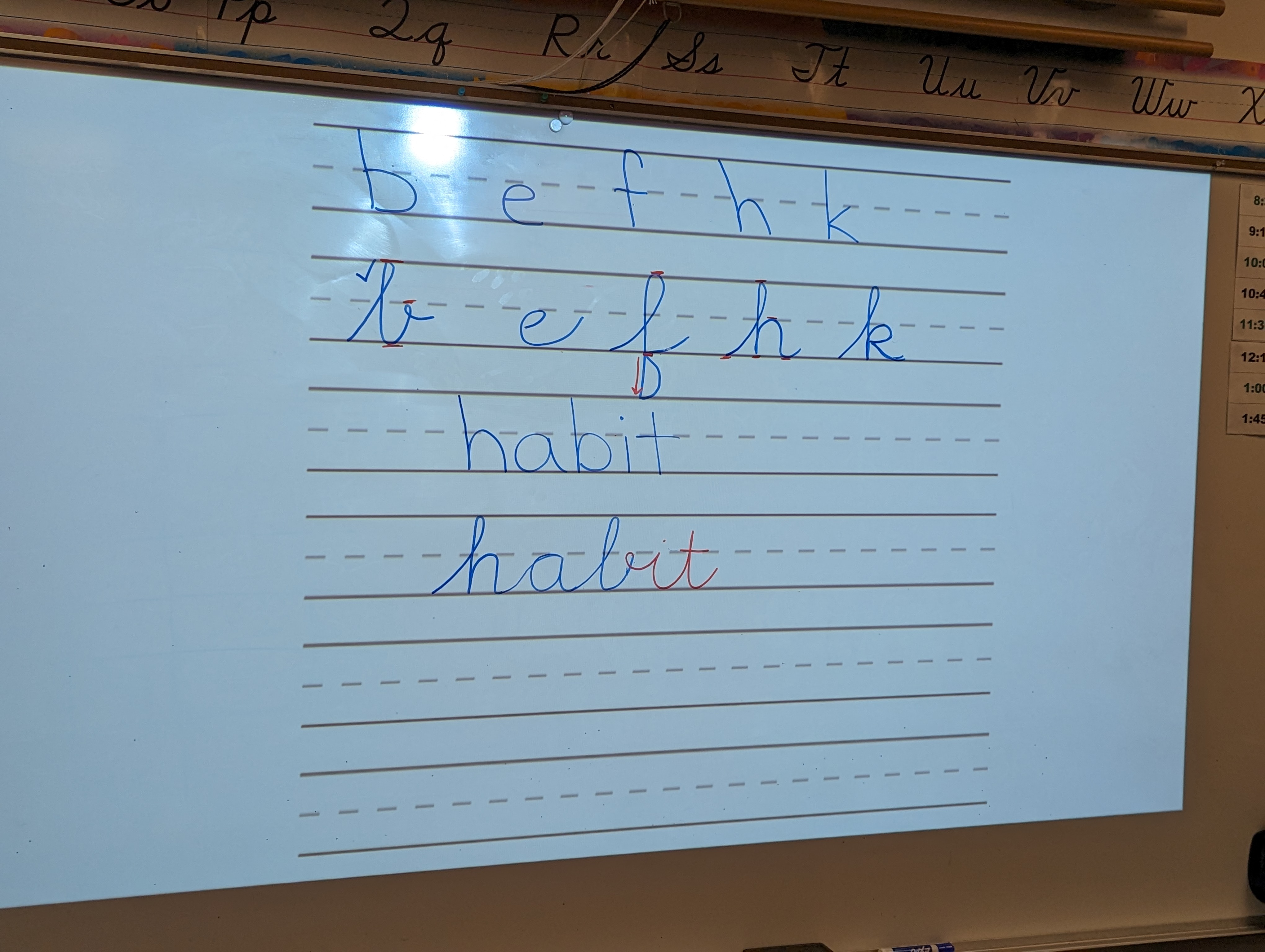
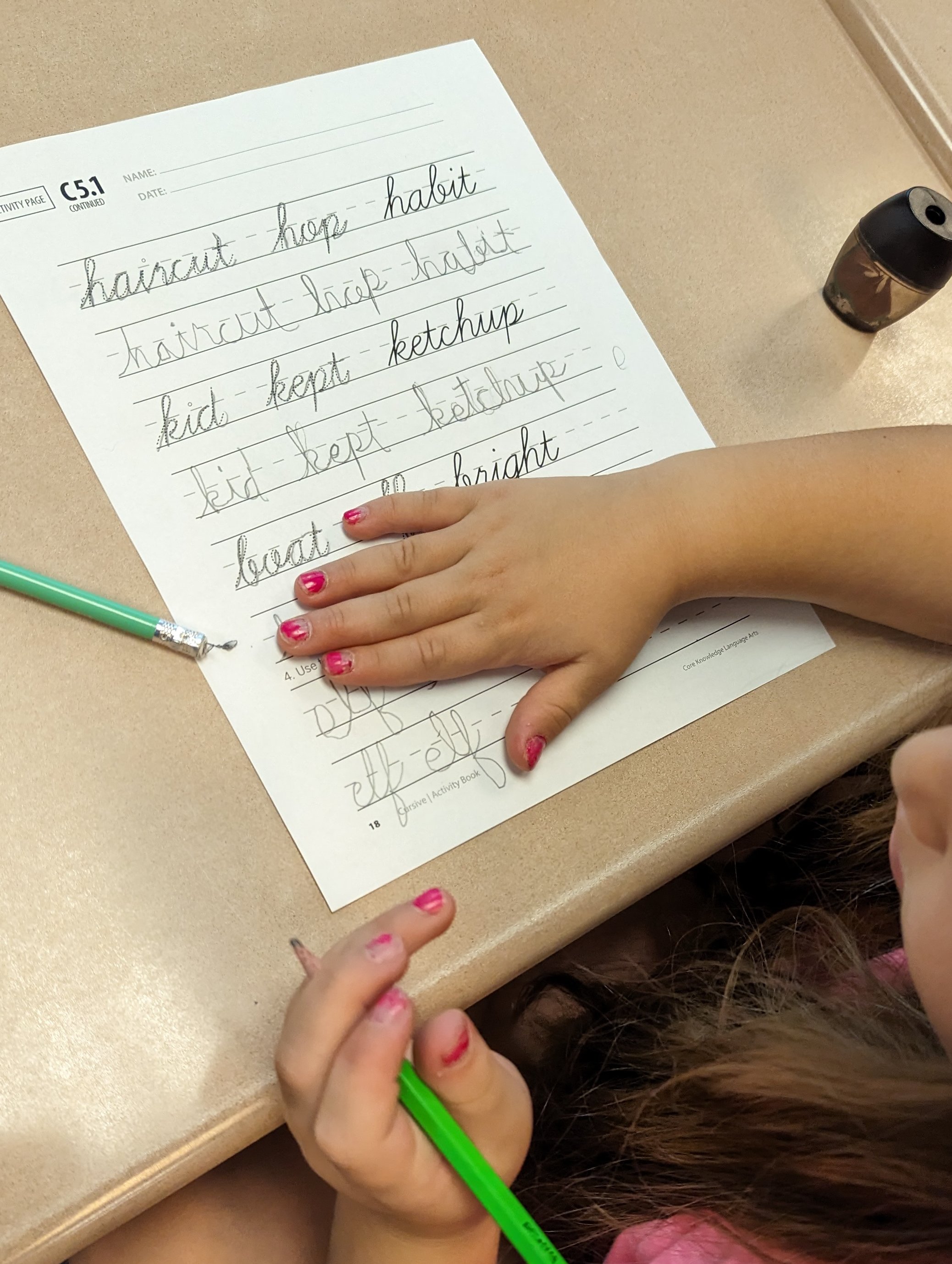

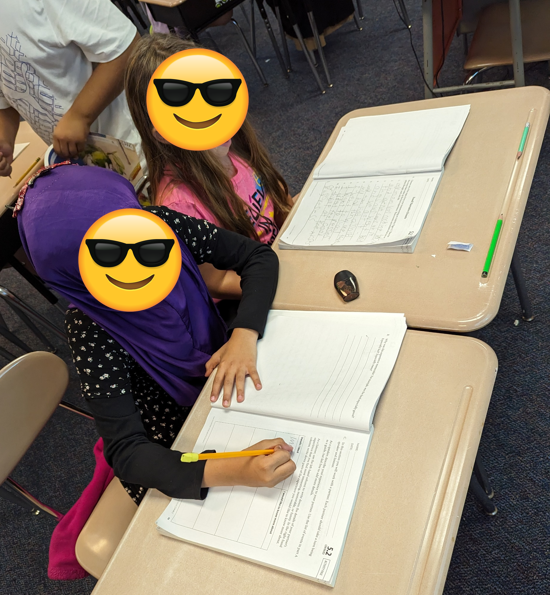


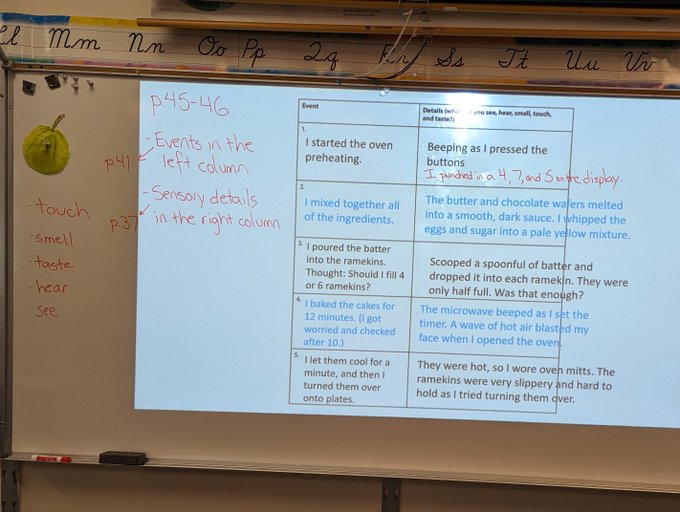


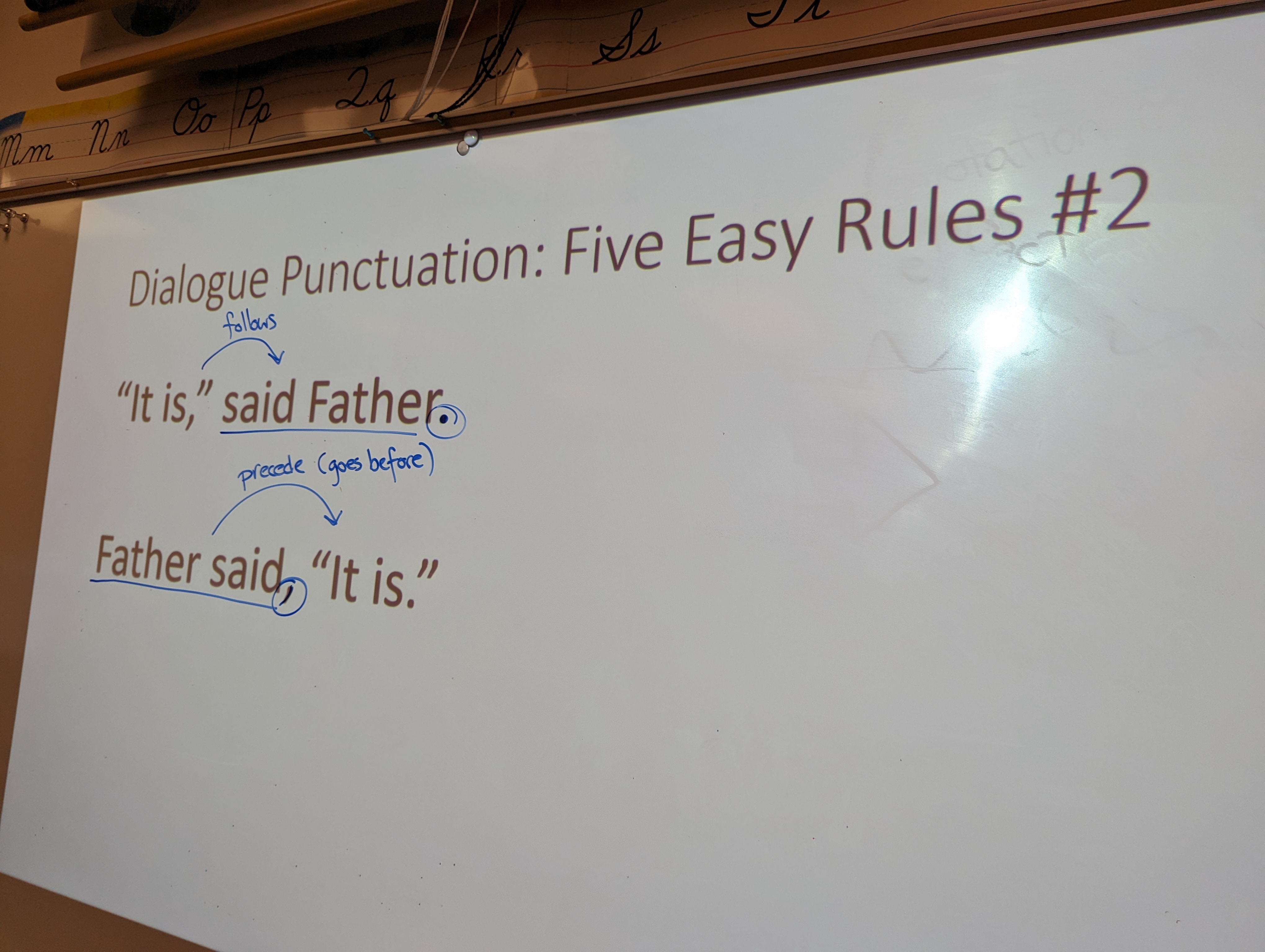

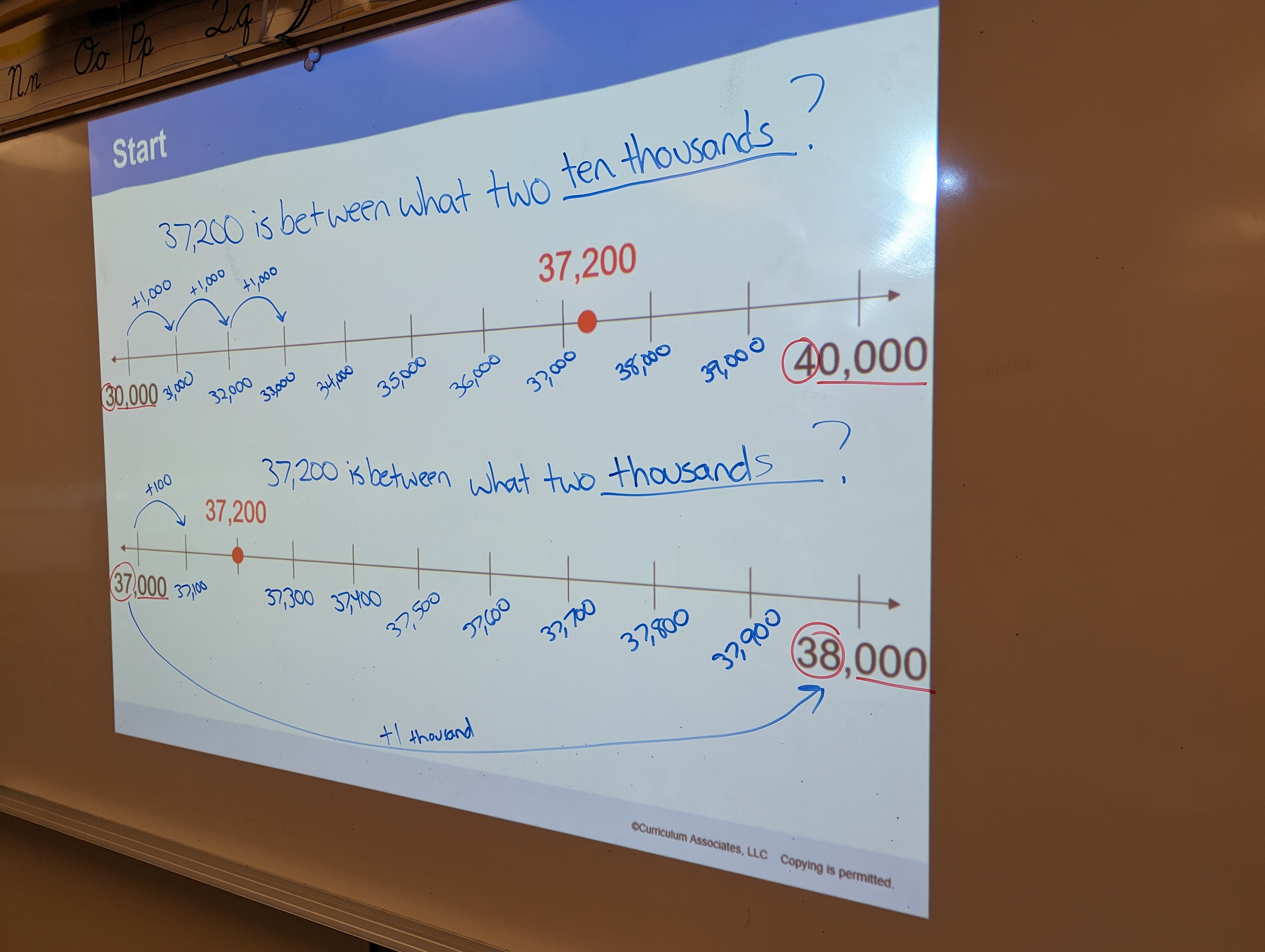


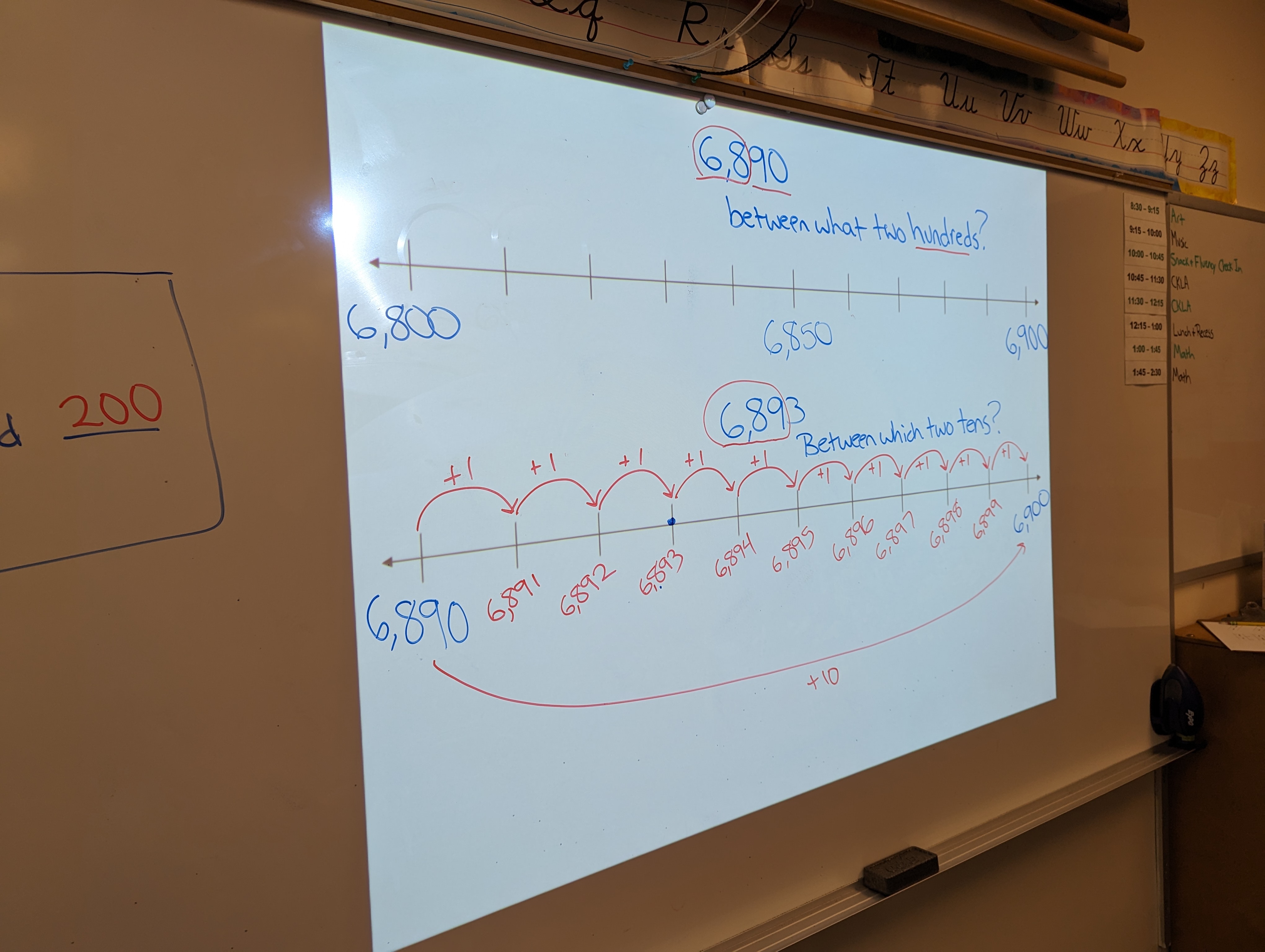
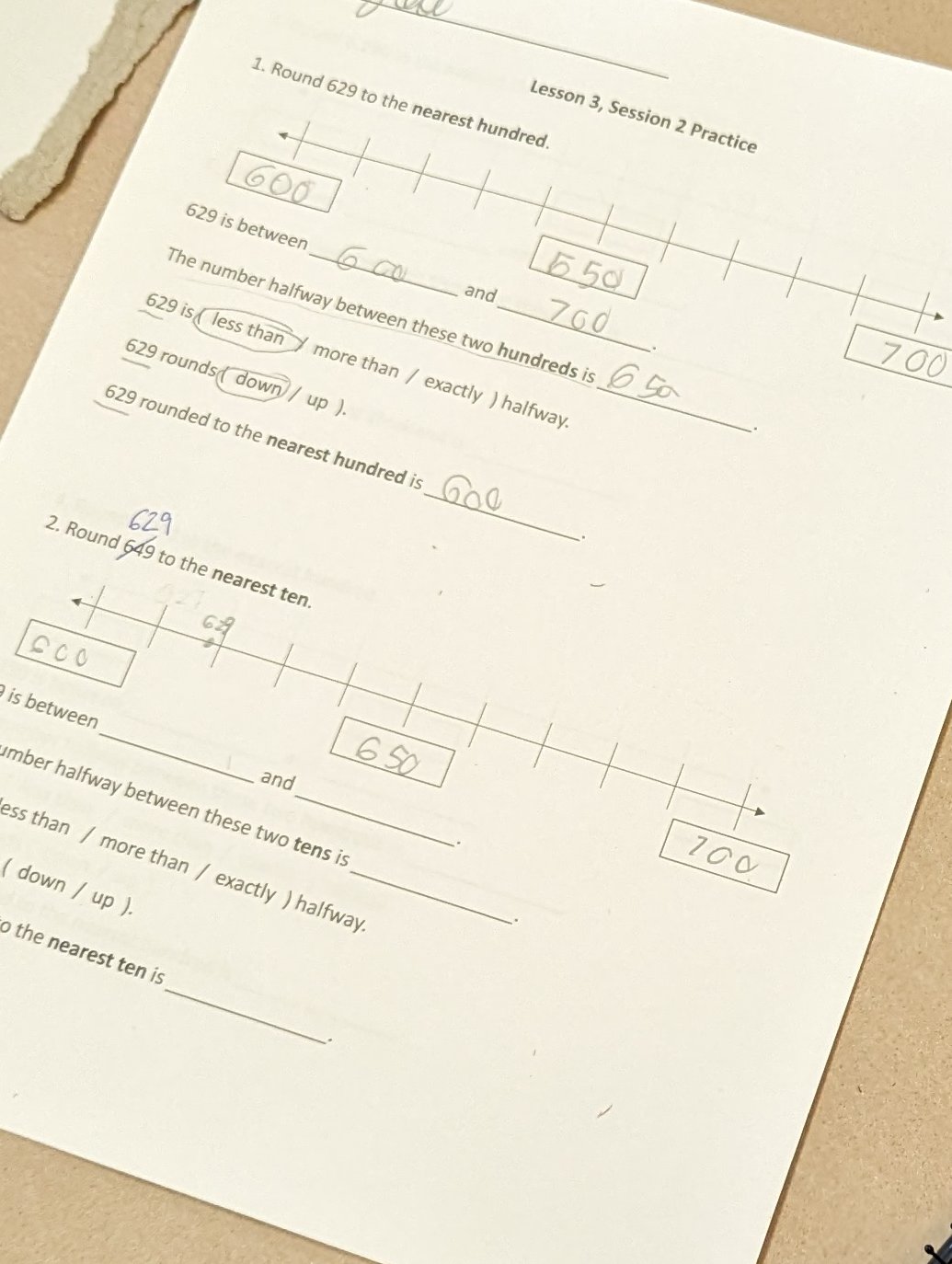
 Teaching to the Beat of a Different Drummer